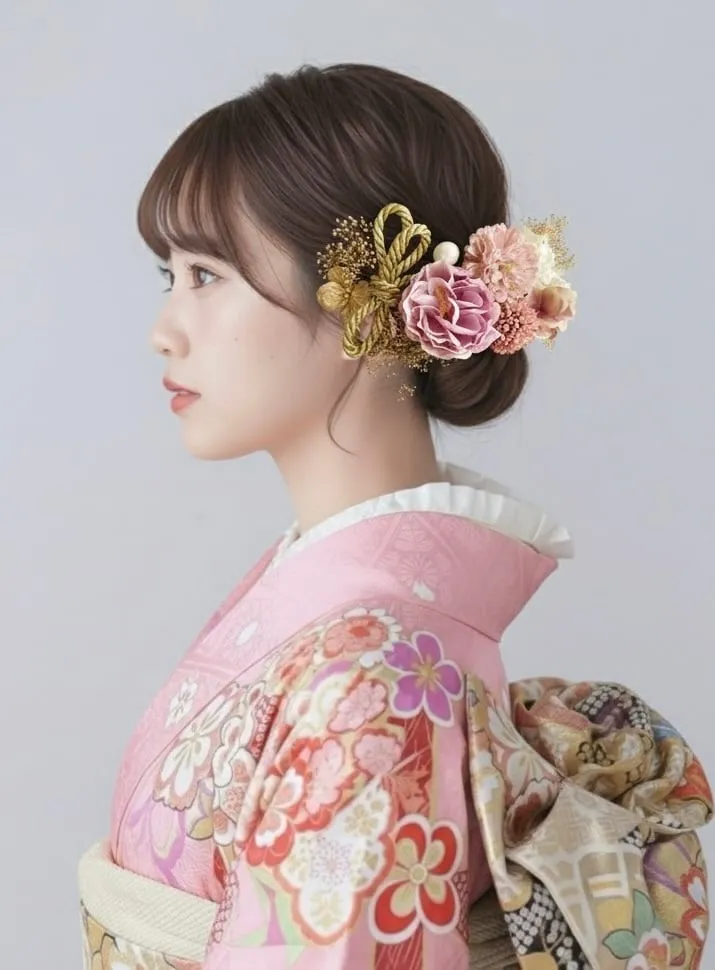
 A luxuriant rose-themed kanzashi from Le Reve.
Kanzashi are often described as kimono hair accessories. But there’s a lot more to this ancient Japanese art than just formal decorative hairpins. Indeed, kanzashi pair just as well with contemporary hairstyles and modern clothing as they do with traditional Japanese outfits.
In this article we track the development of kanzashi from their origins as ancient talismans; through their rumored use as deadly weapons; right up to their current position in contemporary fashion. Along the way, we’ll also give you the lowdown on where to buy Japanese hairpins when ordering from abroad!
What Are Kanzashi?
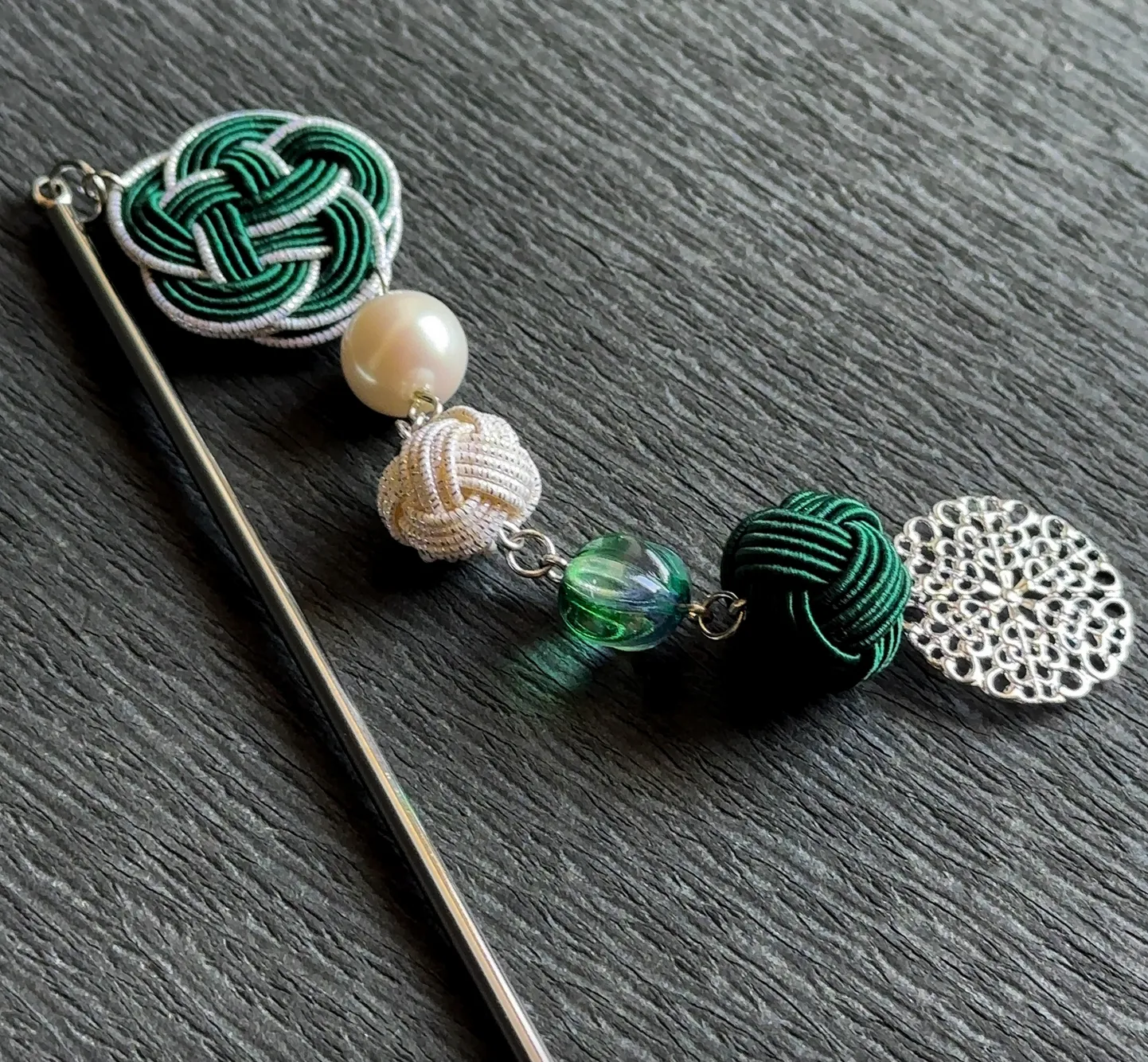 A deep green kanzashi hairpin from Minne.
Kanzashi (簪) are traditional Japanese hair decorations such as ornamental hairpins, barrettes, fabric flowers, fabric hair ties, and similar accessories. They are usually crafted from materials like metal, lacquer, and silk and were originally believed to protect against evil.
Legend also has it that kanzashi were once used as weapons by women from Samurai families; concealed in their hair and pulled out on unsuspecting attackers to deadly effect.
How accurate this information actually is remains unclear. In any case, today these hair ornaments are mostly used for more peaceful, decorative purposes; typically worn with kimonos during special events including festivals, weddings, graduations, New Year celebrations, and coming-of-age ceremonies.
There’s a lot more to kanzashi, though, so let’s dig a little deeper into their history.
A Brief History of Kanzashi Hair Ornaments
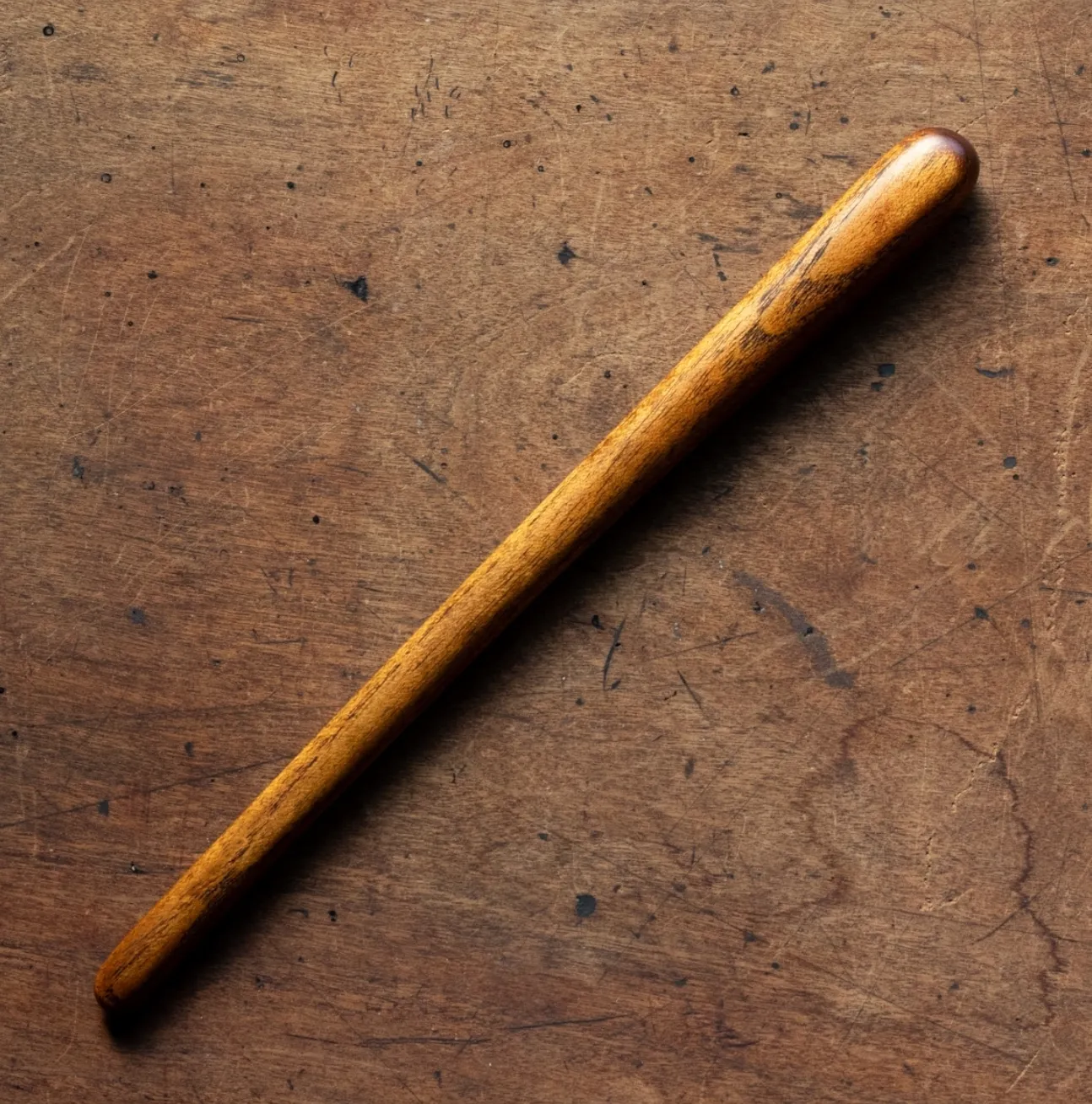
A minimal, rustic kanzashi, crafted from lacquered mulberry wood. Available on Minne.
Japanese Kanzashi have a long and fascinating history that is somewhat at odds with their simple status as kimono hair accessories. First originating in Japan during the Jōmon period, early Kanzashi – essentially just simple rods or sticks – were worn in the hair as charms to ward off malicious spirits.
By the Nara period, however, Chinese cultural influence had brought various new hair ornaments to Japan, including more sophisticated hairpins and combs. And come the Heian period, when hair was typically worn long and loose, the term kanzashi was used more broadly; now referring to all kinds of hair ornaments, from sticks to combs and pins.
During the Azuchi-Momoyama period, hairstyles shifted once again, and loose hair went out of fashion. Instead people now favored more elaborate ‘dos worn on top of the head. This set the stage for the modern nihongami styles, which incorporate a lot more hair accessories.
Finally, as hairstyles grew larger and more intricate in the Edo period, Japanese hair accessories also became more elaborate and gained even greater popularity, with artisans producing very finely-crafted ornaments. Indeed, the Edo period marked a peak in kanzashi craftsmanship, establishing many styles of hair accessories that are still widely seen in present times.
Modern Kanzashi
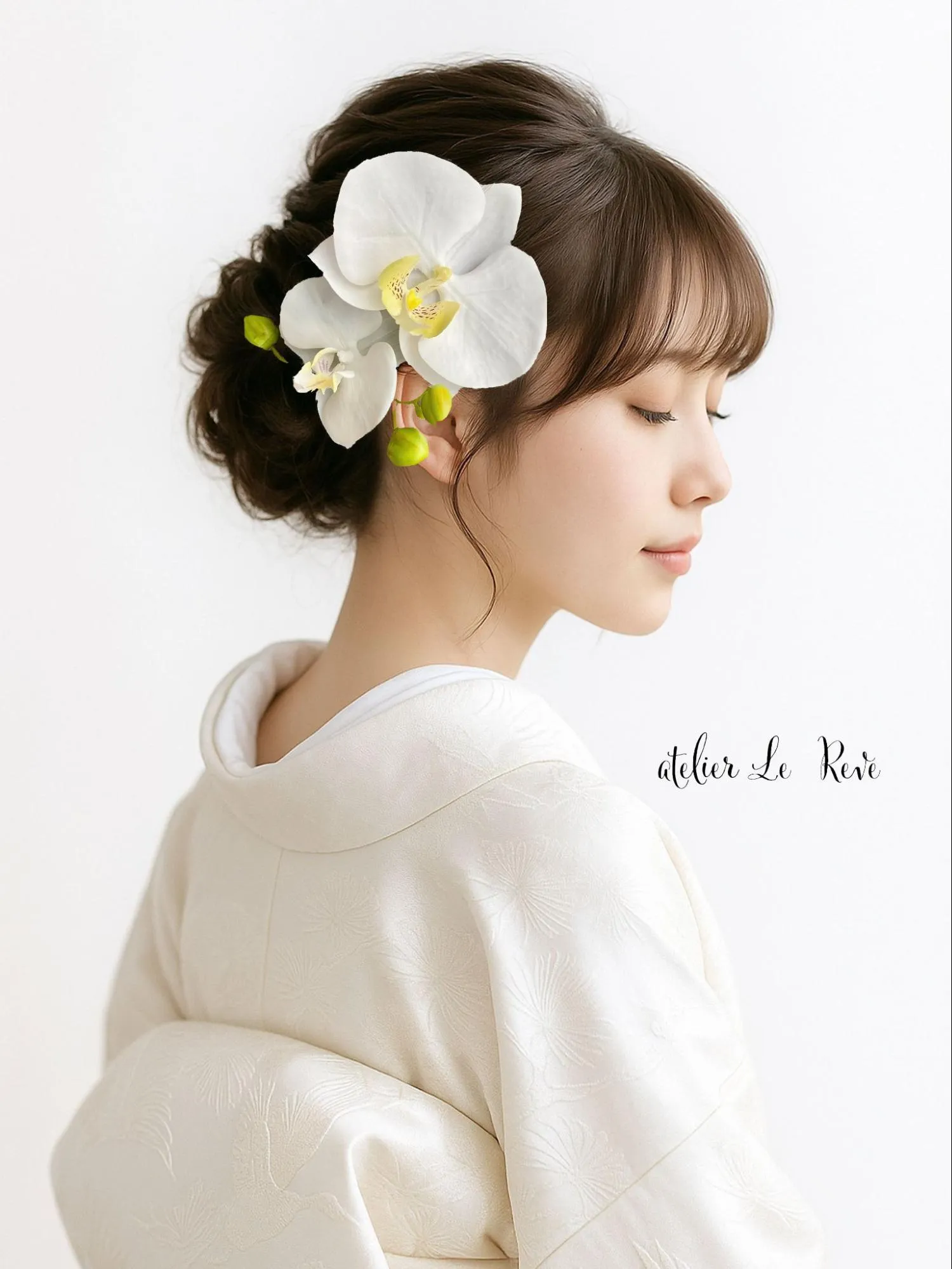
The white artificial orchids on this kanzeshi from Le Reve give the wearer’s furisode a fresh, modern feel.
Today the average person on the street in Japan is more likely to sport a cut inspired by the runways of Paris than a traditional Japanese hairstyle. However, it’s still possible to see geisha, maiko, sumo wrestlers, and brides sporting traditional hairdos. And in this case they will typically also be wearing kanzashi or some other traditional form of Japanese hair accessory.
Aside from these somewhat atypical cases, though, kanzashi are still very commonly used in Japan. Only now they are typically worn as everyday hair accessories, paired with contemporary haircuts and Western-style dress. So while it’s certainly okay for you to wear a kanzashi with a traditional Japanese kimono if you wish, there’s nothing stopping you from incorporating kanzashi into more regular outfits for daily wear, too, if that’s more your style – just as plenty of Japanese people do.
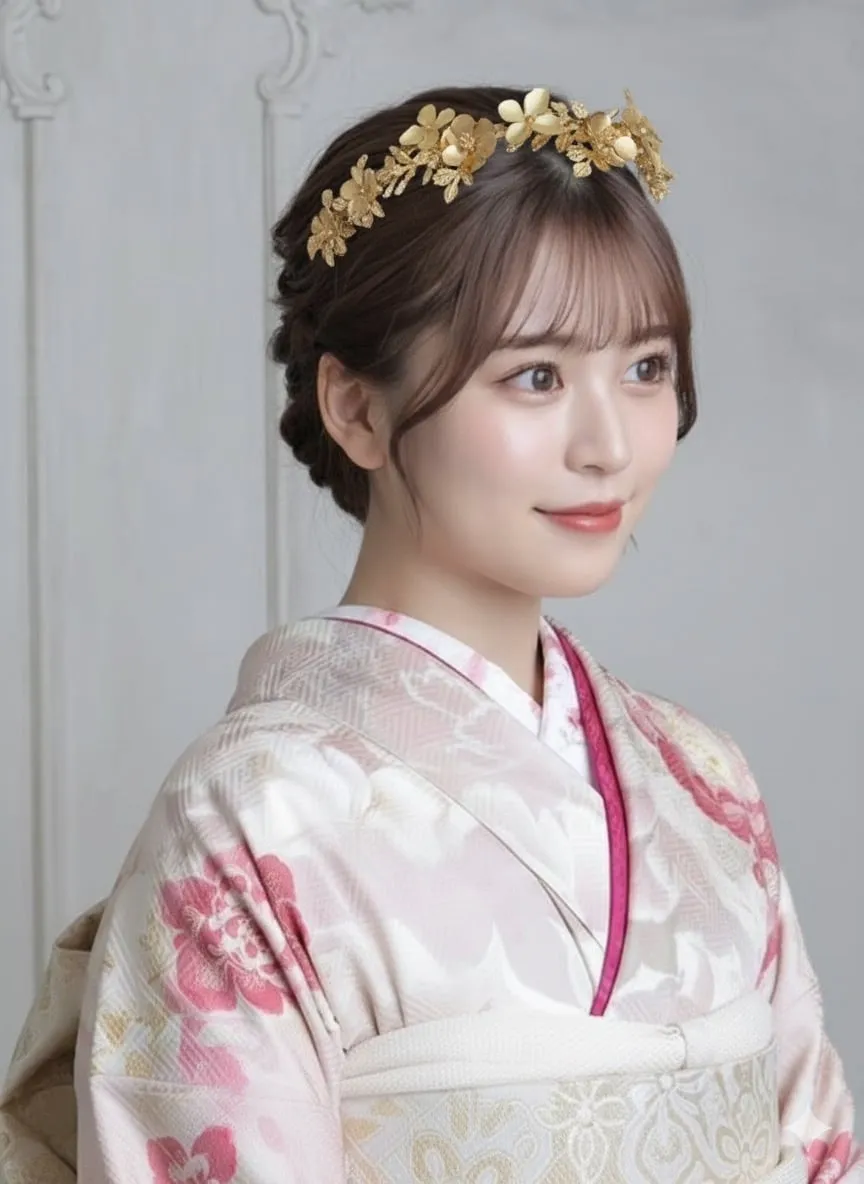
This gold leaf kanzashi from Le Reve takes inspiration from Western tiaras.
Kanzashi Craftsmanship
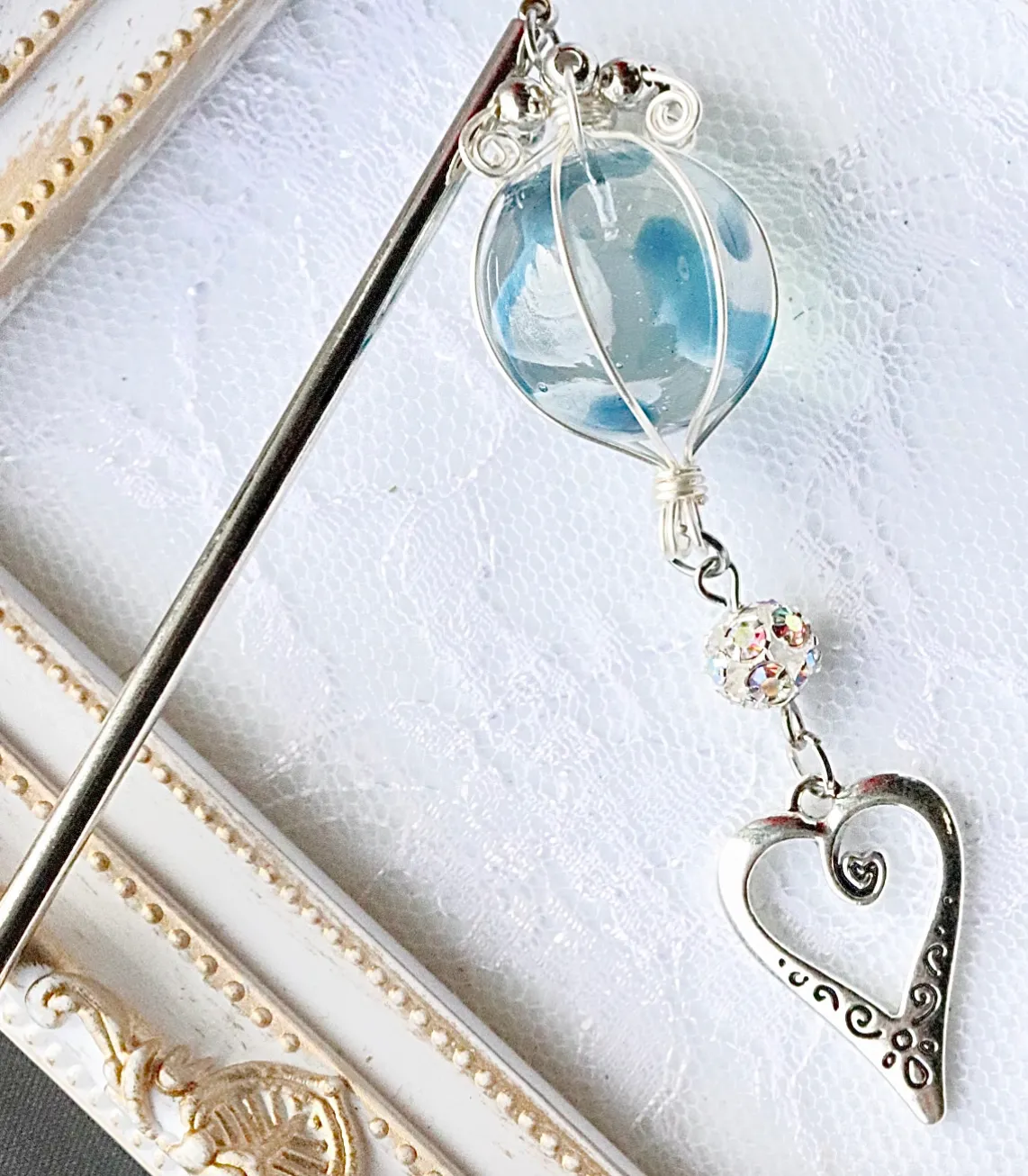 A retro Showa-style handmade kanzashi available from Minne.
A great many kanzashi are crafted by hand. As is common with Japanese craft traditions, the apprenticeship period for a professional kazashi-maker is long and demanding; typically lasting between five and ten years. The fact is, though, that today very few people in Japan choose to train professionally in this craft at all.
Indeed, the number of traditionally-trained kanzashi craftspeople still practicing in the country at the start of the millennium was said to be less than twenty – possibly as few as five by 2010 – so it might seem that the art of kanzashi-making is totally doomed.
Thankfully, however, this isn’t the case at all. Indeed, there is currently a great deal of interest in kanzashi from hobbyists, who are keeping the art of creating traditional kimono hair accessories well and truly alive. In particular, the technique known as Tsumami kanzashi – a method of folding fabric to resemble the petals of flowers and other objects – is highly popular.
What’s more, a number of these enthusiasts have sidestepped the conventional apprenticeship route, and gone on to forge their own independent paths as successful professional kanzashi-makers.
Types of Kimono Hair Accessories and Their Materials
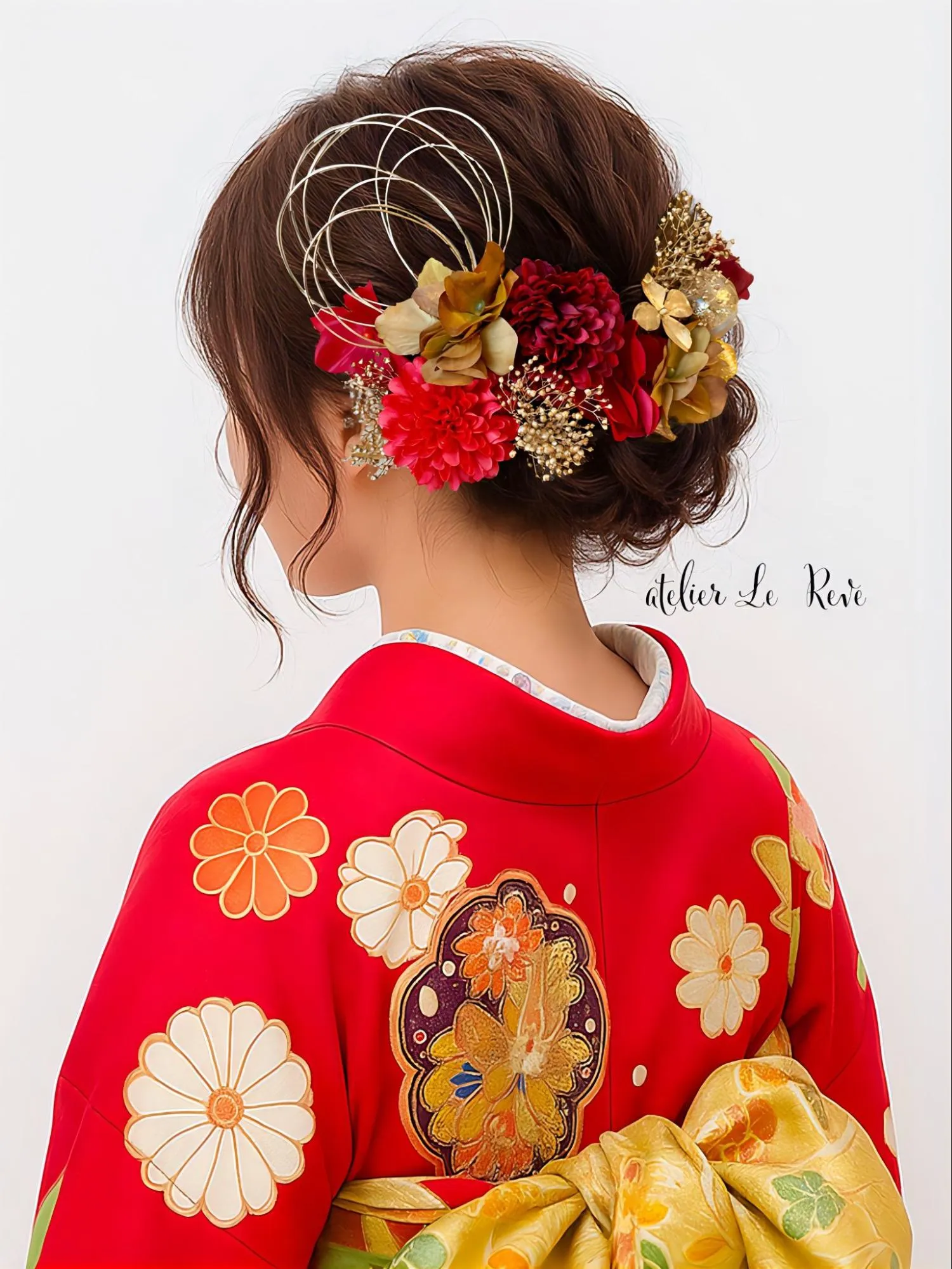
An ornate floral kanzashi from Le Reve, combining both artificial and preserved real flowers.
Kanzashi typically feature floral, avian, and other nature-based designs. They can be fashioned from a variety of materials, including silk, metal, tortoiseshell, wood, plastic, and even glass. What's more, early- and mid-century Kanzashi made from materials such as bakelite are now highly sought-after collector’s items, too.
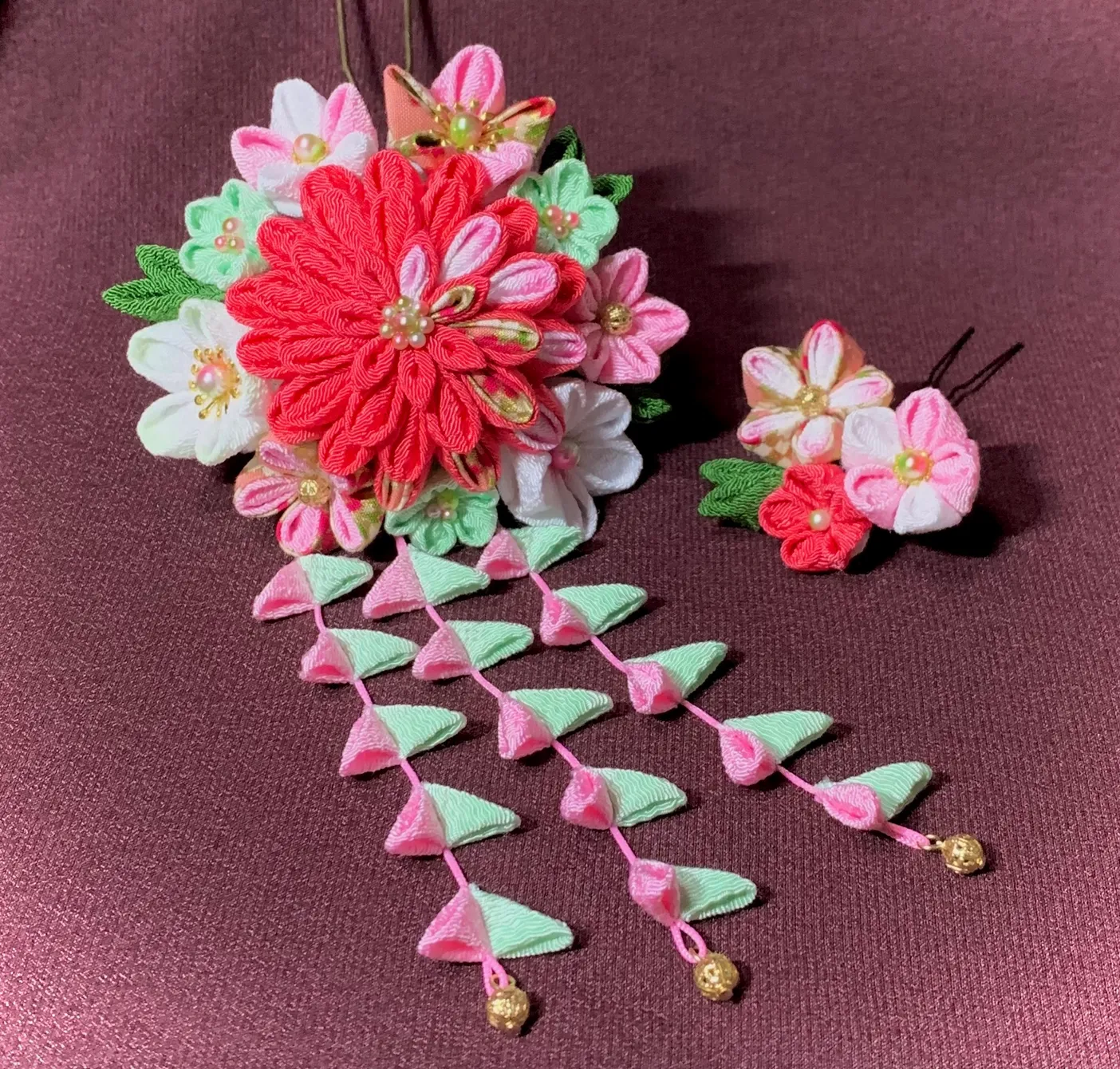
Contemporary Tsumami kanzashi available from Minne.
There are a great many different types of kanzashi available – many more than we can list here – however, the main basic styles include:
- Edo Tsumami kanzashi: a traditional technique that involves folding and pinching small silk squares – called habutae – to craft detailed shapes such as flowers and birds. When English-speakers talk of kanzashi, what they are typically referring to are Tsumami kanzashi.
- Bira-bira kanzashi: Two-pronged pins with dangling metal strips or silk flower chains (shidare) that move freely. Many bear family crests (mon).
- Hanagushi: Kushi combs decorated with folded silk flowers (tsumami kanzashi), often used informally.
- Hirauchi kanzashi: Two-pronged pins with rounded, flattened ends. Decorated with lacquer, metalwork, or filigree.
- Kanoko: Brightly colored fabric ties, sometimes padded. Made of kanoko shibori–dyed fabric. These are usually tied around buns.
- Kogai: Two-piece sword-like sticks with removable ends. Made from tortoiseshell, lacquered wood, ceramics, or metal. Often sold with kushi combs (below).
- Kushi: Comb-shaped ornaments, often inlaid or gilded. Placed at the front of traditional buns. Commonly paired with kogai (above).
- Ōgi bira kanzashi: A fan-shaped variant of bira-bira kanzashi stamped with family crests. Worn mostly by maiko (apprentice geisha).
- Tama kanzashi: Single-pronged pins topped with a decorative bead. Traditionally color-coded for seasons and made from semi-precious materials or shibori-dyed fabric.
Beyond these popular types of kanzashi, other specialized designs exist for specific hairstyles, such as Bonten kanzashi (large silver wire flowers), Miokuri (metal strips hanging from buns), Tachibana kanzashi (representing oranges with silver leaves), and Maezashi (small decorative pins worn by maiko). These styles signify age, status, and seasonal changes especially for geisha and maiko.
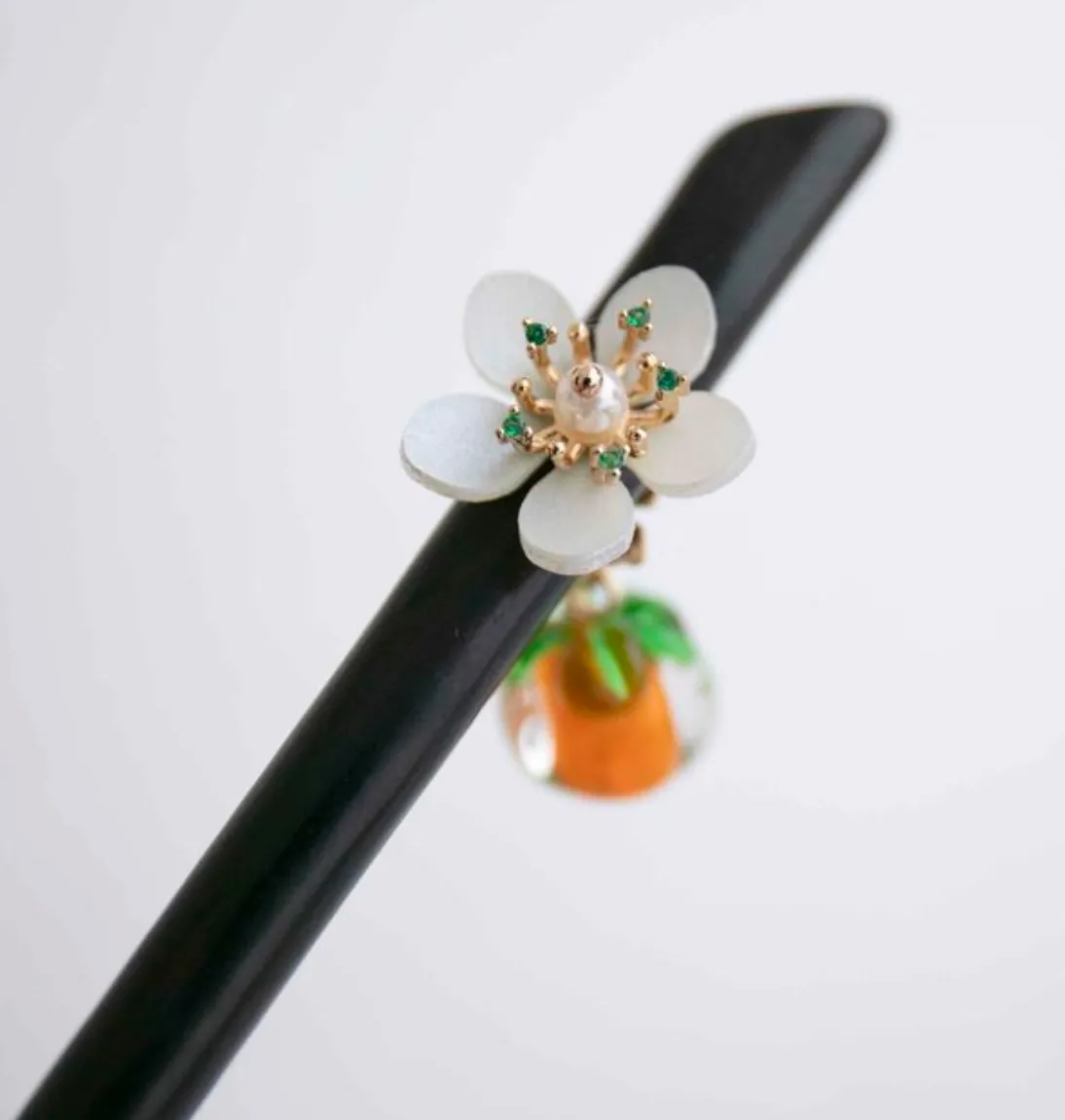
A persimmon kanzashi hairpin from Minne.
How To Match Your Kanzashi To Your Kimono?
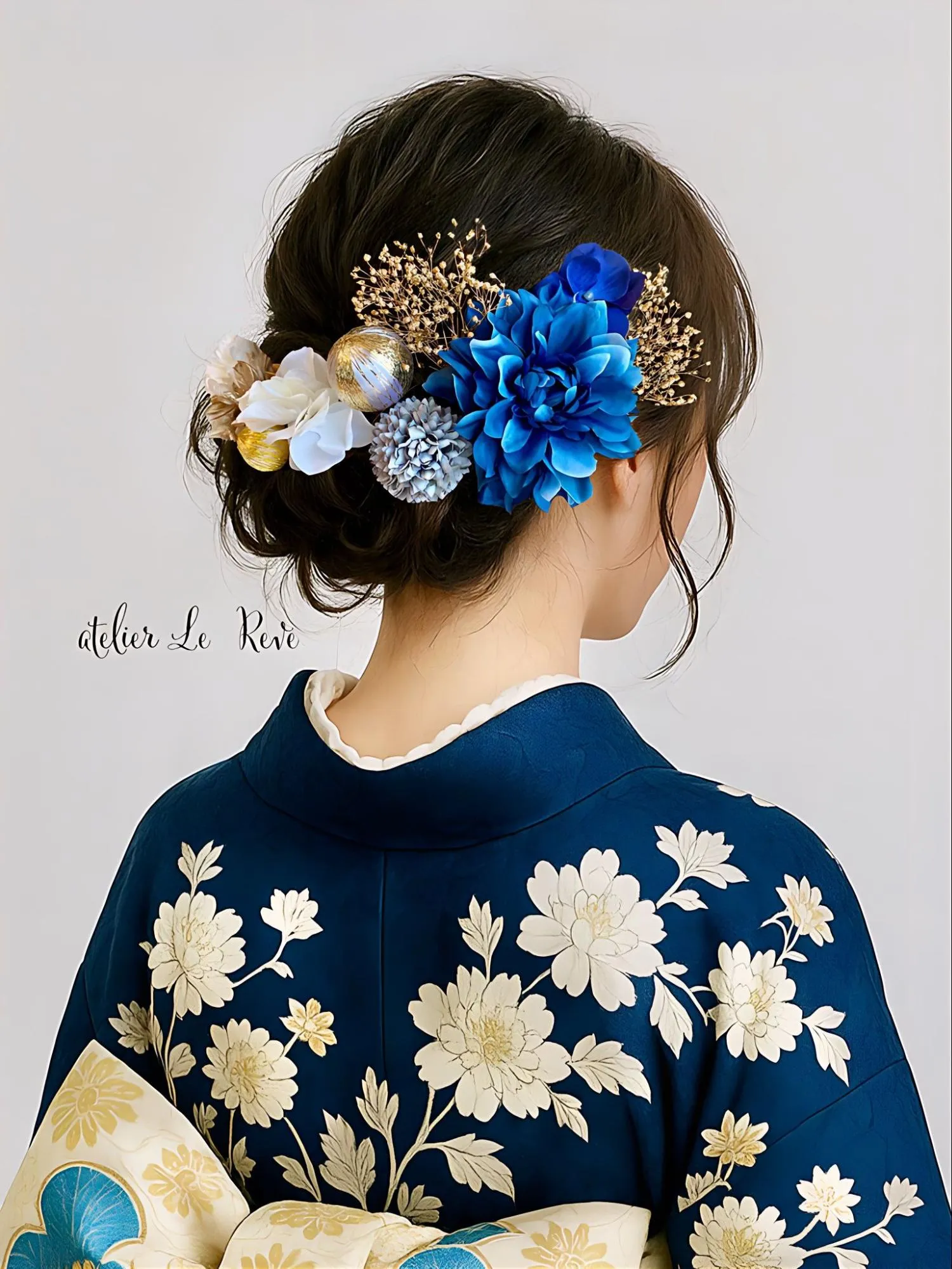
This eye-catching blue Dahlia kanzashi from Le Reve perfectly complements the wearer’s kimono.
As we’ve seen, there are a great number of different Japanese hair accessories to choose from. And an almost equally bewildering variety of kimonos to pair them with. How to match your kimono with the right kanzashi for the occasion?
As a general rule, the more formal the kimono, the more elaborate the kanzashi. But let’s break the rules down in a little more detail.
Formal Kimono (Furisode, Uchikake, Tomesode)
These kimonos are usually worn for weddings, ceremonies, or formal events, so the accompanying kanzashi must project a similar degree of elegance and status. Wear with Tama-kanzashi (decorative balls), Hana-kanzashi (flower clusters), and multi-piece sets. Aim for luxurious motifs such as cranes, pine, plum blossoms – ideally incorporating gold or silver accents.
Semi-Formal Kimono (Houmongi, Iromuji)
These kimonos are typically worn for visits or tea ceremonies, so they should be paired with kanzashi that are refined but not overly extravagant. Stick to moderately ornate pieces – e.g. single sticks in lacquered wood – and go for subtle designs such as seasonal flowers like iris or chrysanthemum.
Casual Kimono (Komon, Yukata)
Komon and yukata are casual-wear – often seen at summer festivals, firework displays and other fun events – so they call for light and playful accessories that don’t overpower the relaxed style of dress. Aim for simple kogai (straight sticks), bira-bira (dangling strips), or plastic/resin kanzashi featuring motifs such as fans, butterflies, or summer flowers.
Finally, regarding where to place your kanzashi, highly ornamental designs are typically worn toward the front of the head for greater visibility, while simpler ones are placed at the back.
Where to Buy Japanese Hairpins Online?
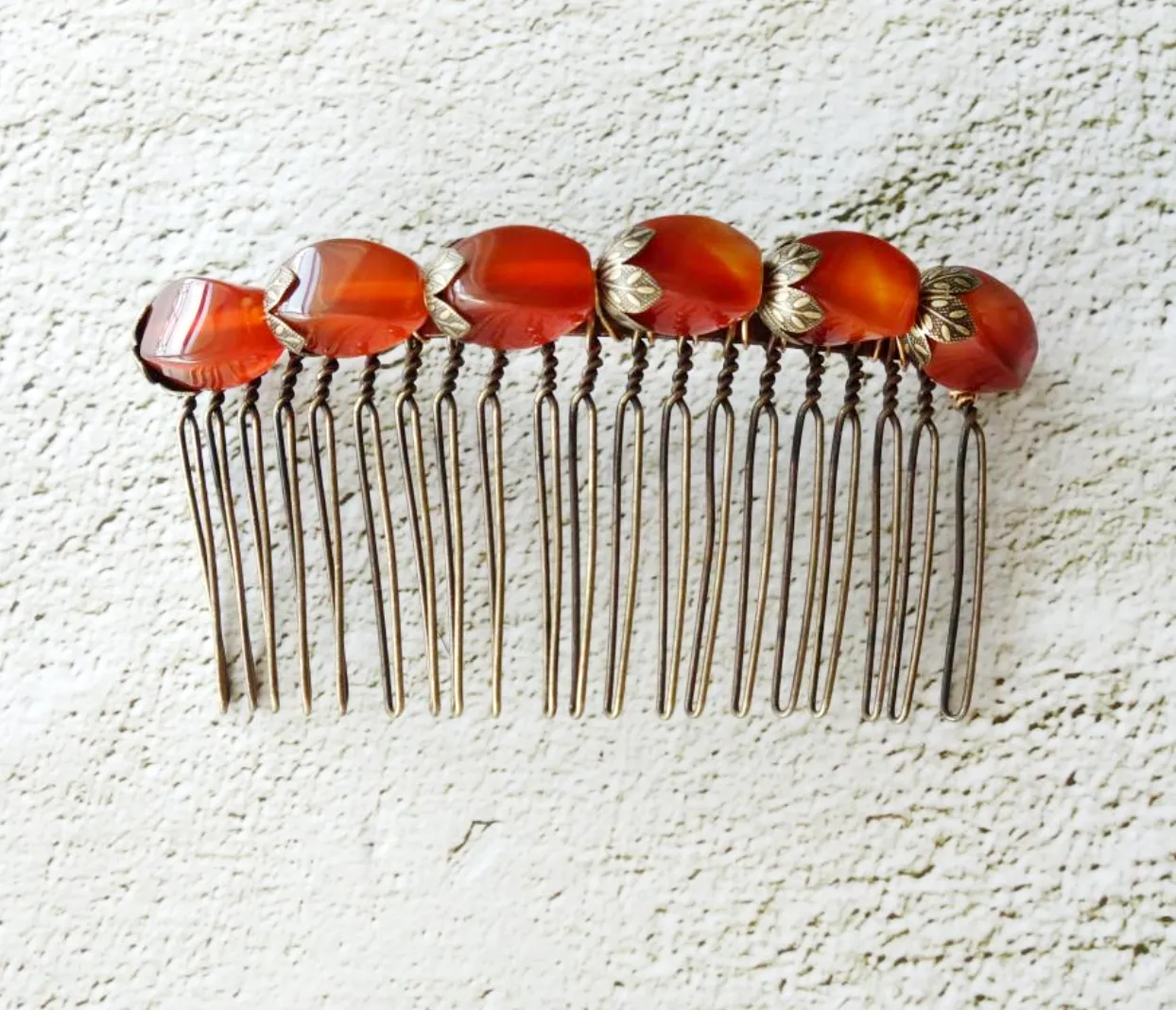
Featuring natural agate and intricate metal openwork, this beautiful vintage-style Kushi kanzashi is available from Minne.
For those living in Japan, a wide range of kimono hair accessories are available from a variety of sources. But anyone outside the country is likely to find tracking down high-quality kanzashi a more arduous task. The main challenge is understanding where to buy Japanese hairpins that are unique and handcrafted by local craftspeople, rather than cheap mass-produced items imported from foreign factories.
Vintage Kanzashi
For vintage and even antique kanzashi, it’s hard to beat Etsy. And if you know what you are doing, eBay, too, can be worth a look. Be aware, though, that certain types of vintage kanzashi are very highly sought after, and prices for the more desirable pieces – particularly those crafted from precious materials – tend to be steep.
Handmade Kanzashi
For modern, hand-crafted kanzashi and other top-quality kimono hair accessories, ZenMarket’s partner stores Le Reve and Minne offer a highly-impressive selection of Japanese hairpins sourced from local artisans.
Atelier Le Reve is a small specialized store focusing on kimono hair accessories crafted from dried, preserved, or artificial flowers; making Le Reve many people’s go-to destination for accessorizing everything from furisode to yukata. You can even put together your own custom designs by purchasing separate add-on items like flowers and bands.
Meanwhile, for fans of Japanese craftsmanship more generally, Minne will need little introduction. This well-established platform for Japanese handicrafts and artisanal goods stocks everything from stylish Japanese homeware and crafting materials such as washi tape, through to Japanese miniatures and, yes, handmade kanzashi. No matter your tastes, if you have been wondering where to buy Japanese hairpins, your quest is likely over, as the selection here is huge!
For those located outside of Japan, ordering directly from Le Reve and Minne can be something of a challenge. But by signing up for a free ZenMarket account you can simply add items from these stores to your ZenMarket shopping cart. Once they have arrived at our warehouse, we’ll take care of the rest, sending all your bundled items direct to your door in a single shipment – wherever you are in the world.
💡Also Read: How to buy from Recommended Stores?
Conclusion
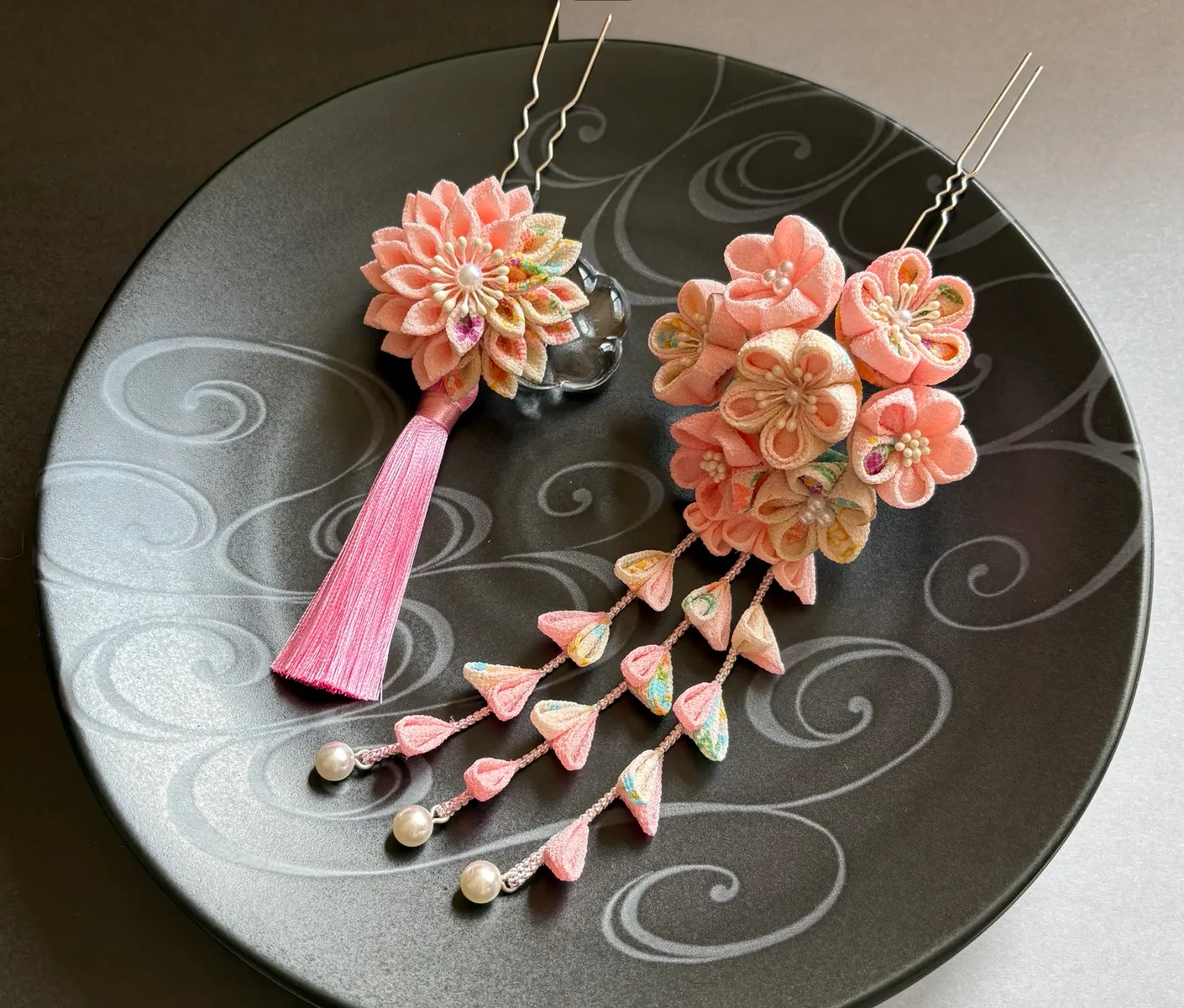
Exquisite cherry blossom Tsumami kanzashi, available from Minne.
Kanzashi are traditional Japanese hair ornaments that were originally worn as simple charms against evil spirits, but have since evolved into elaborate decorations reflecting a variety of cultural and historical influences. Today they are worn alongside modern fashion just as much as with formal kimonos, and both hobbyists and professional artisans continue to keep the art vibrant and healthy.
Now that you know where to buy Japanese hairpins, there’s nothing stopping you from authentically accessorizing your favorite kimonos, or even incorporating these traditional kimono hair accessories into more contemporary looks for everyday wear. The creative possibilities of kanzashi are truly limitless. Set up your free ZenMarket account today, and start ordering from some of Japan’s premier kimono hair accessories stores right away!
Have you signed up for ZenMarket yet?
ZenMarket is the place to get your hands on goods directly from Japan!
Sign up now!