A quality saltwater lure can make the difference between simply finding offshore fish and successfully convincing them to strike. Tuna, yellowtail, amberjack, giant trevally, and mahi-mahi are powerful predators, but each species responds differently to lure size, swimming action, retrieve speed, and position in the water column.

Choosing the right lure is only part of the equation. Your casting or jigging setup must also be balanced around the lure weight, fishing depth, line class, target species, and expected fish size. This guide explains how to select tuna casting lures, metal jigs, and jigging rods while highlighting the qualities that make premium Japanese fishing tackle so popular among serious offshore anglers.
What Makes a Good Saltwater Lure?
A good saltwater lure must combine an effective action with the strength required for harsh offshore conditions. It should swim consistently, cast accurately, and remain stable when retrieved through waves, current, or rough water.
Durability is especially important. Offshore lures may be hit repeatedly by tuna, amberjack, GT, and other powerful species. Strong internal wire construction, reinforced hook hangers, corrosion-resistant hardware, and a durable finish help the lure survive aggressive strikes and prolonged fights.
The lure should also match the local baitfish. Length, profile, color, and swimming depth can all influence results. Natural sardine, mackerel, saury, flying fish, and squid patterns are useful starting points, while brighter colors can improve visibility in deep water, low light, or stained conditions.
Different Types of Saltwater Lures
Offshore anglers should carry several lure styles because fish behavior can change throughout the day. Surface activity may call for a large topwater lure, while fish holding beneath the boat may require a fast-sinking metal jig.
Topwater Plugs

TT.popper 180F floating topwater plugs, engineered for long-distance casting and a subtle fluttering action that draws tuna toward the surface.
Topwater plugs create movement and surface disturbance to attract tuna, GT, yellowtail, and other offshore predators. They are especially effective around feeding schools, current lines, floating debris, reefs, and areas where baitfish are being pushed toward the surface.
The TT.popper 180F is a floating topwater plug designed for exceptional casting distance and a more subtle approach than a conventional, high-noise popper. Measuring 180 mm and approximately 76 g, its stable flight helps reduce air knots while allowing anglers to reach fast-moving schools.
Stickbaits
Stickbaits have a slim baitfish profile and can produce a natural swimming or sliding action. Depending on the model, they may float, suspend, or sink.
Floating stickbaits are useful for working the upper water column with controlled sweeps and pauses. Sinking versions cast well in wind and can reach fish holding below the surface. Their subtle action can be particularly effective when offshore predators ignore noisy lures.
Poppers
Poppers use a cupped face to push water, creating splashes, bubbles, and low-frequency sound that can attract offshore predators from a distance. Larger models are commonly used for tuna and GT, while smaller poppers can be effective for yellowtail and mahi-mahi. Because they generate greater water resistance than streamlined stickbaits, they should be paired with a casting rod that has enough tip strength to work the lure efficiently.
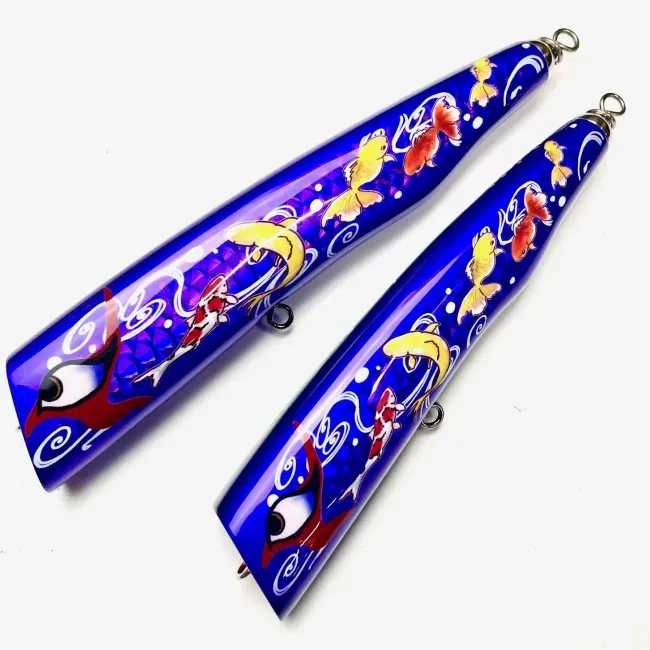
Kabuki Diving Poppers in 195 mm/80 g and 220 mm/120 g sizes, combining diving, swimming, and powerful popping actions for tuna and GT casting.
The Kabuki Diving Popper showcases the precision and attention to detail associated with premium Japanese lure craftsmanship. Its carefully balanced body combines the smooth swimming action of a diving pencil with the water-grabbing power of a popper. On a steady retrieve, it dives with its head submerged and swims naturally; with a sharp rod movement, it produces a deep popping sound, strong water displacement, and a dense trail of bubbles.
Its refined finish is matched by purposeful performance. The 195 mm, 80 g model balances casting distance with responsive handling, while the 220 mm, 120 g model delivers greater stability in rough seas.
Metal Jigs
Metal jigs are among the most versatile offshore lures. They can be dropped vertically, cast toward feeding fish, or worked through different depths with fast or slow movements.

Bridge DENIRO 350 and 450 g metal jigs, designed for deep-water tuna jigging with a streamlined profile and high-flash finishes.
Long, narrow jigs generally suit faster presentations, while wider or asymmetrical designs often produce a slower, fluttering fall. Jigging is widely used for species including yellowtail, amberjack, tuna, and other predatory fish.
Minnows
Saltwater minnows imitate small baitfish with a controlled wobbling or rolling action. Most have a diving lip that determines their swimming depth.
They are useful when fish are feeding on smaller prey or when a steady, predictable presentation produces better results than an aggressive surface action. Heavy-duty offshore models should have strong internal construction and hardware suitable for the target species.
How to Match Lures to Target Species
Tuna
Tuna often respond to stickbaits, poppers, sinking minnows, and metal jigs. Match the lure profile to the baitfish and select a weight that allows you to reach the feeding zone.
When tuna are feeding aggressively at the surface, a floating stickbait or popper can be highly effective. For scattered fish, windy conditions, or deeper activity, a sinking stickbait or metal jig may be easier to present.
Yellowtail
Yellowtail and yellowtail kingfish can be targeted with stickbaits, diving minnows, and metal jigs. Faster retrieves often trigger active fish, while slower jigging presentations may work when fish are holding around reefs or deeper structure.
Choose tackle with enough power to control the fish before it reaches rocks, wrecks, or other line-cutting structure.
Amberjack
Amberjack commonly hold near reefs, wrecks, ledges, and deep offshore structure. Metal jigs are a reliable choice because they reach depth quickly and allow anglers to work the strike zone vertically.
Use heavier tackle when fishing close to structure. Amberjack are powerful fighters and will quickly take advantage of a rod, reel, leader, or hook that is too light.
Giant Trevally
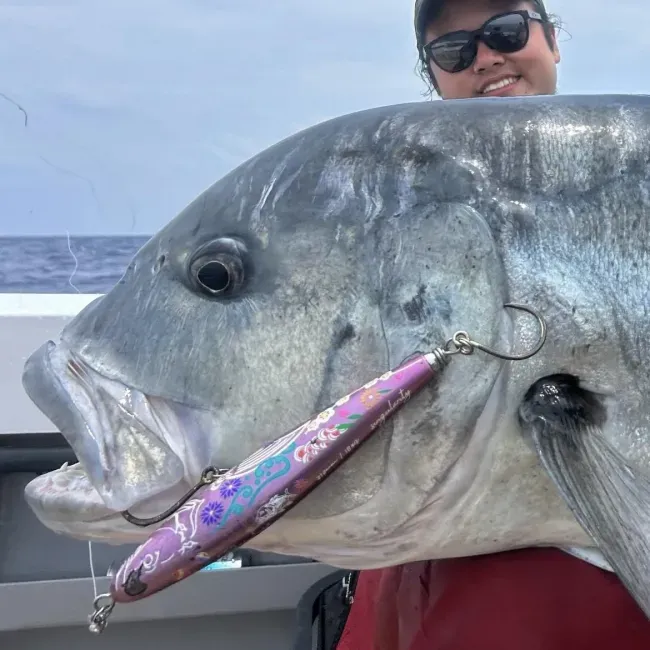
A giant trevally caught on the 210 mm, 185 g Singularity Thinking Pencil, a fast-sinking lure designed to reach GT holding below the surface.
Giant trevally, or GT, are commonly targeted with large poppers, stickbaits, and heavy sinking pencils. When fish are holding below the surface, the Singularity Thinking Pencil offers a strong alternative to topwater lures.
At 210 mm and 185 g, it sinks quickly and can be worked with fast retrieves, long jerks, or short sharp movements. Its weight also improves casting distance and control in wind or current. Because GT places extreme pressure on tackle, rods, reels, line, leaders, hooks, and terminal components must be matched for heavy drag.
Mahi-Mahi
Mahi-mahi often respond to smaller stickbaits, minnows, poppers, and compact metal jigs. Bright colors can be productive, especially around floating debris, weed lines, current boundaries, and fish-aggregating structure.
Because mahi-mahi frequently change direction and jump during the fight, secure hooks and a properly adjusted drag are essential.
How to Choose Tuna Casting Lures
Choose tuna casting lures that match the bait, reach the fish, and remain easy to control. Lure weight should suit the rod and provide enough casting distance, while the profile should resemble local baitfish. Adjust the action according to fish behavior, from aggressive sweeps to slower retrieves with pauses.
Floating vs. Sinking Stickbaits
Floating stickbaits work well near the surface and are easy to pause around feeding fish. Sinking models offer greater distance and allow anglers to target deeper water. Carry both, as tuna may move through different depths as conditions change.
When to Use Poppers
Use poppers when strong surface attraction is needed, especially in rough water or around scattered bait. When tuna follow without striking, switch to a quieter stickbait with a more natural swimming action.
Recommended Features
At the end of the day, you want to look for tuna casting lures with:
- Strong through-wire or reinforced internal construction
- Heavy-duty hook and split-ring attachment points
- Stable flight for long-distance casting
- Balanced swimming action at different retrieve speeds
- Durable saltwater-resistant finishes
- Hardware appropriate for the expected fish size
Hooks and split rings should be selected as part of the complete setup. Oversized hardware adds strength but may reduce the lure’s natural action, so balance is important.
Why Japanese Tuna Lures Stand Out
Many premium Japanese tuna lures are developed around precise balance, controlled swimming action, and demanding offshore fishing conditions. Small changes in weight distribution, body shape, and water resistance can affect casting stability and how naturally a lure moves.
Japanese lure makers also offer a wide variety of specialized models. Anglers can choose between floating and sinking designs, subtle and aggressive actions, compact baitfish profiles, and large lures intended for powerful pelagic species.
HEAD & TAIL carries specialist Japanese tackle for tuna, yellowtail, amberjack, GT, and other offshore targets, including casting rods, plugs, jigs, hooks, and rigging components. Its catalog includes products designed specifically for tuna casting and power jigging rather than general-purpose saltwater fishing.
How to Pick the Right Jigging Fishing Rod
A jigging fishing rod should be selected according to jigging style, jig weight, water depth, current, line class, and target species. A rod that is too soft may struggle to move the jig and a excessively stiff rod can make the lure tiring to work and reduce control during the fight. Start with the manufacturer’s recommended jig and line ratings as they provide a better guide than choosing a rod based only on the size of fish you hope to catch.
Different Jigging Styles
Speed Jigging
Speed jigging uses quick rod movements and rapid reel turns to imitate escaping baitfish. It is effective for active tuna, yellowtail, amberjack, and other fast-moving predators.
A speed-jigging rod usually needs enough responsiveness to accelerate the jig while remaining comfortable during repeated movements. The reel should have a smooth drag and a gear ratio that supports the intended retrieve.
Slow-Pitch Jigging
Slow-pitch jigging uses the rod’s rebound to lift the jig before allowing it to fall, slide, or flutter. Many strikes occur as the jig falls.
A slow-pitch rod is not simply a light conventional jigging rod. It is designed to control the jig’s movement with measured input. When targeting very large fish, anglers must still consider the rod’s lifting limits and use the reel, drag, and boat positioning effectively during the fight.
Rod Length
Shorter jigging rods are generally easier to operate vertically and place less leverage on the angler during prolonged fights. Longer rods can move more line and may offer additional control when casting or working a jig away from the boat.
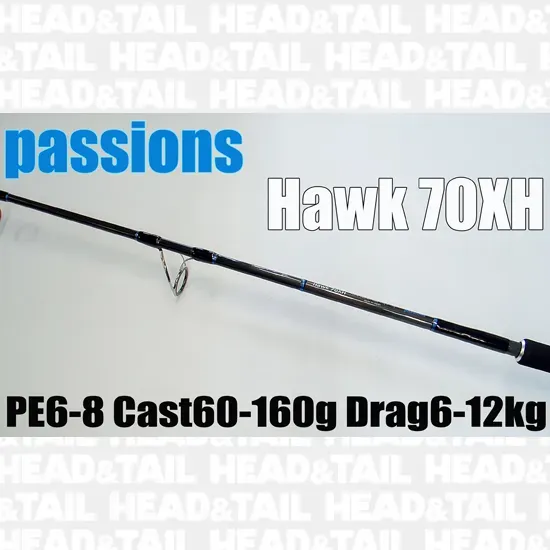
Passions Hawk 70XH, a 7-foot PE #6–8 casting rod engineered for 100 kg-class Atlantic bluefin tuna.
For monster tuna, rod power should provide sustained pressure without exhausting the angler. The Passions Hawk 70XH is a 7-foot, PE #6–8 casting rod developed for Atlantic bluefin tuna exceeding 100 kg. Its deep, progressive bend maintains pressure with a 6–12 kg drag range, while efficient recovery helps anglers control powerful fish during long fights.
Power
Rod power should match jig weight, line class, drag pressure, and target species. More power is not always better; the rod must still load properly and control the jig. Tuna and amberjack require a strong backbone, while lighter setups may offer better lure control for yellowtail and mahi-mahi.
Action
Rod action describes where the blank bends. Fast-action rods flex mainly near the tip, while moderate or parabolic rods bend deeper. A responsive tip helps animate the jig, while a deeper bend absorbs sudden runs and reduces fatigue. Choose action according to jigging style and technique.
Matching Rods with Reels and Line
Balance the rod with a suitable reel, braided line, and abrasion-resistant leader. Line capacity should account for fishing depth, current, and long runs. Keep drag pressure within the safe limits of every component, including the rod, knots, hooks, and terminal tackle.
Conclusion
Choosing the right saltwater lure depends on the target species, bait size, depth, current, and feeding behavior. Poppers and stickbaits cover the surface, minnows provide a controlled baitfish action, and metal jigs reach fish holding deeper in the water column.
For tuna casting lures, carry both floating and sinking options and prioritize strong construction, stable casting, and reliable hardware. Select a jigging fishing rod by matching its length, power, action, and ratings to your preferred technique.

ZenMarket helps international anglers purchase fishing tackle and other products from Japanese online stores.
HEAD & TAIL offers premium Japanese lures, rods, reels, hooks, and rigging components for building a balanced offshore setup. International anglers can use ZenMarket to order these fishing supplies, along with many other types of products from Japanese online stores. Create a ZenMarket account, open the desired product page on HEAD & TAIL, copy its URL, and paste it into the ZenMarket search bar. Add the item details and quantity to your cart; ZenMarket then confirms its price and availability, purchases it from the seller, receives it at its Japanese warehouse, and arranges international delivery after you select and pay for shipping.
Don't have a ZenMarket account yet?
Sign up