Japanese craftsmanship is amazing and diverse, and one of its brightest expressions is Edo Kiriko glass. This traditional technique is used by Japanese artisans to create stunning whiskey glasses and sake cups with intricate carved patterns. Why is Japanese glass so highly valued around the world, and how can you buy original Edo Kiriko glasses from Japan? Find out in our helpful guide.
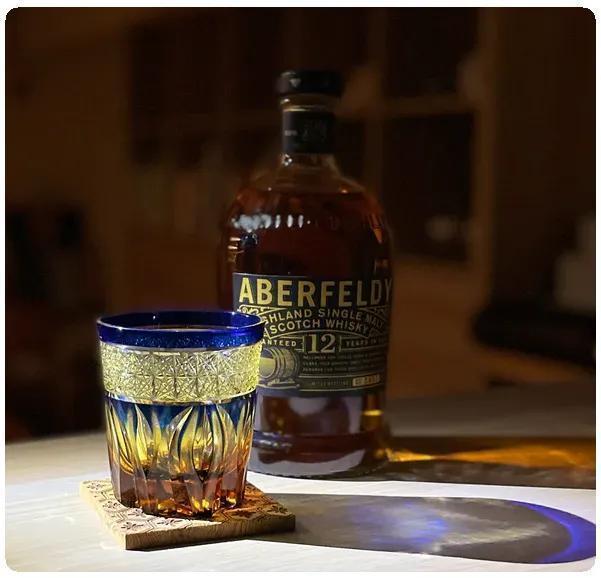
If you have a favorite tableware set and have ever held a glass with a carved pattern, you already know how refined it can be. Edo Kiriko Japanese glassware takes the beauty of cut crystal glasses to the highest level, combining Japan’s remarkable traditions with the finest Western glassmaking techniques.
These elegant glasses, made from colored and clear glass with mesmerizing patterns, are perfect for enjoying premium alcoholic beverages. If you are looking for a Japanese whiskey glass, you should definitely pay attention to Edo Kiriko. We will also tell you where to buy authentic Japanese glassware.
What is Edo Kiriko? The legacy of Japanese craftsmen
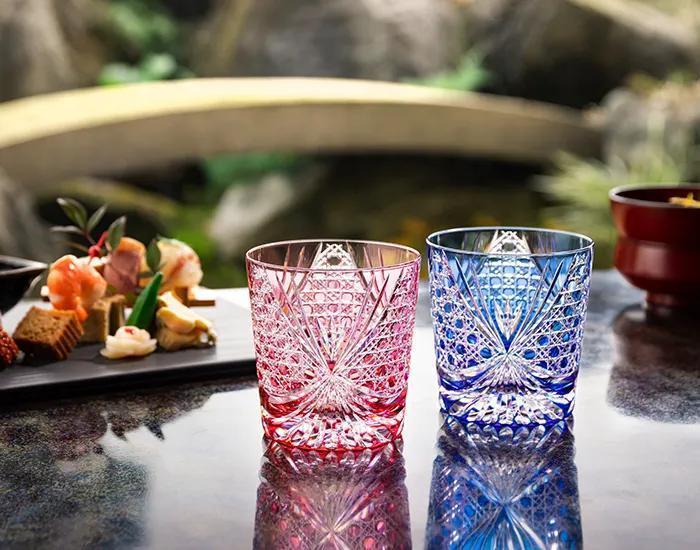
Japanese glass has long been famous for its high quality and elegant appearance, and Edo Kiriko (江戸切子), or “Edo glass cutting” (modern-day Tokyo), is one of the best examples of this. It is a glassmaking technique focused on creating refined crystal glasses and tableware with carved patterns.
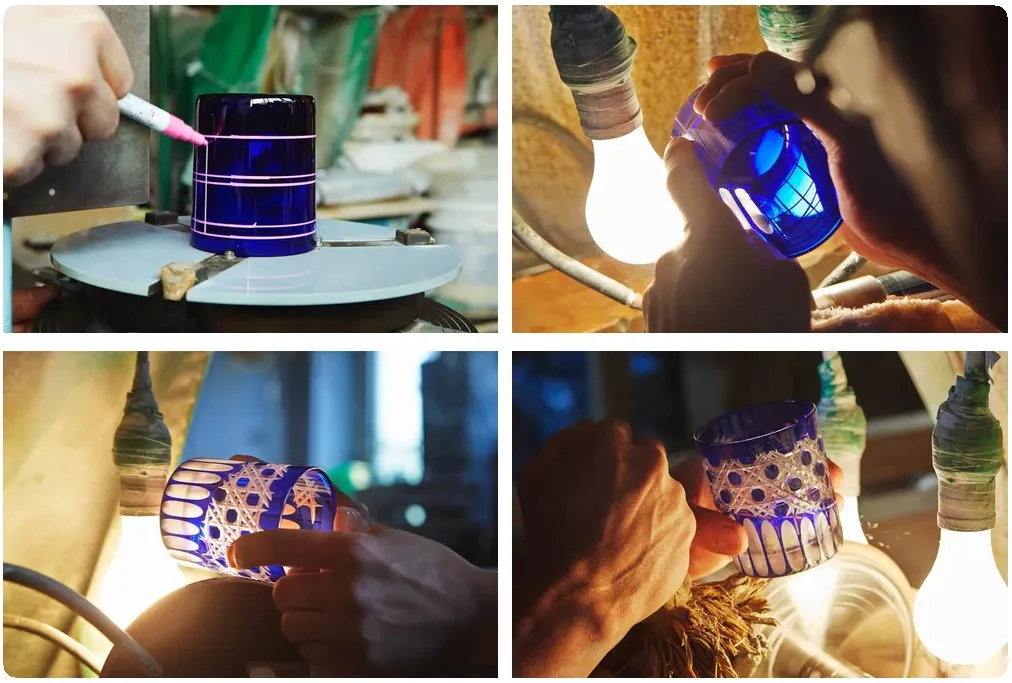
First, the artisan blows the glass into shape, after which lines and dots are marked on it, these serve as guides for cutting an intricate glass design. Today, Edo Kiriko is recognized among Japan’s traditional crafts and is considered one of the most prestigious and sought-after types of Japanese glass.
The Edo Kiriko Japanese whiskey glass is handmade in several stages. First, rough lines are cut into the glass using a grinding stone, water, and sand. Then, the ornament is refined in detail using a smaller metal or diamond wheel and abrasive powder. The more skilled the artisan, the more exquisite the pattern, a delicate handwork that only the very best can perform.
That is why Edo Kiriko Japanese glasses are so expensive, with an average price ranging from 30,000 to 50,000 yen each. The final stage is polishing the pattern, giving it a finished look and ensuring the glass’s perfect clarity.
History of Edo Kiriko
The Edo Kiriko craft first appeared in 1834 in the Japanese city of Edo, now known as Tokyo, and is credited to its founder, the renowned glassblower Kagaya Kyūbei, owner of a glass workshop in the Odenma-chō district. Inspired by crystal tableware from Europe and America, he began making glasses with carved patterns, using a nail file for the work.
In 1853, Commodore Matthew Perry’s squadron arrived in Japan, ending the country’s trade isolation. He was presented with many gifts, including crystal tableware made by Kagaya Kyūbei, and the commodore was delighted by its elegant designs.
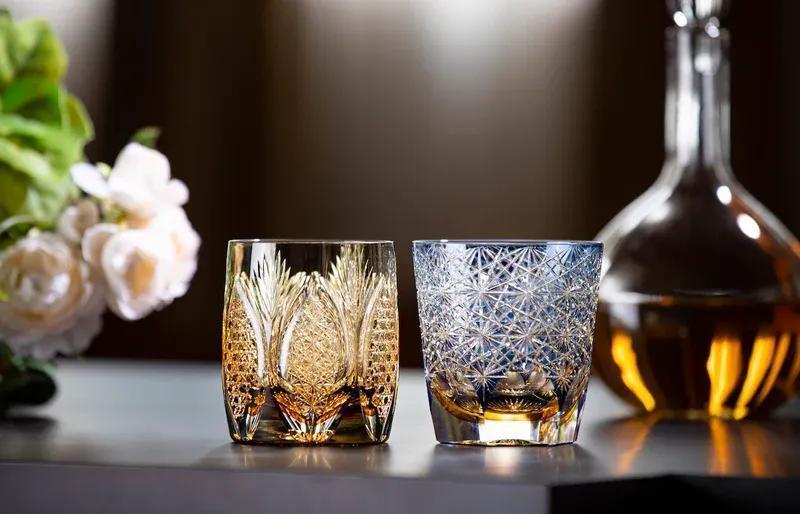
Edo Kiriko glassware differs from other Japanese tableware due to its intricate production techniques and hand-applied patterns. Original glass pieces known as Edo Kiriko are made only by craftsmen in Tokyo.
Originally, Edo Kiriko tableware was made exclusively from transparent glass, which became the classic style for cups and glasses. But after World War II, colored glass began to be used for decoration, influenced by the Satsuma Kiriko craft from Kagoshima. In such cases, a cup is often made from colored glass and then covered with a layer of clear glass. This technique is called kise garasu, or overlay glass.
As a result, Edo Kiriko cups today are remarkably diverse: you can find combinations of transparent and colored glass, along with a wide range of hues such as blue, red, amber, purple, and green. Their harmonious patterns beautifully refract light from any angle, casting a captivating shadow. Each design reflects centuries-old traditions of Japanese culture and aesthetics.
The branded carved patterns of Edo Kiriko and their meaning
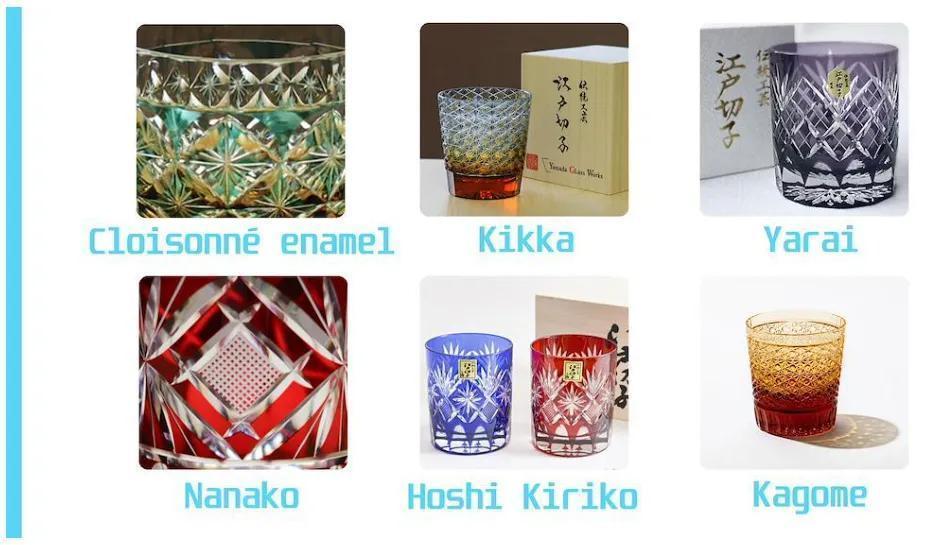
A large part of Edo Kiriko glass’s appeal lies in its stunning patternss, which are more than just precise geometric shapes that captivate the eye. Each motif carries its own meaning, deeply rooted in Japanese culture. When creating their small glass masterpieces, Edo Kiriko artisans draw inspiration from nature and simple objects of Japanese daily life, such as hemp leaves or bamboo fences.
Let’s take a look at the most popular patterns and their meanings:
- Cloisonné enamel (七宝) – this pattern features interlocking circles symbolizing harmony, connection, and good fortune. The name “seven treasures” comes from Buddhism, representing wealth and happiness. Common in decorative arts and Edo Kiriko, it conveys wishes for prosperity and lasting relationships.
- Kikka (菊花), or chrysanthemum – a very important symbol in Japan’s history, as this flower is depicted on the seal of the Emperor of Japan. The chrysanthemum with 16 petals is associated with high social status and is also believed to symbolize nobility, longevity, and loyalty;
- Yarai (矢来) – a bamboo fence. This pattern combines thick and thin lines to form a diamond-shaped design reminiscent of a bamboo fence. It is believed to ward off evil spirits and bring good luck;
- Nanako (魚子) – a traditional Japanese pattern made of closely arranged cells resembling fish roe. It symbolizes high social status, delicate craftsmanship, and prosperity;
- Hoshi-kiriko (星切子) – a star-shaped pattern, often appearing as transparent stars against colored glass, beautifully refracting light. In Japanese culture, it symbolizes hope and clarity;
- Kagome (籠目) – a pattern of hexagons that resembles the openings in woven bamboo baskets. It symbolizes protection and is regarded as a talisman or amulet that wards off misfortune and evil spirits.
Famous Edo Kiriko Brands: Why They’re Popular in Japan
Edo Kiriko glass is very popular in Japan because it combines elegance with centuries-old Japanese cultural traditions. This refined craft transforms a simple glass cup into a true work of art, worthy of taking pride of place in your tableware collection.
The Japanese value not only the exquisite patterns of Edo Kiriko but also the painstaking work of the glassmakers who pour their hearts into their creations. This makes the Edo Kiriko whiskey glass a truly prestigious gift for special occasions, and many of them can even be ordered right away in gift packaging. Let’s take a look at the most popular Edo Kiriko glass brands from Tokyo!
Haku Glass
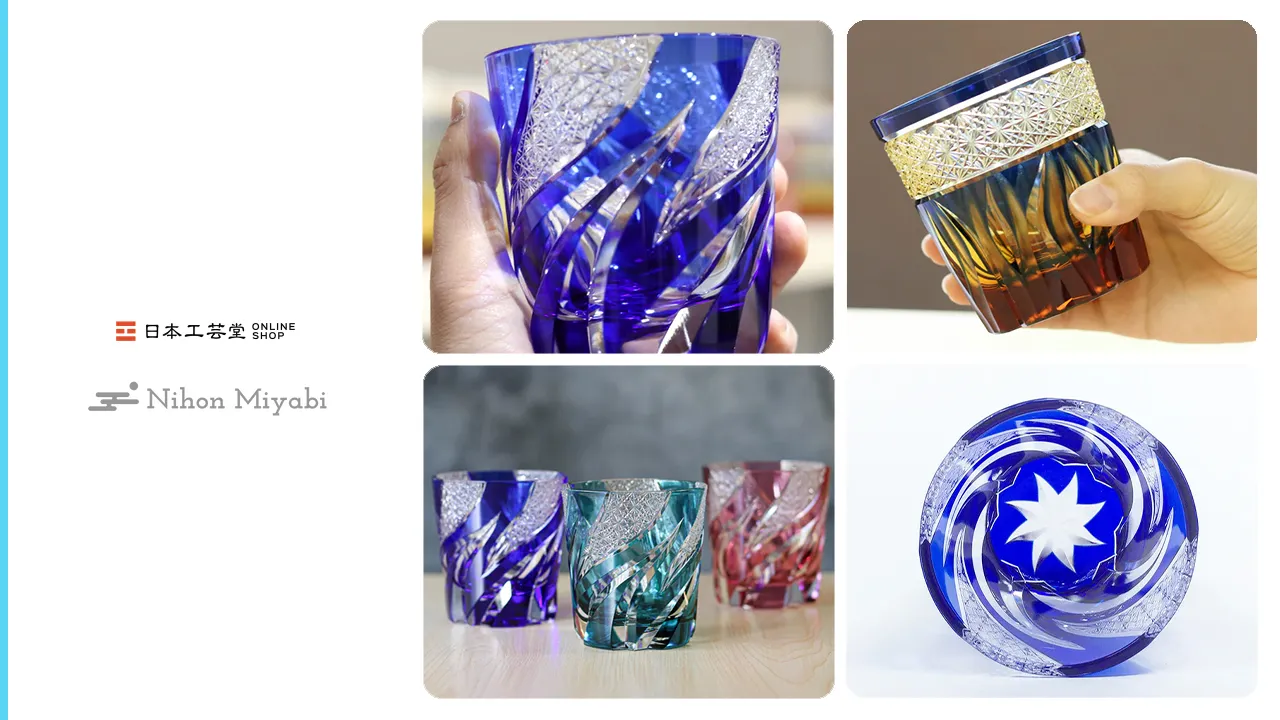
A workshop from the Koto district in Tokyo, owned by Yoshihiro Mitamura. He strives to develop the art of Edo Kiriko, combining tradition with modern trends and experimenting with patterns. An excellent choice for those looking for a unique Japanese whiskey glass!
Buy Haku Glass cups on Japanese Crafts
Kiyohide Glass Kobo
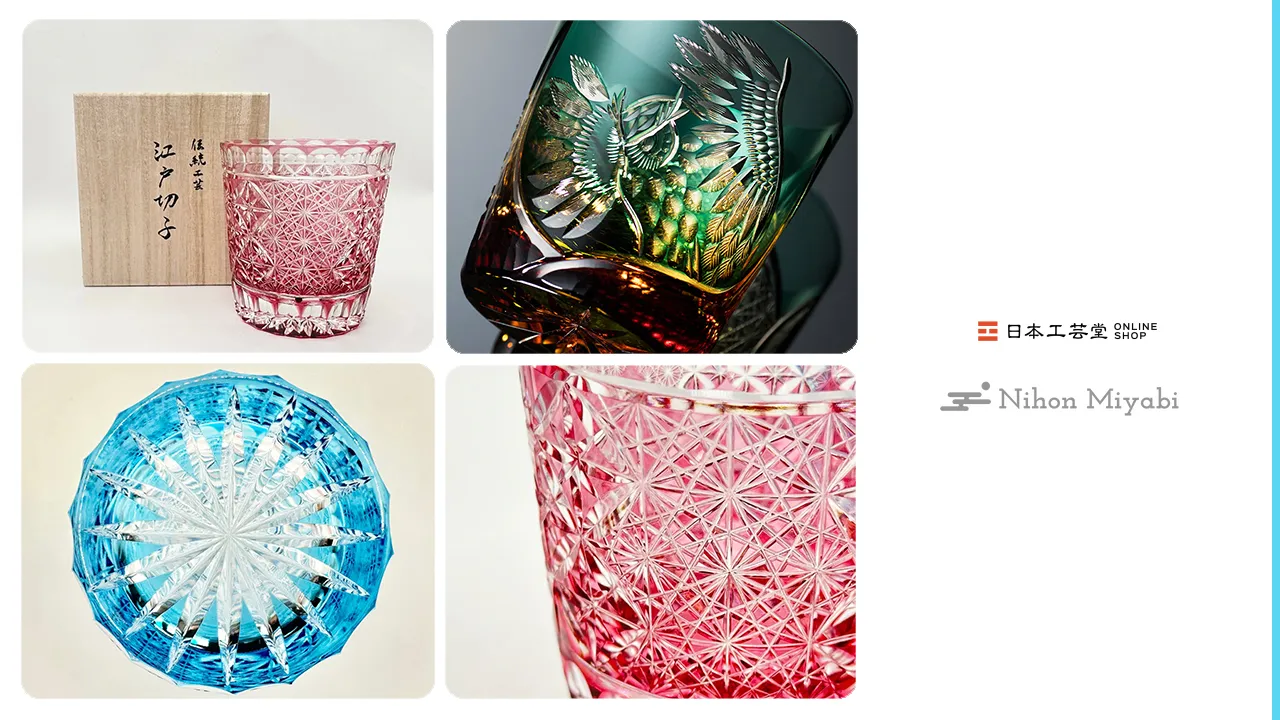
Edo Kiriko Japanese glass is an art that combines elegance and practicality. Master Hidetaka Shimizu says: “Traditional arts are meant for everyday use. There’s no point in them if they’re not used.” Just look at these beautiful Japanese whiskey glasses with sparkling patterns, and you’ll definitely want to pour your favorite drink into them as often as possible!
Buy Kiyohide Glass Kobo glasses on Nihon Miyabi
Yamada Glass
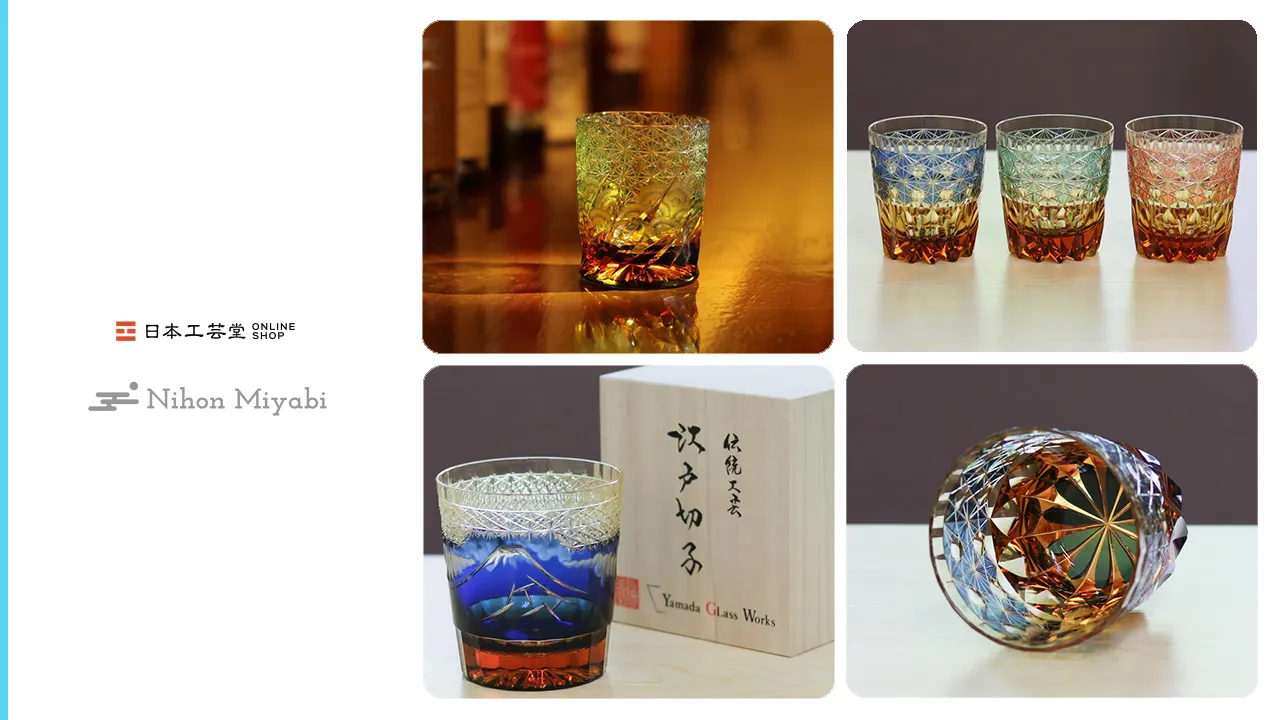
The perfect choice for those seeking a brand with history is the Yamada Glass workshop from the Sumida district in Tokyo, which has been around for over 80 years with three generations of craftsmen having worked there. Their Japanese whiskey glasses are presented in beautiful wooden boxes, making them an excellent option for a premium gift. Original and elegant pattern designs with smooth lines, such as Mount Fuji, together with high quality and a dedication to tradition, are the main strengths of Yamada Glass.
Choose Edo Kiriko glasses from Yamada Glass now
Toa Glass Kogei
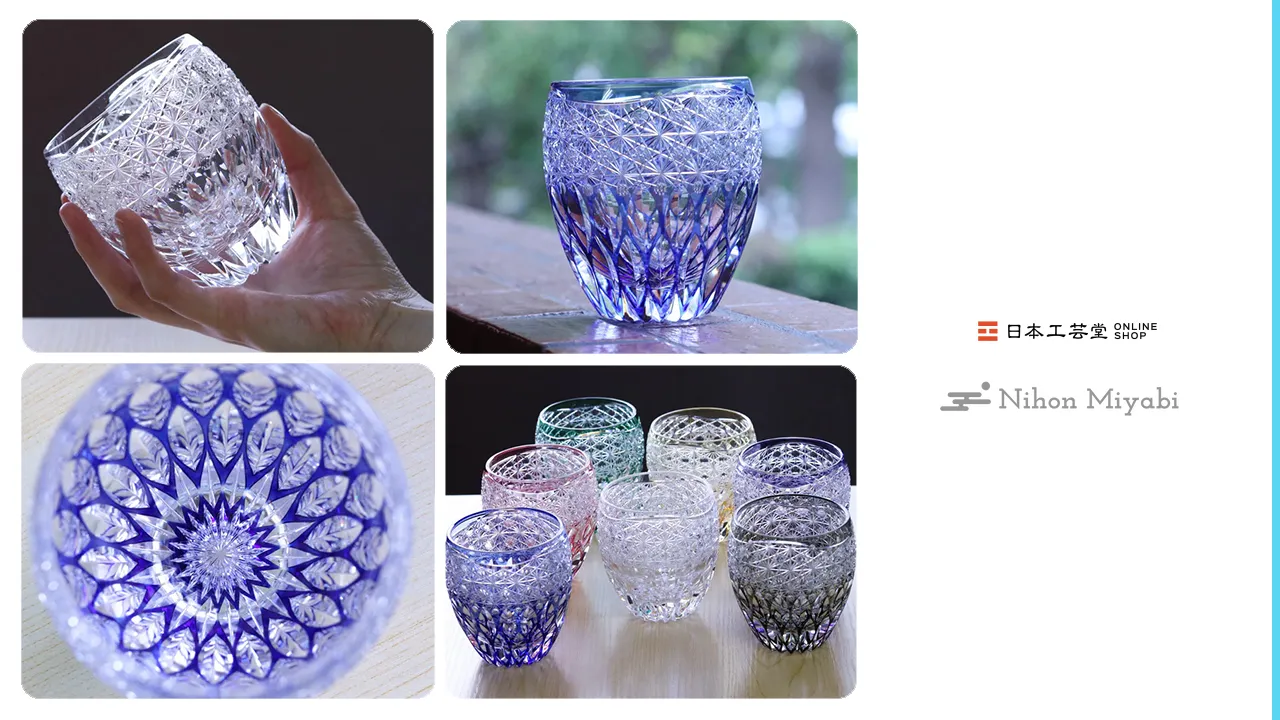
This workshop opened in Tokyo’s Ōta district in 1960, initially making whiskey bottles before switching to the production of Edo Kiriko glassware. Their classic clear-glass designs with carved patterns will appeal to those who want crystal whiskey glasses in a traditional style.
Find Japanese Toa Glass Kogei glass with us
Aoyama Yayoi
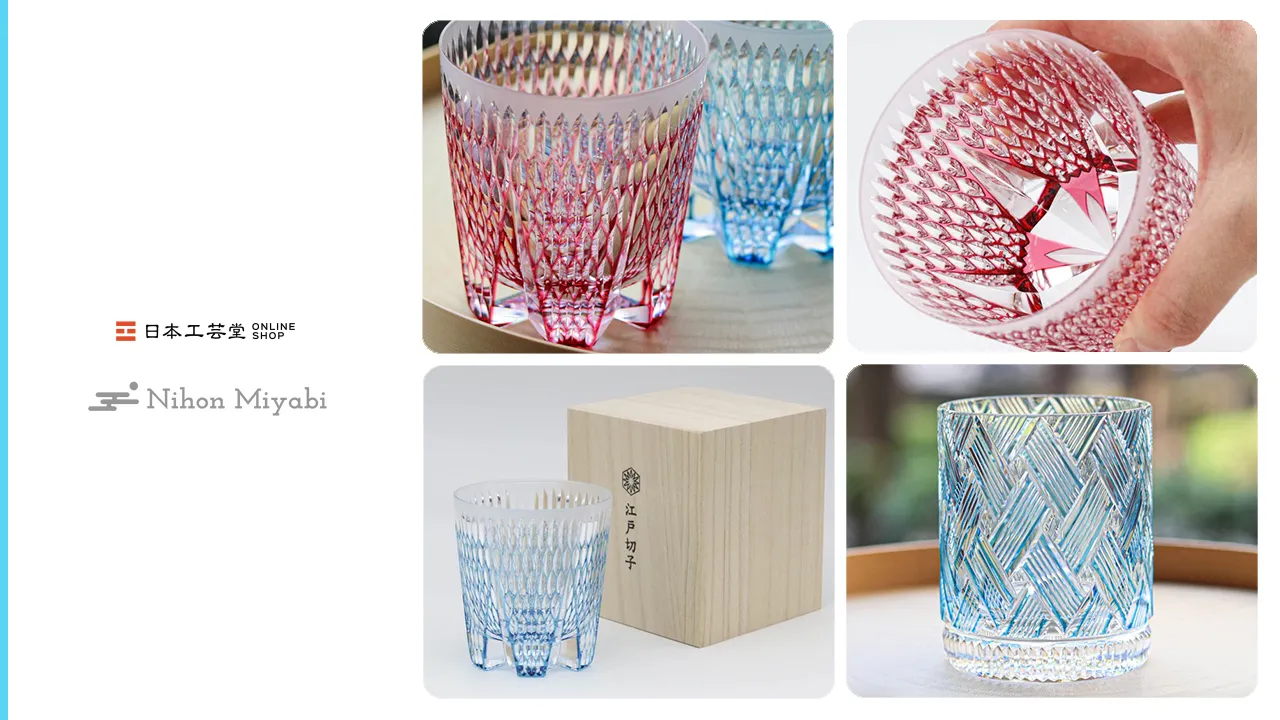
A Japanese student, Aoyama Yayoi, was so captivated by the art of Edo Kiriko that she decided to learn it from scratch under renowned masters. She has now opened her own workshop in Tokyo. Her handmade glasses feature delicate and elegant patterns with perfect polishing, which magically refract light and attract more and more customers.
Purchase Edo Kiriko glasses from Aoyama Yayoi
Mitsuwa Glass Kogei 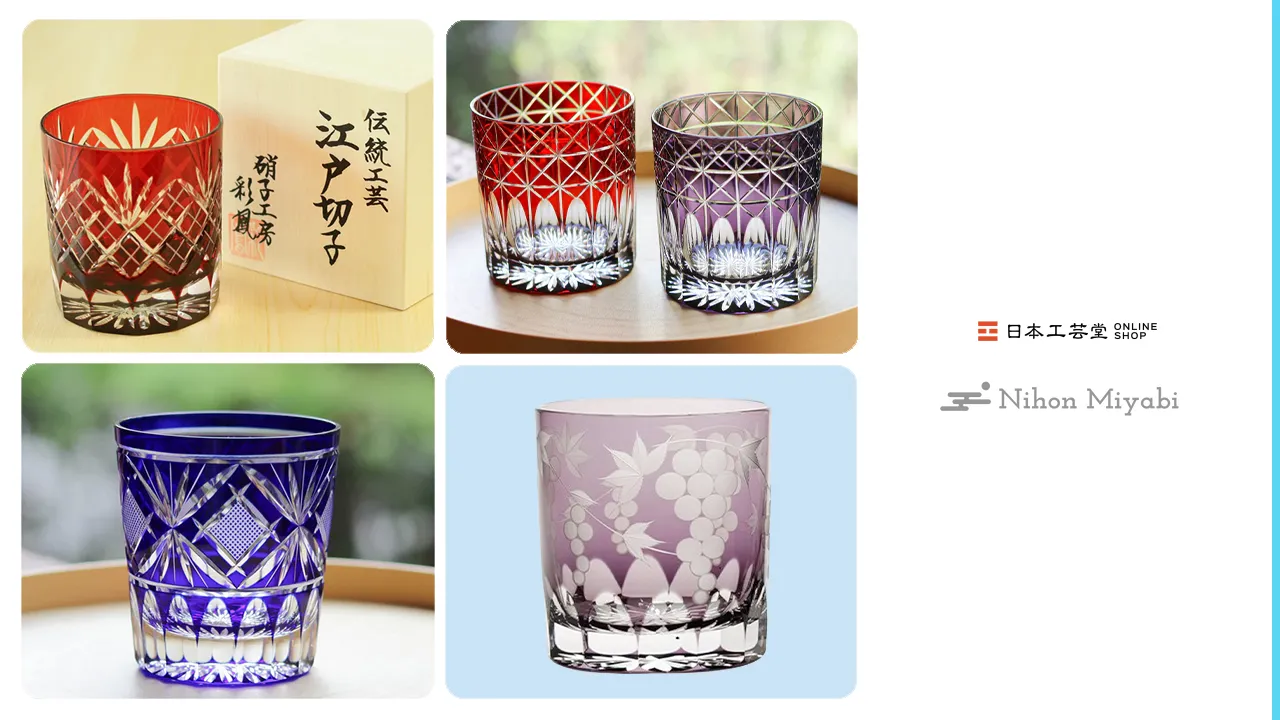
The workshop was opened in 1971 and has since brought together many Edo Kiriko craftsmen who pass their skills on to new generations. In addition to beautiful traditional patterns, their glasses and goblets are decorated with original designs such as grape clusters and flowers.
Buy Japanese glass Mitsuwa Glass Kogei at Japanese Crafts
Edo Kiriko Glasses: Benefits, Usage, and Japanese Whisky Types
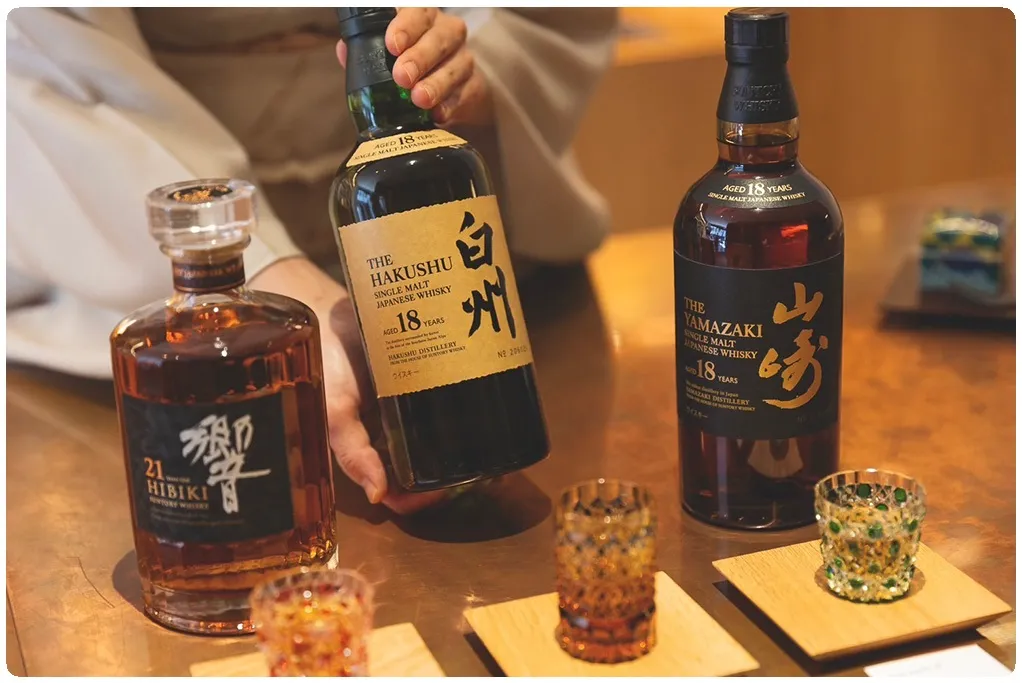
The Japanese Edo Kiriko whiskey glass is the perfect choice for lovers of this fine alcoholic drink. Most often, these are rocks-style glasses made from high-quality crystal, which has a heavy weight and feels pleasant in the hand. While tulip glasses and Glencairns are preferred for tasting whiskey and appreciating all the nuances of its aroma, rock-style glasses are meant for enjoying your favorite drink in comfort.
In Japan, the most expensive whiskeys are served in these glasses, while in Europe the Glencairn remains the preferred choice. If you value well-aged single malt whiskeys, these quality Japanese glassware will perfectly highlight the prestige of fine alcohol.
If you want to drink good Japanese whisky from Edo Kiriko glasses, it’s worth trying the Suntory and Nikka brands. Suntory is known for its single malt whiskies Yamazaki and Hakushu, its grain whisky Chita, and the harmonious blend Hibiki. There are both simpler and more affordable young whiskies from 3 years ago (called Distiller’s Reserve) as well as aged ones.
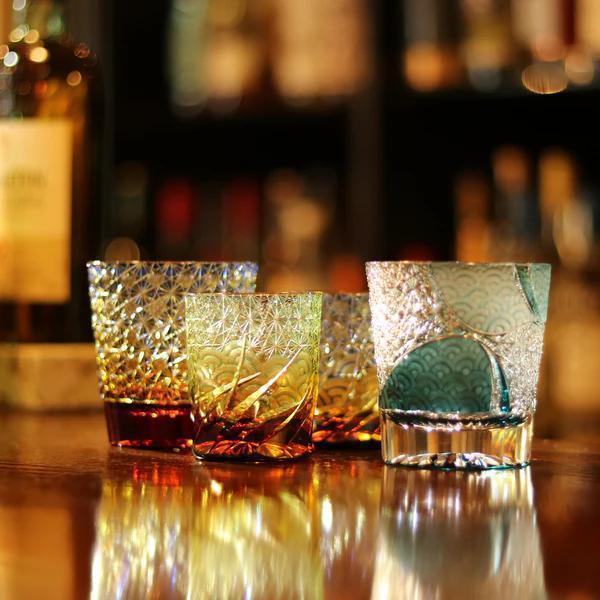
Of course, Japanese Edo Kiriko glasses are also perfect for your favorite Scotch whiskies like the smoky, peaty Laphroaig from the Isle of Islay, the Irish Jameson, or the American Watford Reserve. The first one, by the way, now also belongs to the Japanese brand Suntory, showing how deeply Japan has long been involved in the global whisky industry.
High-quality whiskies priced over $40, such as Nikka Yoichi, are strongly not recommended to be drunk with ice or cocktails. Whisky should be enjoyed slowly, in small sips, neat and unchilled, to fully reveal all the nuances of its taste and aroma. The ideal serving temperature is 18–22°C. This also applies to aged single malt whiskies costing $100 a bottle and up, such as Yamazaki 12, or the elite Yamazaki 18 priced at $600.
The drink has a rich fruity-spicy flavor with sandalwood notes imparted by aging in Japanese mizunara oak casks. An elegant Edo Kiriko Japanese whisky glass will certainly come in handy to fully enjoy this refined taste!
Of course, Edo Kiriko Japanese glassware will also appeal to those who prefer simpler whiskies. Originally, rocks glasses were created to make it easy to enjoy whiskey with ice or to mix cocktails, such as an Old Fashioned. For this, affordable Japanese blends like Suntory Toki or Nikka Days are ideal, since they are the kind of whiskies you can enjoy even when diluted with cola.
Where to buy original Japanese Edo Kiriko whiskey glasses
Since Edo Kiriko art originated in the city of Edo (Tokyo), only glasses made by local craftsmen can be considered authentic. To be sure you’re buying the real thing and avoiding counterfeits, it’s important to purchase only from trusted sellers.
The recommended ZenMarket stores – Japanese Crafts and Nihon Miyabi – are exactly such sellers. There, you will find not only a wide selection of Japanese Edo Kiriko glassware, but also many other items of traditional Japanese craftsmanship, from tableware to home décor.
Japanese Crafts
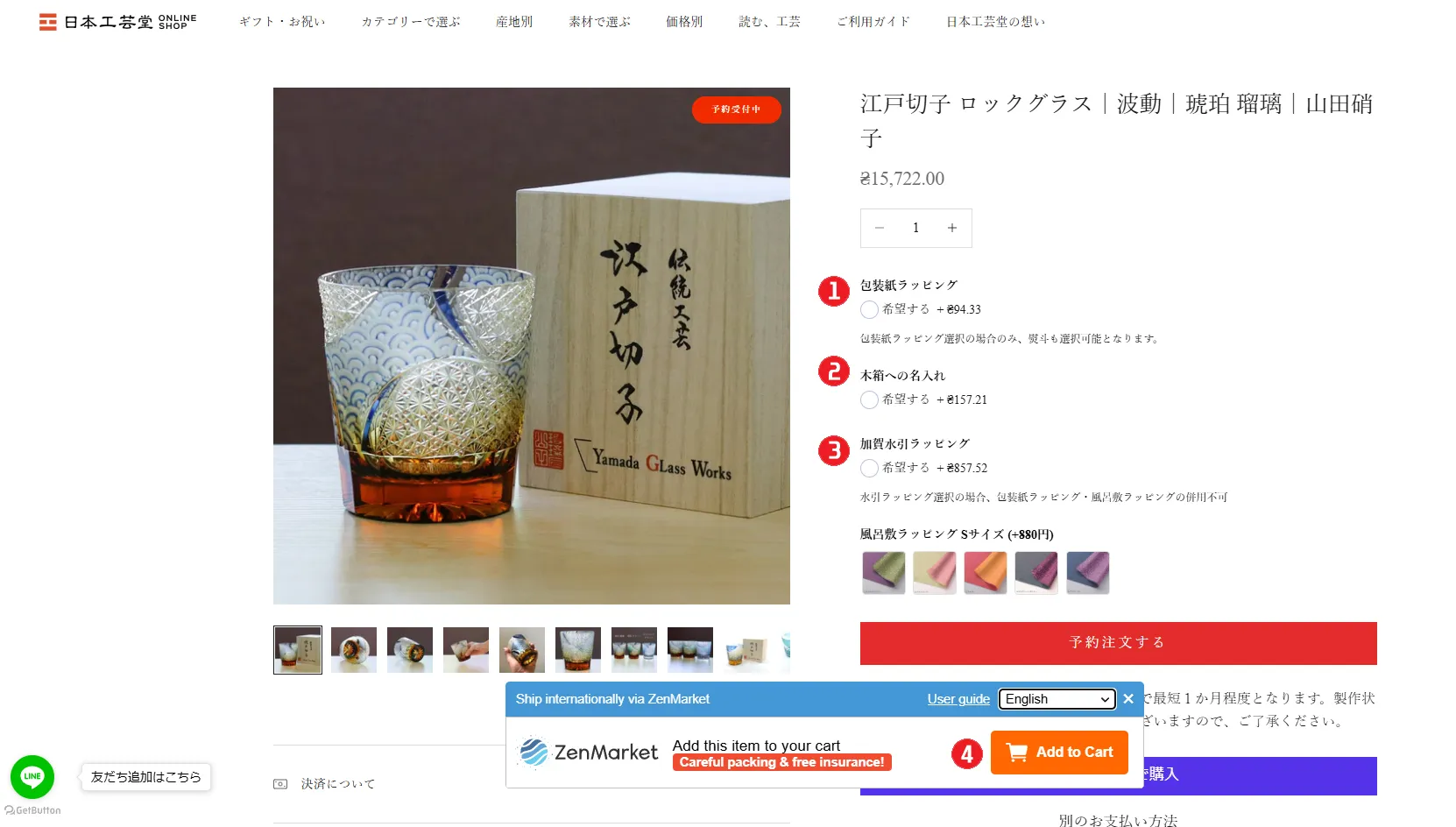
You won’t find a better place to buy an authentic Japanese whiskey glass. To do so, simply follow the link to the Edo Kiriko section on Japanese Crafts to see the store’s full range. You can read about the history of this craft, and by scrolling down the page, you’ll find a wide variety of whiskey glasses and sake cups. Here’s a brief guide to the Japanese Crafts store:
- 包装紙ラッピング (wrapping paper) – to additionally wrap the product in paper packaging.
- 木箱への名入れ (name engraving onto a wooden box) – to make an engraving of a name of your choice on the wooden box for the glass. If you choose this option, additionally specify the desired name in the ZenMarket wishes window when confirming the purchase.
- 加賀水引ラッピング (kaga mizuhiki wrapping) – to wrap a glass in traditional Japanese paper packaging with Kaga Mizuhiki decorations. If you are buying an Edo Kiriko glass as an important gift, this will make it even more presentable.
- "Add to Cart" – click this button in the ZenMarket window to add the Edo Kiriko glass to the cart on our website.
Nihon Miyabi
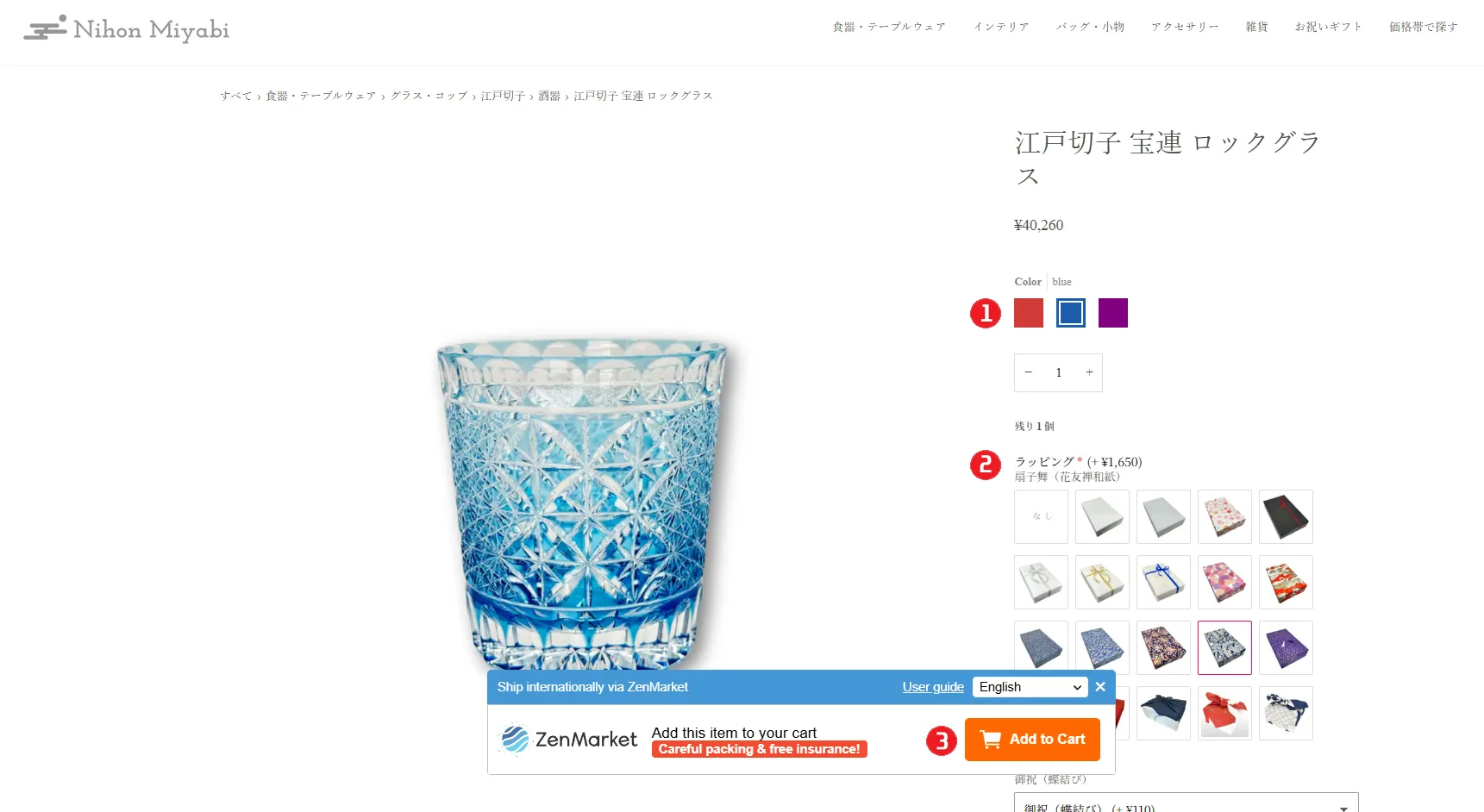
Click on this link to go to the Edo Kiriko glassware section on Nihon Miyabi. In this recommended store, you will not only find elegant Japanese whiskey glasses, but also a huge selection of other high-quality handmade Japanese tableware. Here's a brief shopping guide:
- Color – glass color selection. Simply click on the desired square before adding the item to the cart;
- ラッピング (wrapping) – paper wrapping. Here you can similarly choose the gift packaging you like. If you select the first square with the word なし (no wrapping), the item will be without paper wrapping.
- "Add to Cart" – click this button to add the Edo Kiriko glass to your ZenMarket cart.
💡 Also read: How to buy from Recommended Stores?
Edo Kiriko is a true Japanese work of art. Shimmering in glass with patterns of incredible beauty, your favorite whiskey will bring you even greater enjoyment. Edo Kiriko Japanese whiskey glasses are also perfect as a prestigious gift. Let’s choose them together!
Have you signed up for ZenMarket yet?
ZenMarket is the place to get your hands on goods directly from Japan!
Sign up