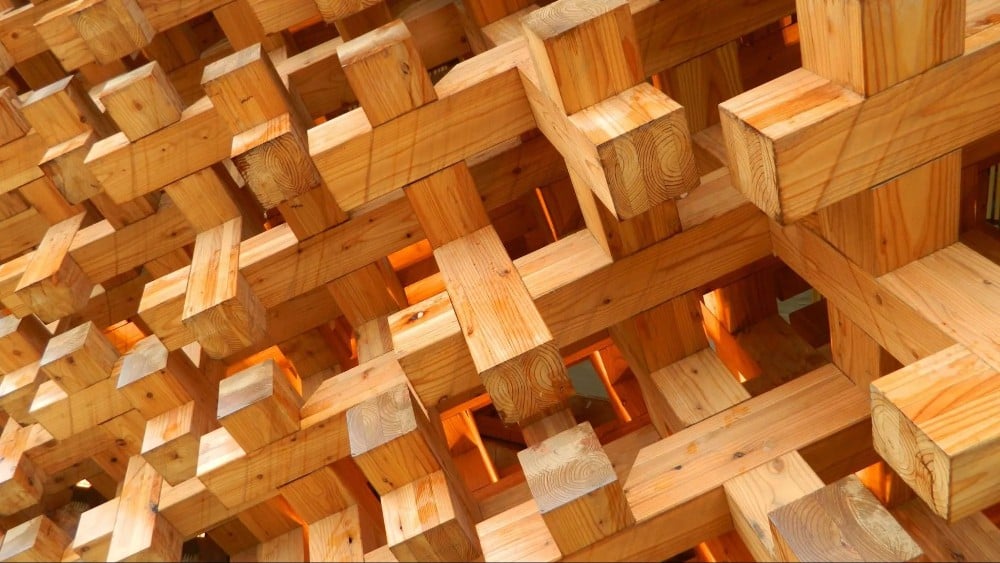
Image credit.
Whether you are an experienced furniture maker or a hobbyist setting up a new workshop, the moment you first pick up a Japanese wood saw can come as an epiphany. For those accustomed to Western hand tools, the design of a Japanese wood saw (nokogiri) can feel beautifully minimalist, almost deceptively simple. Yet, beneath that clean silhouette lies a masterfully engineered tool that flips the physics of Western woodcraft completely on its head.
While Western and Japanese woodworking tools ultimately share the exact same goal – shaping raw timber into beautiful, functional objects – the ways they achieve this could not be more different. From the direction of the cutting stroke to the molecular composition of the steel, the Japanese approach offers woodworkers an entirely different experience at the workbench.
If you have ever wondered what sets Japanese hand tools apart, how their unique engineering benefits the maker, or which specific models deserve a place in your collection, this guide will break down the essential mechanics and philosophy of Japanese wood saws to help you choose the perfect match for your next woodworking project.
What Makes Japanese Wood Saws Different?
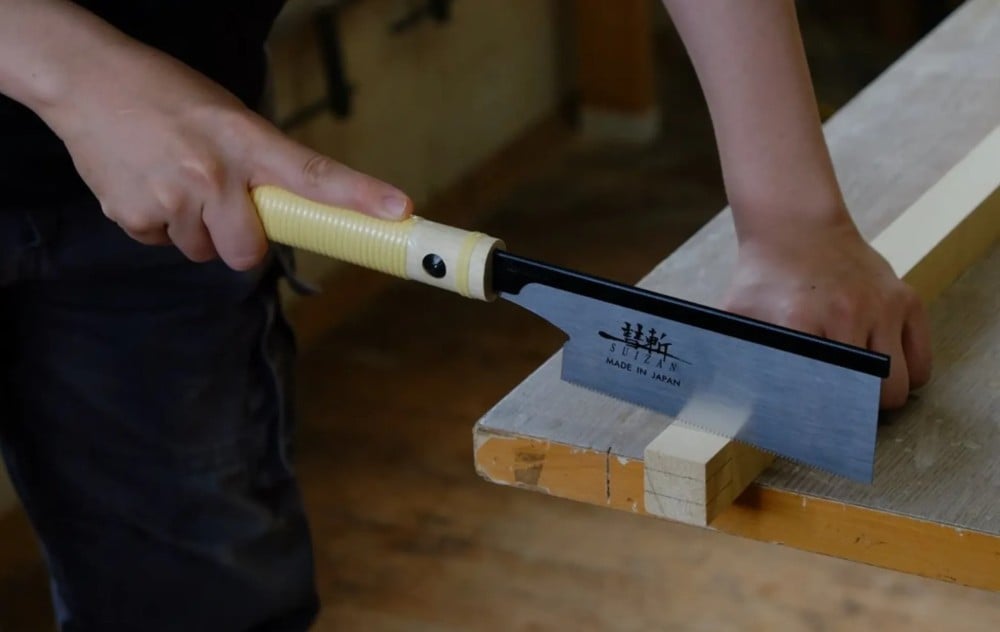
While Western and Japanese wood saws share the same fundamental purpose, they approach the task from totally opposite directions. Quite literally!
Indeed, whereas Western saws cut on the push stroke, Japanese saws cut exclusively on the pull. And when you pull a saw, the blade is placed under tension, which keeps it naturally straight. But the blade of a Western saw is compressed by the pushing action, which risks buckling it. And as pushing relies heavily on the core and back muscles, it’s also much more tiring for the user. In short, Japanese wood saws are kinder to both the craftsman and the tool.
Because a pull-action saw doesn't need to resist buckling, Japanese saw blades can be made incredibly thin – often half the thickness of a Western equivalent. As a result, the "kerf" (the width of the cut left by the blade) is significantly narrower. This means you remove far less wood material, resulting in faster cuts requiring less physical energy.
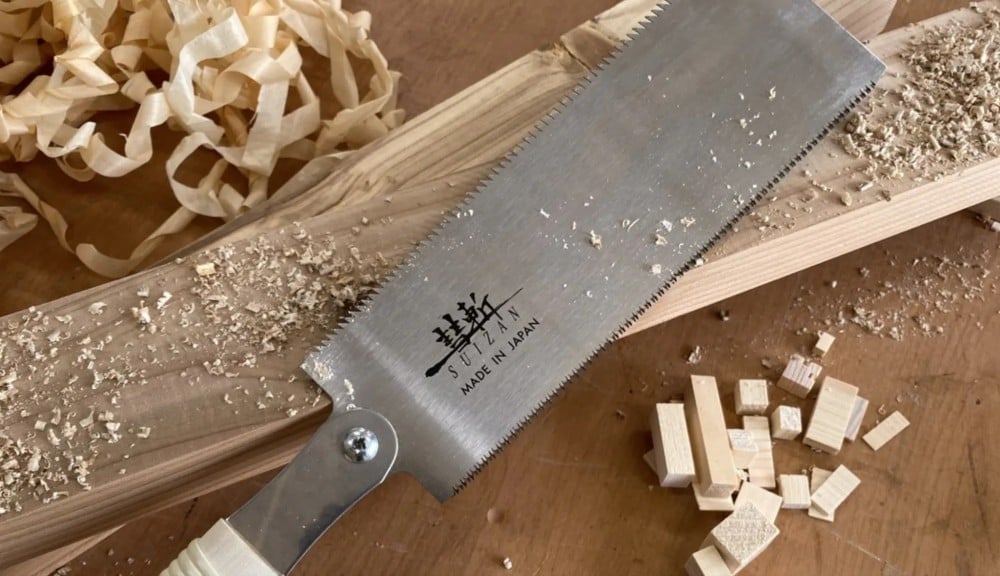
Japanese saw teeth are long, slender, and feature up to three or four distinct cutting bevels per tooth; by contrast Western saw teeth are typically simpler triangular points with two bevels.
Additionally, most modern Japanese saws feature "impulse hardened" tooth tips. What this means is that the teeth are heated by an ultra-high frequency current for a fraction of a second, making them incredibly sharp and long-lasting. Meanwhile, the spaces between Japanese saw teeth are specifically engineered to remove fine, powdery dust from the kerf before it binds the blade.
Western saw handles feature a distinct D-shape or pistol grip – today often made of plastic – that locks the wrist into a specific angle. Japanese handles, meanwhile, are typically long, straight, and made of wood. They are meant to be held with either one or both hands, allowing the user to guide the cut with their entire body. Furthermore, the straight handle of a Japanese wood saw is typically as long as its blade, and is designed to keep your hand, wrist, arm, and the blade perfectly aligned on a single plane – offering an unobstructed view of the cut line.
Why Choose Japanese Hand Tools for Your Workshop
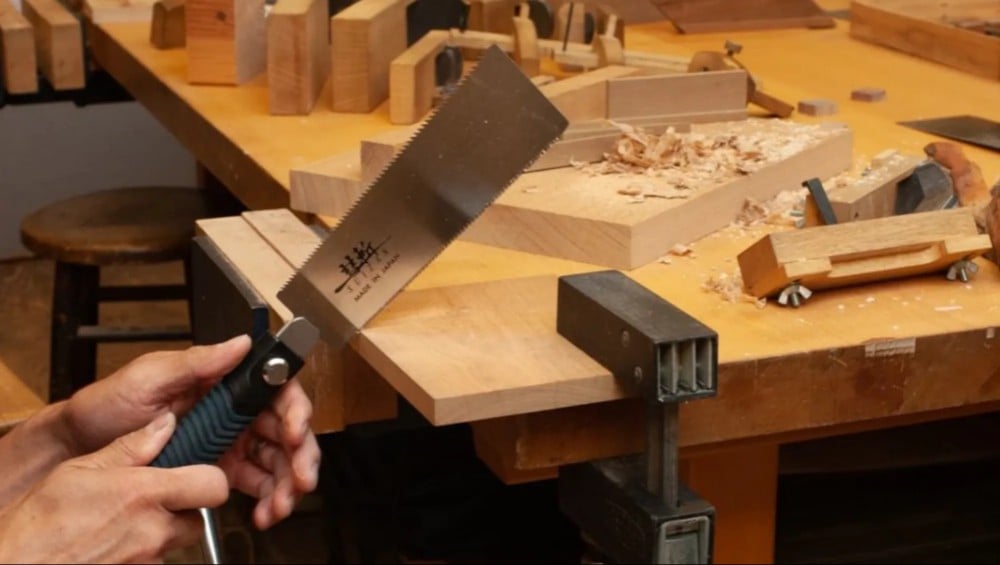
There’s a lot more to Japanese hand tools than just saws, and in recent years Japanese woodworking tools in general have achieved almost legendary status among serious craftspeople the world over. For Japanese hand tool purists, the main appeal is that these implements are designed following a completely different tool-making philosophy to those in the West.
A Japanese hand tool is almost viewed as a life-partner. It wears down slowly in sync with your woodworking career, growing into your hands over time. Yes, traditionally-made Japanese tools require regular maintenance, but they are also capable of being completely refurbished and resharpened for decades.
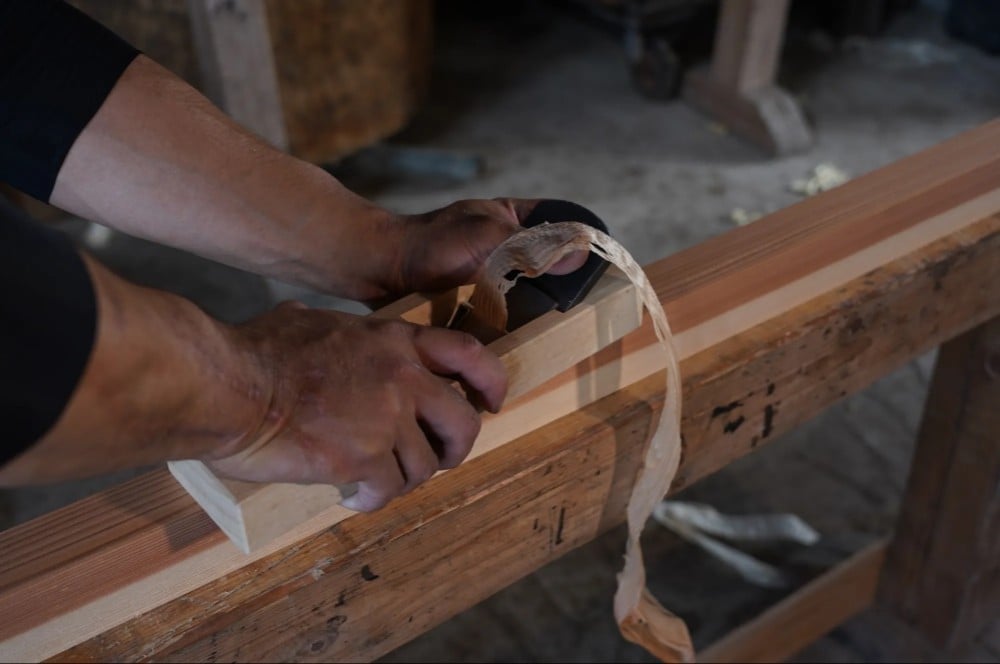
What’s more, the ergonomics of Japanese woodworking tools are rooted in precision. Take Japanese wood planes for example; as with Japanese saws, Japanese planes are pulled toward the body rather than pushed away from it, providing much greater accuracy and improved tactile feedback from the wood itself.
Meanwhile, another major draw of Japanese hand tools is their durability. Most modern Western tools are typically stamped out of a single piece of steel. But high-end Japanese tools are forged by laminating two completely different types of metal together.
The cutting edge of a Japanese wood saw is often made of high-carbon steel that is hardened to a level far beyond its Western counterpart. This gives the saw a razor-like edge that stays sharp much longer. But because ultra-hard steel is brittle and would snap under a hammer blow, this layer is then forge-welded onto a thick backing of soft, malleable iron – which acts as a shock absorber and gives the tool greater structural integrity. Win/win.
There are of course many other reasons why Japanese woodworking tools are so popular, but essentially it comes down to a long history of woodcraft expertise, coupled with the intelligent, innovative, and highly practical approach to design for which the nation is justifiably famous.
How to Choose the Right Japanese Wood Saw for Your Project
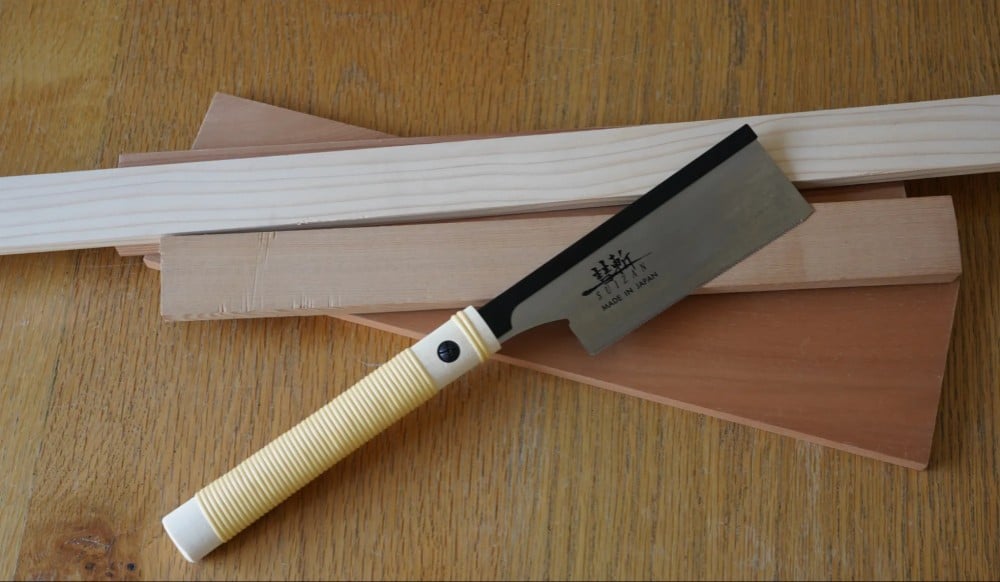
There are a variety of different Japanese wood saws available to the curious furniture-maker or woodworking enthusiast. Let’s take a look at the main types and their common uses.
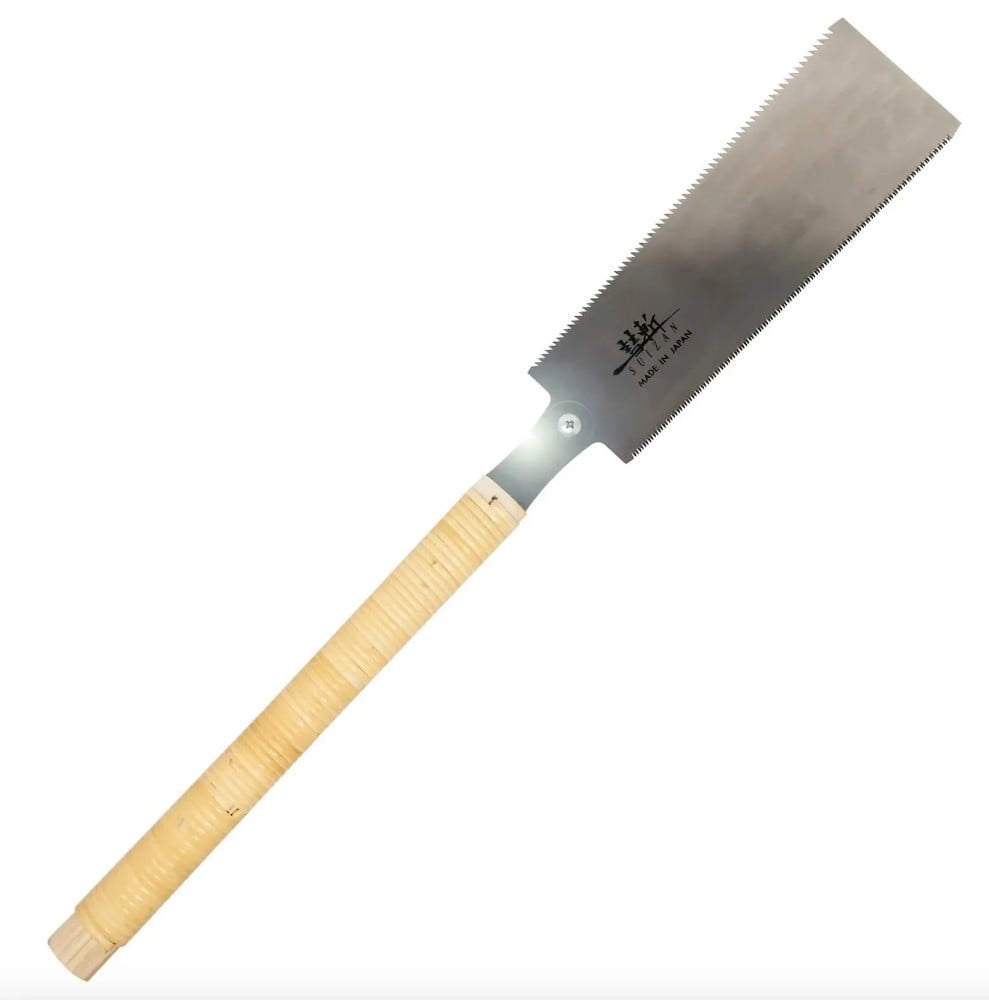
A 240mm Ryoba from Suizan, makers of fine Japanese wood saws.
The Japanese joiner’s workhorse, the Ryoba is a uniquely Japanese design, combining two distinctly different saws into a single tool. One side of a Ryoba blade features fine, tightly spaced teeth optimized for cross-cutting (cutting across the wood grain); the opposite side features larger, progressively spaced teeth designed for ripping (cutting down the length of the grain). And because a Ryoba blade has no rigid spine supporting it, you can cut all the way through a piece of timber – of any thickness or depth.
As a final touch of genius, the blade of a high-quality Ryoba is ground thinner in the center and slightly thicker at the tooth edges, preventing it from binding or pinching inside a deep cut.
When to use: Cutting raw lumber to size and making deep dimensional cuts.
Which to choose: For furniture making, a 240mm Ryoba like the one pictured above hits the sweet spot. It’s nimble enough for smaller parts, but long enough to clear waste efficiently when working with larger panels. For other uses, check out the full Ryoba saw range from Suizan here.
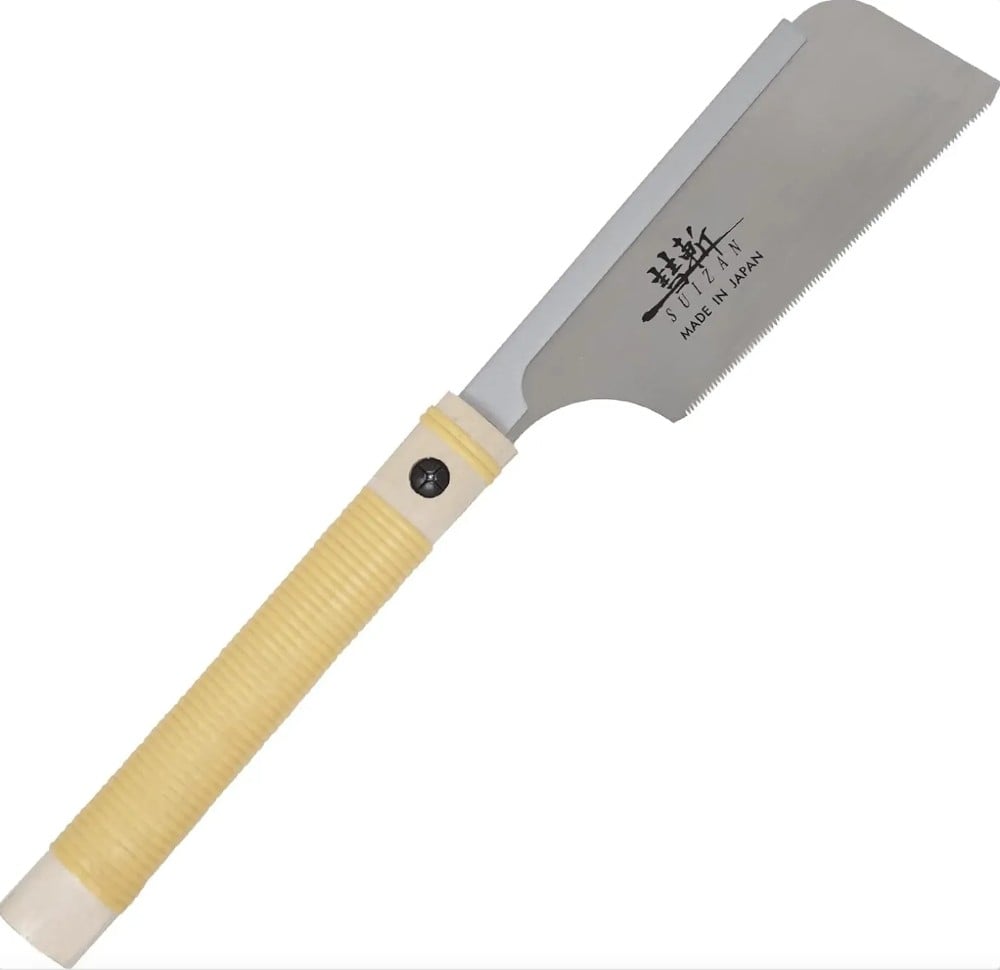
Pictured here is a 150mm mini Dozuki saw, made in Japan by Suizan.
Made for precision work, the Dozuki is the Japanese equivalent of a Western dovetail or tenon saw. Its defining feature is a blade so thin that it would warp instantly…if it wasn’t for the stiff spine affixed to its top edge. This sturdy steel or brass bar holds the blade perfectly straight even under high tension.
The downside to this design, of course, is that the maximum depth-of-cut is limited by the spine; once the spine hits the wood, you can cut no further.
Finally, it’s worth noting that Dozuki saws feature tiny, razor-sharp teeth, which leave a finish so clean and smooth that the cut often looks as though it has already been planed or sanded.
When to use: Cutting dovetails, small joints, and precision tenon cheeks.
Which to choose: Because the Dozuki is specifically designed for precision joinery, it features much tighter tooth spacing. For furniture, look for a 240mm or a 150mm/180mm (mini) Dozuki. For other uses, check out the full Dozuki saw range from Suizan here.
If you only purchase two Japanese hand tools, make one a Ryoba, the other a Dozuki, and you’ll be fully prepared for all but the most specialized of woodworking scenarios. For more specific or unusual tasks, however, a couple of other Japanese wood saw options exist.
-
Kataba (Single-Edged/No-Back Saw)
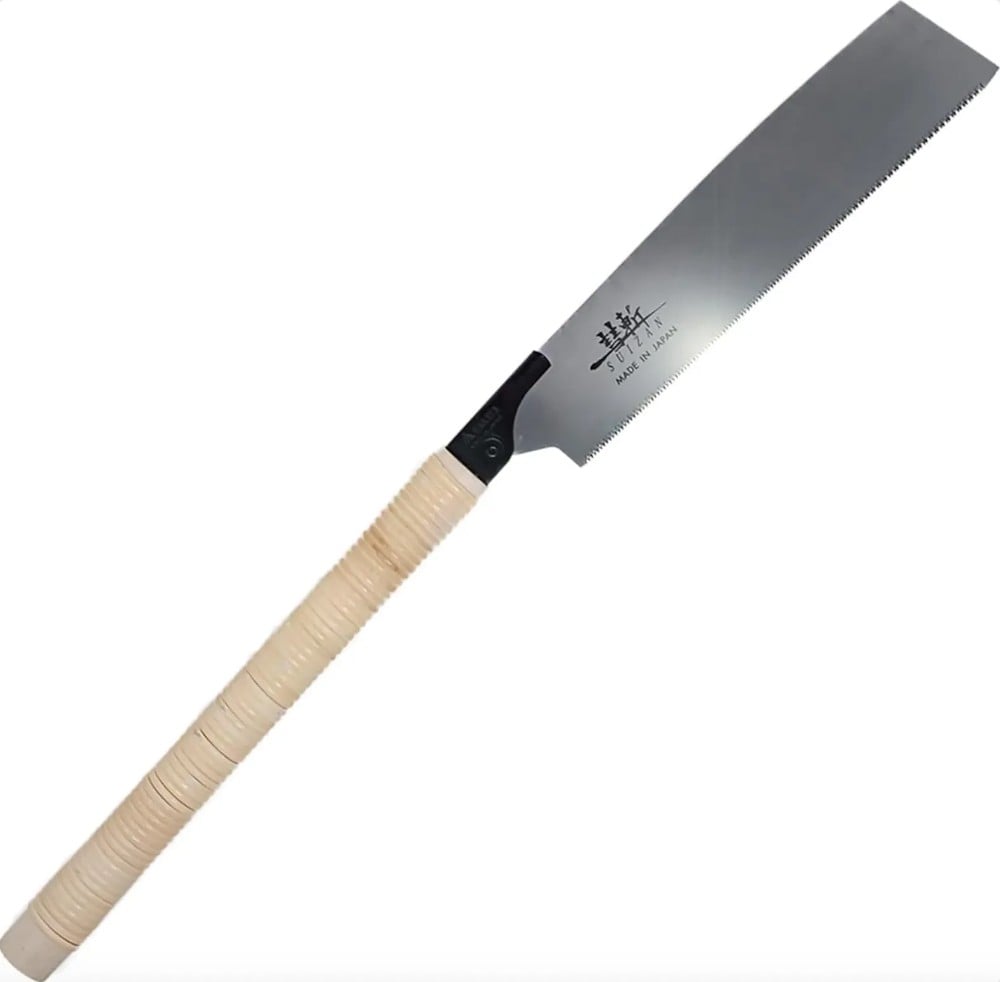
The 265mm Kataba saw from Suizan.
A Kataba is a single-edged saw that lacks the reinforced spine of a Dozuki. While not as strong as the latter, and by no means as versatile as a Ryoba, in certain circumstances the Kataba will be the only appropriate saw to use. Specifically when making deep cuts through thick lumber: here a Kataba will take you all the way to the other side, whereas the path of a Dozuki will be blocked by its own spine.
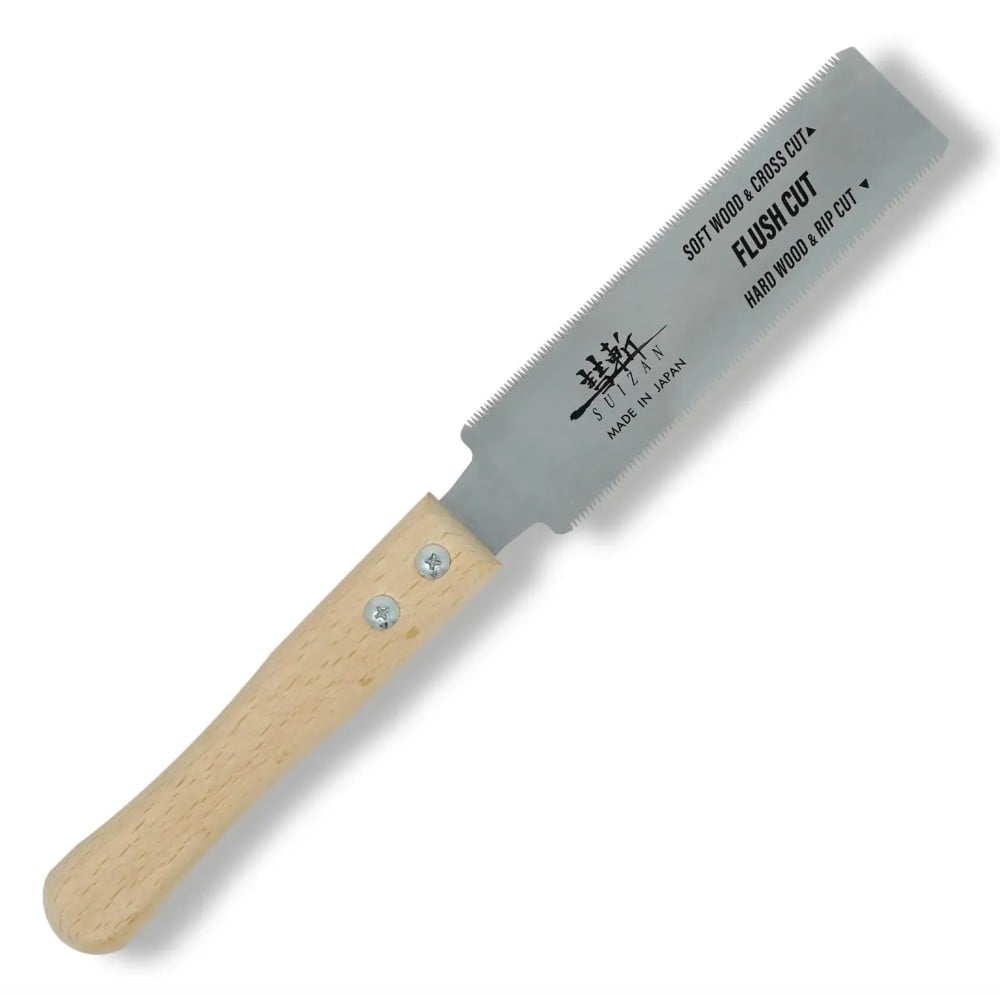
A 150mm Kugihiki professional flush-cut saw from Saizan.
Kugihiki saws feature highly flexible blades with zero tooth "set" (i.e., the teeth do not flare outward). This means that you can press the blade completely flat against surfaces, allowing you to saw off protruding dowels, tenons, or shives without scratching the surrounding wood. A cabinetmaker’s dream!
Want to learn how to use Japanese woodworking tools correctly? Check out Suizan’s blog section for easy-to-follow guides - at both beginner and advanced levels. And if you’re about to purchase your first Japanese wood saw, this article is a great place to start.
Conclusion
To summarize, Western saws excel at heavy, fast stock-removal where you can throw your weight behind the tool. Meanwhile, Japanese saws really shine when it comes to pinpoint precision, permitting the creation of small, complex joints and leaving a glassy, pre-sanded finish directly out of the cut.
Keen to get your hands on some of the high-performing Japanese wood saws featured in this article? All are available from esteemed maker of professional Japanese hand tools, Suizan. To purchase from the Suizan site overseas, simply sign up for a free ZenMarket account, and you can order* your dream set of precision Japanese woodworking tools right away!
*Please note that some products may not be available for purchase via ZenMarket in certain countries.
Don't have a ZenMarket account yet?
Sign up