Skatewear, once dismissed as the uniform of scraped-knee teenagers and parking-lot rebels, has quietly become one of the most influential forces in men's fashion. From Supreme's early Lower East Side drops to Hedi Slimane's landmark Celine Homme S/S 2021 collection, skate culture has reshaped how men dress at every price point.
In this guide, we trace the full history of skatewear style, explore its defining characteristics, and show how to incorporate authentic skate pieces into a modern men's wardrobe. Along the way, we feature a curated selection of genuine skatewear from two of Japan's most respected skate boutiques: Resunce and Horrible’s Project. Skateboard entirely optional.
Resunce
Resunce is the real deal. Alongside a thoughtfully curated selection of skate apparel and streetwear, the store stocks a range of high-end decks and accessories from boutique Japanese brands Lesque and SLD Skateboards.
For those seeking stylish skatewear options that work just as well off the board as on it, Resunce offers no shortage of well-chosen pieces.
Horrible's Project
Decks, trucks, wheels, back issues of Thrasher Magazine: Horrible's Project's skater credentials are equally legit. But here we head straight for the clothing. Horrible's Project carries a strong range of skatewear from Japanese and international brands that look just as sharp worn on or off deck.
What Is Skatewear? Definition, Style, and Key Characteristics
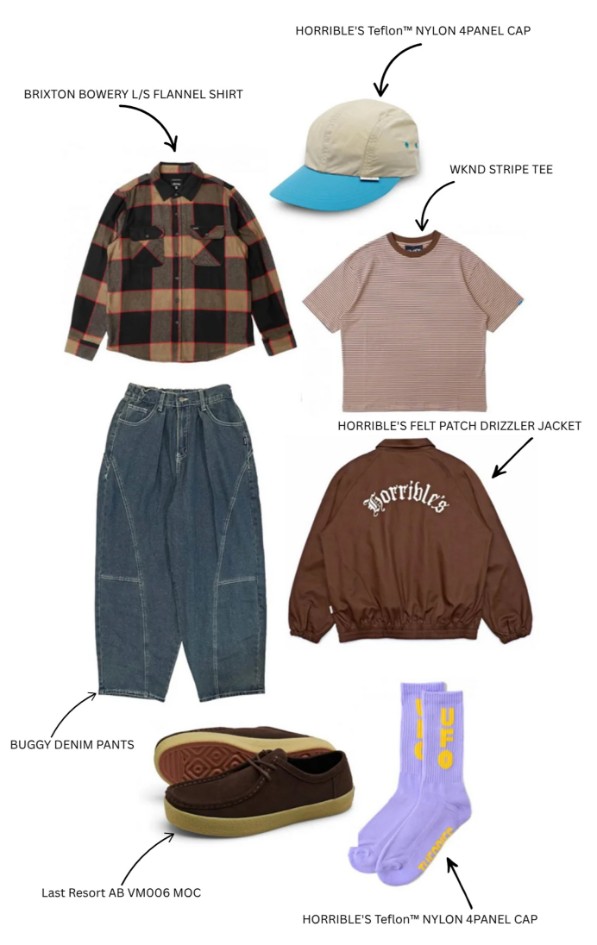
Skatewear is a style of men's clothing defined by four core principles: freedom of movement, comfort, durability, and street-level style. Rooted in 1960s California surf and skate culture, it typically includes graphic tees, relaxed-fit denim, flannel shirts, hoodies, and canvas sneakers from brands like Vans. Today, skatewear sits at the intersection of streetwear and contemporary men's fashion.
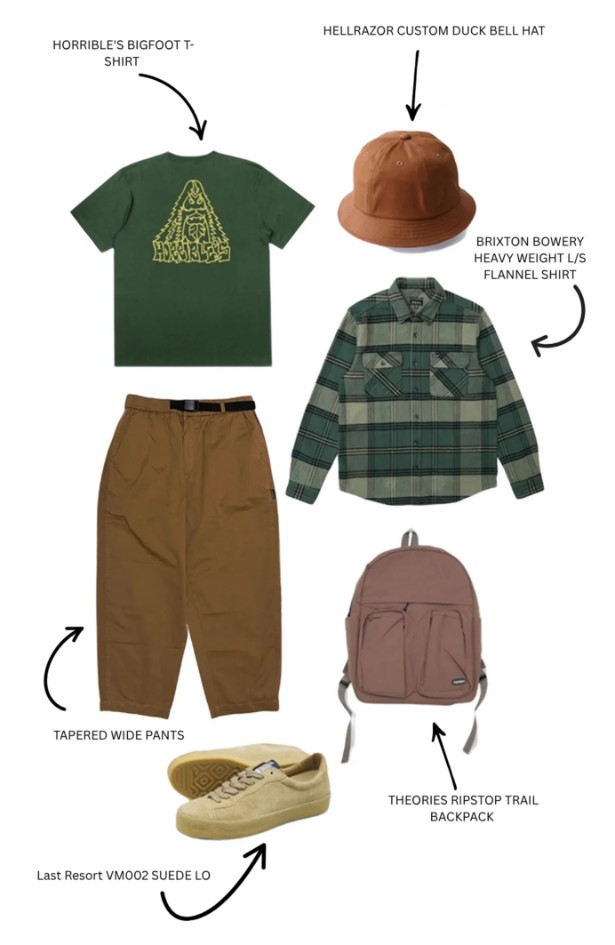
Beyond simply "clothes to skate in," skatewear can feel like a slippery concept to pin down. Skating has long been associated with subversion. Some of this is youthful bravado. But in the early days, skating often involved trespassing into private backyards to ride pools. Authorities have frequently frowned upon skating in public spaces, at times banning it outright, and most skaters have dealt with hostile confrontations along the way. The connection with rebellion is justified.
A defiant, confrontational image is part of the picture. But it is only part. You could feasibly skate in a business suit. The reason most skaters do not comes down to practicality: ease of movement matters. Skating is also physically demanding, not just on the body but on the clothing. Knocks and tumbles are standard, so skatewear needs to withstand regular abuse.
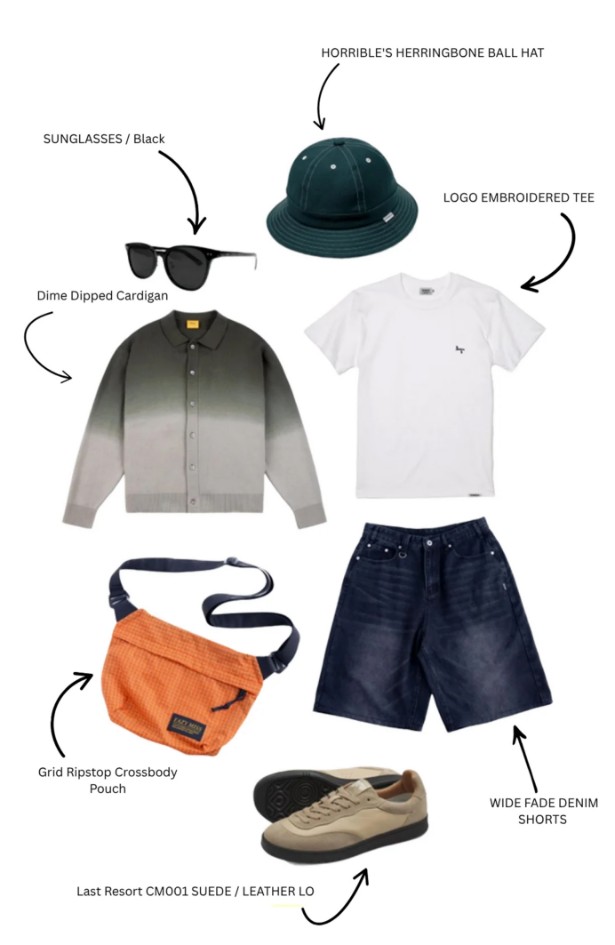
Skatewear, then, strikes a balance between freedom of movement, comfort, style, and durability. Although it was previously marginalized by the fashion establishment, it has never been completely cut off from that world. The unique mix of social, cultural, and stylistic influences that skate culture absorbed over the decades means skatewear has developed a distinctive identity all its own.
The History of Skatewear
Skatewear has never been static. The look has evolved considerably since landlocked surfers first started riding the sidewalks and abandoned pools of southern California in the 1960s.
1960s and 1970s Skatewear: Surf Roots and the First Skate Brands
As there was no skate-specific clothing available at the time, most 1960s skaters dressed like surfers, or like any other fashionable young people of the period. Even so, many of the standard silhouettes and brands we associate with skatewear today had already been established by the 1970s.
Two of the most iconic skatewear labels ever created, Vans and Vision Streetwear, both launched during that decade.
The dominant mood in 1970s skate culture was casual and eclectic: long hair, snap-back trucker hats, singlets, faded and cutoff denim shorts, all adopted from surf and hard rock sources. Footwear largely consisted of canvas sneakers paired with white sports socks pulled up high.
This was the beginning of the magpie-like proto-grunge sensibility that would later come to define skatewear: a mix of practicality and sartorial irreverence that remains central to the aesthetic today.
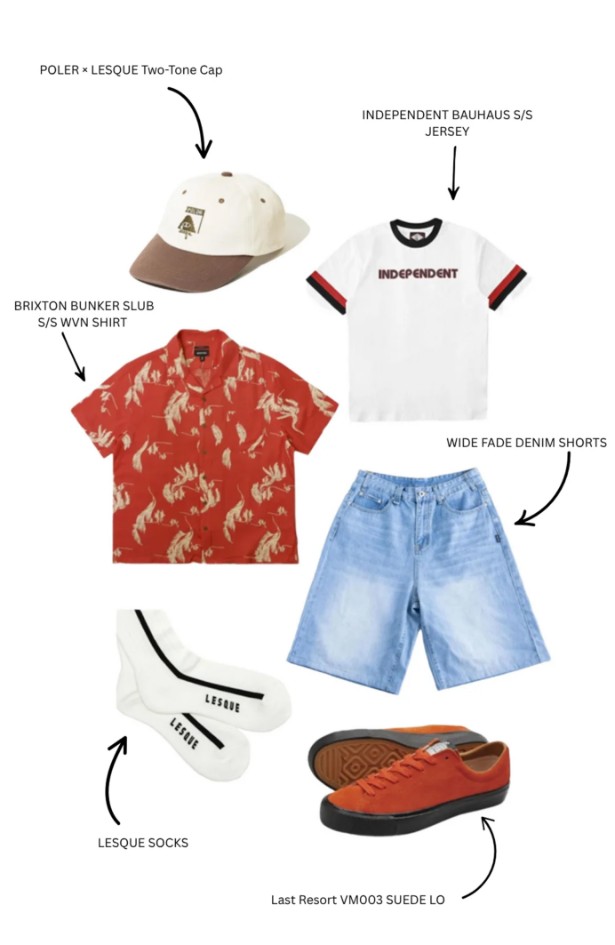
1980s Skatewear: Punk Influence, High-Tops, and Graphic Tees
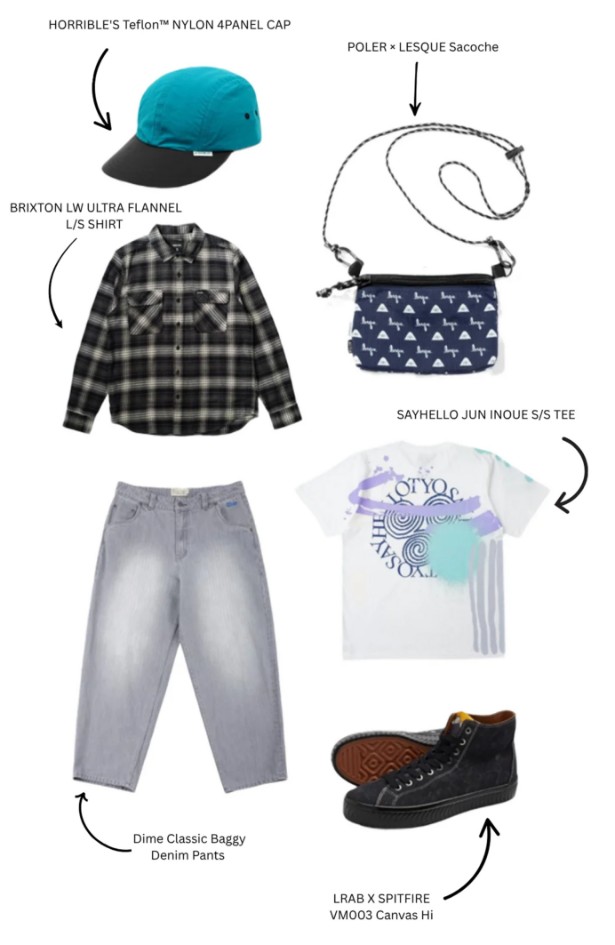
In terms of establishing a distinct identity, the 1980s was the most significant decade in skatewear's development. This was when skaters broke from their surfing past and established skating as a subculture in its own right. West Coast punk and what would later be called skate punk became the dominant influences, locking in the eclectic mix of sportswear, workwear, military surplus, and quirky vintage that forms the backbone of skatewear today.
With the influence of punk, hardcore, and a touch of Cholo gang culture, 1980s silhouettes were slimmer and sharper than the relaxed fits we associate with modern skatewear. Plaid flannel shirts, ripped and faded jeans, bandannas, and rock tees all featured heavily. The result was a distinctly militant edge compared to the laid-back comfort-focus that came later.
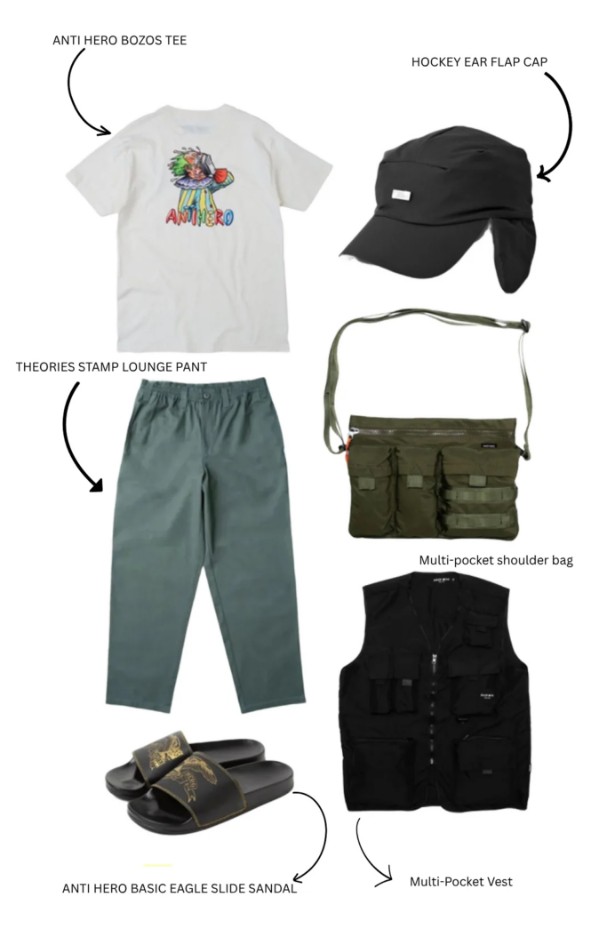
The 1980s was also a decade defined by high-top sneakers and bold geometric designs. If you are aiming for a specifically 1980s streetwear vibe, a pair of high-tops and some funky retro graphics will take you a long way. The finishing touch: a flat-peak baseball cap worn with the brim turned up.
Random and ironic graphic tees became central to skatewear during this era. Initially these were thrift-store finds, but by the 1990s skatewear brands were producing tees featuring their own oddball appropriated imagery. Such pieces remain popular today and are key to pulling off an authentic skater look.
1990s Skatewear: Hip-Hop Influence, Baggy Fits, and Carpenter Pants
By the late 1980s and early 1990s, skatewear brands had grown significantly, quietly holding real influence over the streetwear end of fashion. It was also around this time that skateboarding became strongly associated with rap music. The loose, relaxed fashion sensibility of mid-1990s hip-hop has been a fixture of skatewear ever since.
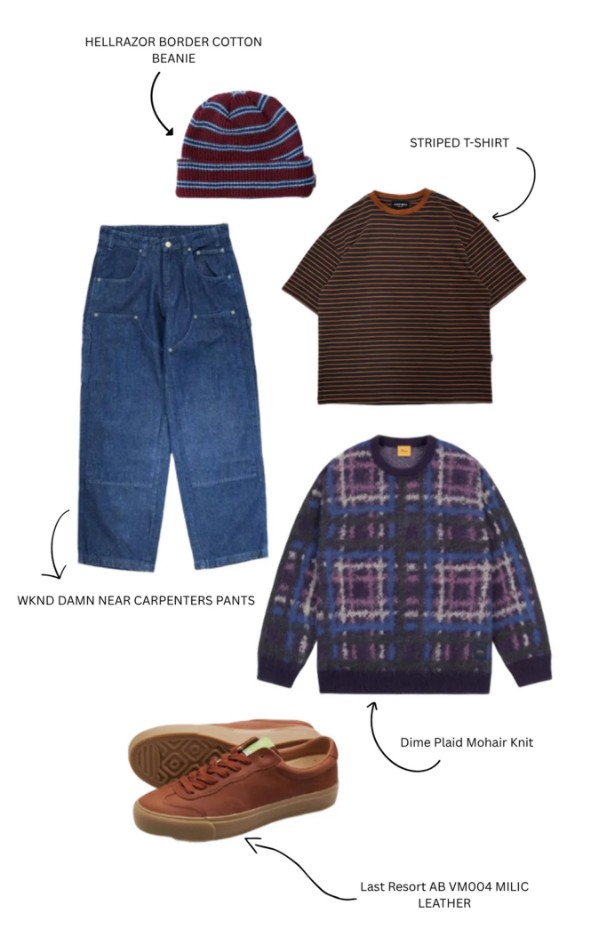
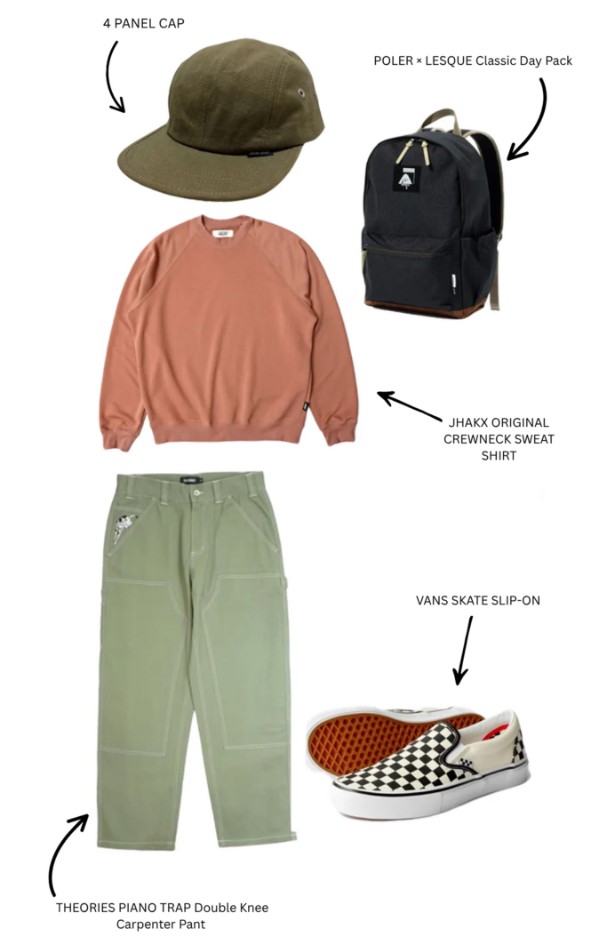
The comfort, style, and materials of 1990s skate apparel were also shaped by practical considerations, as skaters increasingly moved from vert ramps to street skating. Roomy, durable workwear, particularly double-knee carpenter pants from Dickies, became skatewear staples. Bucket hats and snap-backs were ubiquitous.
There were moments in the 1990s when Vans and Vision Streetwear seemed to be everywhere. The 1995 Larry Clark film Kids gave skating a brief push into the mainstream spotlight. Bands with significant skater followings, including The Beastie Boys, The Offspring, Bad Religion, and NOFX, pushed the look from underground to the fringes of mainstream youth culture. Yet these were largely flashes, confined to the urban and street margins: entirely ignored by the gatekeepers of high-end men's fashion.
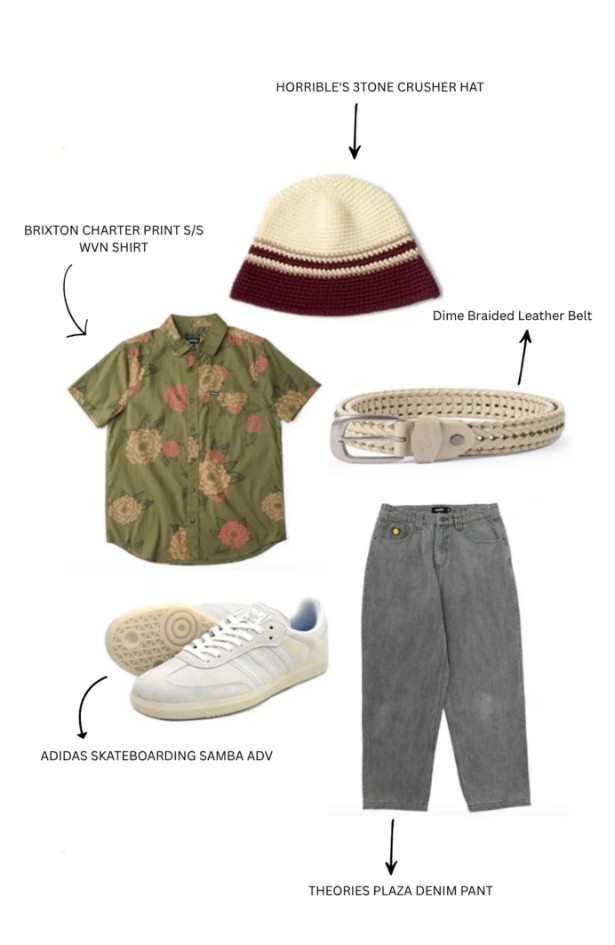
2000s to 2010s Skatewear: From Underground to Mainstream Fashion
The 2000s saw skatewear brands widely distributed and commercially successful. Even so, skatewear was still a very long way from being considered part of men's fashion with a capital F. Even a decade ago, it was almost unthinkable that full-on skatewear looks would appear on the runways of the world's fashion capitals. Then the rules changed.
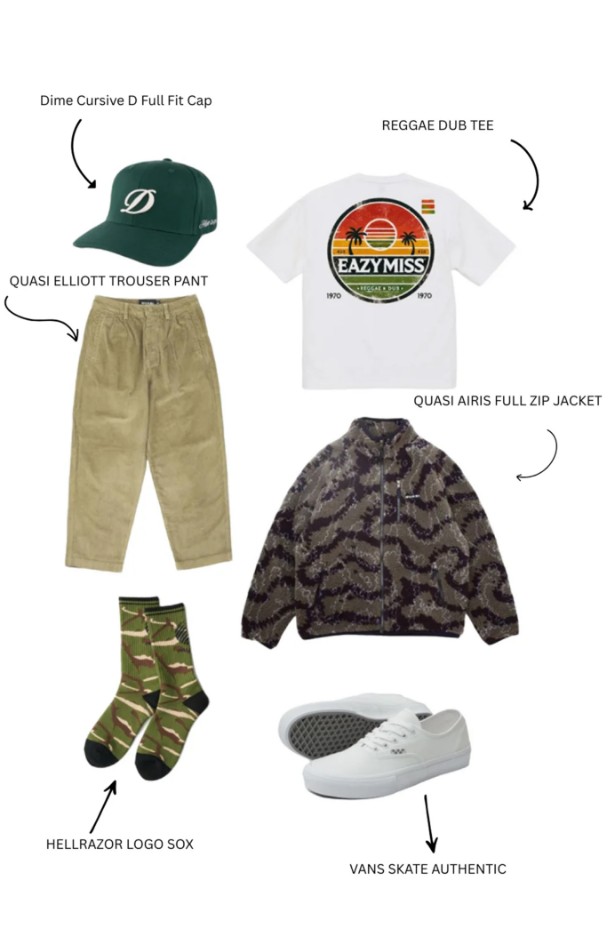
How Skatewear Went Luxury: Streetwear's Takeover of High Fashion
By the end of the 2010s, the traditional clientele of the major fashion conglomerates had grown older, and their offerings had grown stale. A new generation of consumers had come of age with money to spend. Having grown up on a diet of street-level references, they were not about to spend it on silk ties or slinky dress shirts. They wanted streetwear.
The major fashion houses recognized the shift and rushed to install unlikely creative directors in leading roles, buying themselves the credibility they needed to compete.
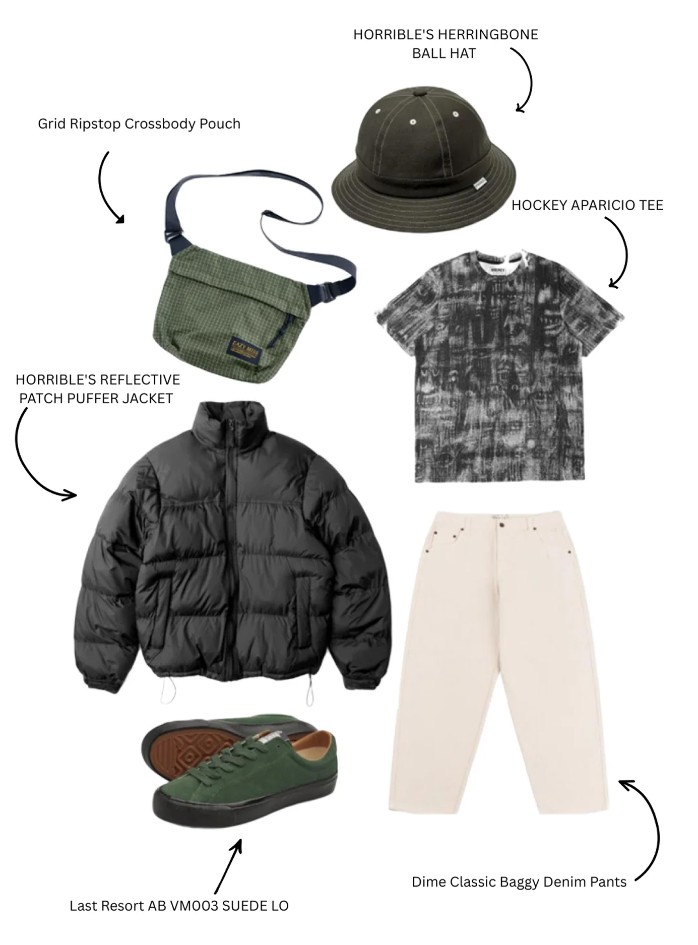
Not long before, wearing a hoodie had been coded as "ghetto," more likely to get you turned away from a venue than welcomed into one. The arrival of the luxury hoodie changed that. The upper echelons of fashion came down to meet the rise of streetwear, and the landscape shifted permanently.
Hedi Slimane and the Dancing Kid Collection
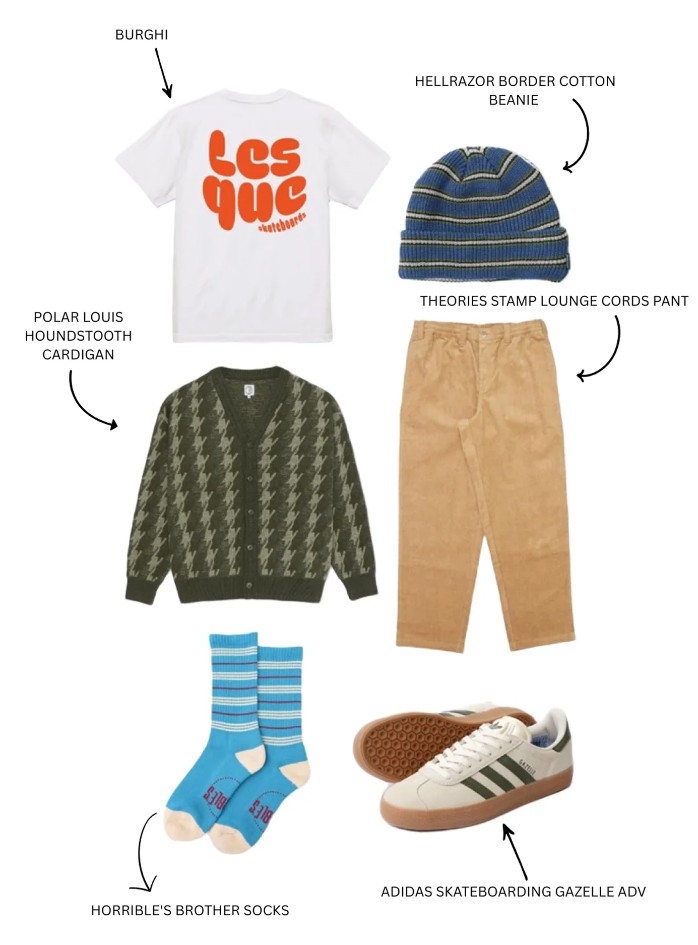
Slimane's Dancing Kid collection for Celine Homme S/S 2021 is widely considered a watershed moment for skatewear's legitimacy in luxury fashion. Featuring oversized grunge silhouettes, band-tee graphics, and deliberately worn-in textures, the collection demonstrated that skate aesthetics could coexist with a four-figure price tag, and that luxury consumers would embrace it.
In the hands of a less talented or less committed designer, a skate-inspired collection would likely have resulted in a fashion equivalent of a faceplant. Slimane's passion for youth culture is clearly genuine, and his research thorough. With The Dancing Kid, he successfully captured something of the rough and eclectic energy of skate culture, upgraded for a market with flashier tastes and deeper pockets.
Today the pairing of disparate items and clashing patterns is very much on-trend in men's fashion. None of that would have happened without the influence of grunge and skatewear.
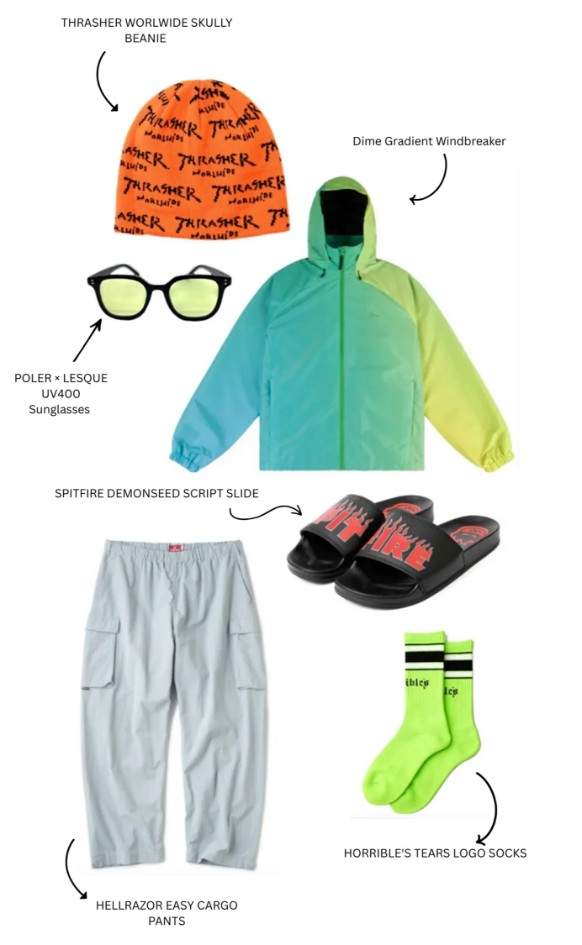
How to Wear Skatewear: Men's Style Tips for 2026 and Beyond
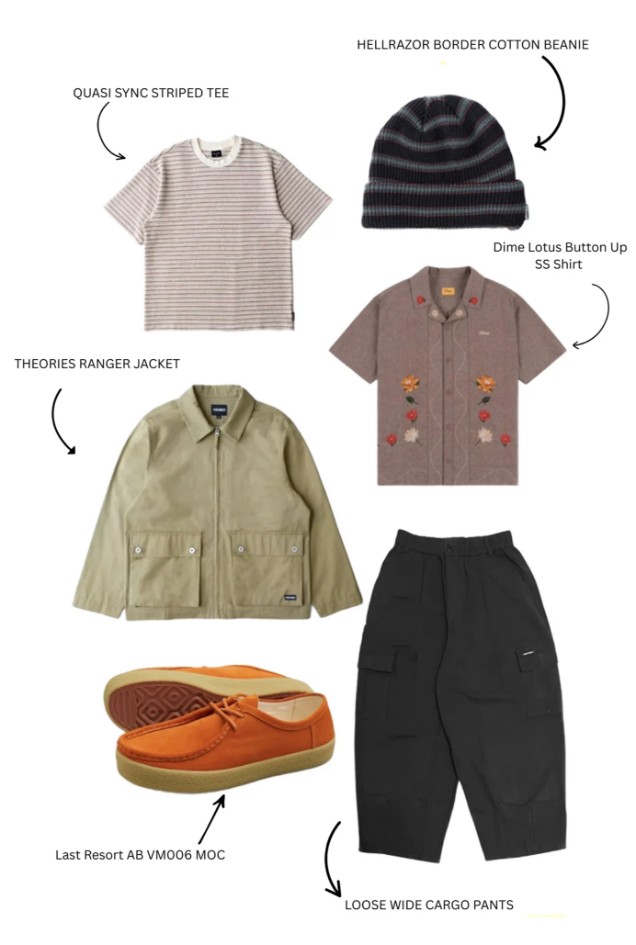
As non-skaters, the key lessons skatewear offers are its studied scruffiness, its disrespect for classical sartorial rules, and its casualization of more formal items. The core approach: mix unexpected pieces, lean into comfortable silhouettes, and do not overthink it.
Graphic tees remain the entry point. Pair an ironic or oddball graphic tee with relaxed-fit trousers or carpenter pants for an effortless skater-inspired look.
Layering is central. An open flannel shirt over a logo tee, or a zip jacket over a crewneck sweatshirt, reflects the practical, weather-ready logic of skate dressing.
Footwear anchors the look. Canvas sneakers from Vans or Adidas Skateboarding are the classic choice. Pair with white or patterned socks worn slightly visible for an authentic touch.
Headwear completes it. A 5-panel or 4-panel cap, a bucket hat, or a simple beanie all work depending on the season and the rest of the outfit.
The key is to treat the rules loosely. Skatewear has always been about mixing references rather than following a rigid formula.
Conclusion
While trends come and go, skatewear's influence on men's fashion is permanent. Quality skate apparel is built to withstand the constant demands of the sport, which also makes it exceptionally well-suited to daily wear in any contemporary context.
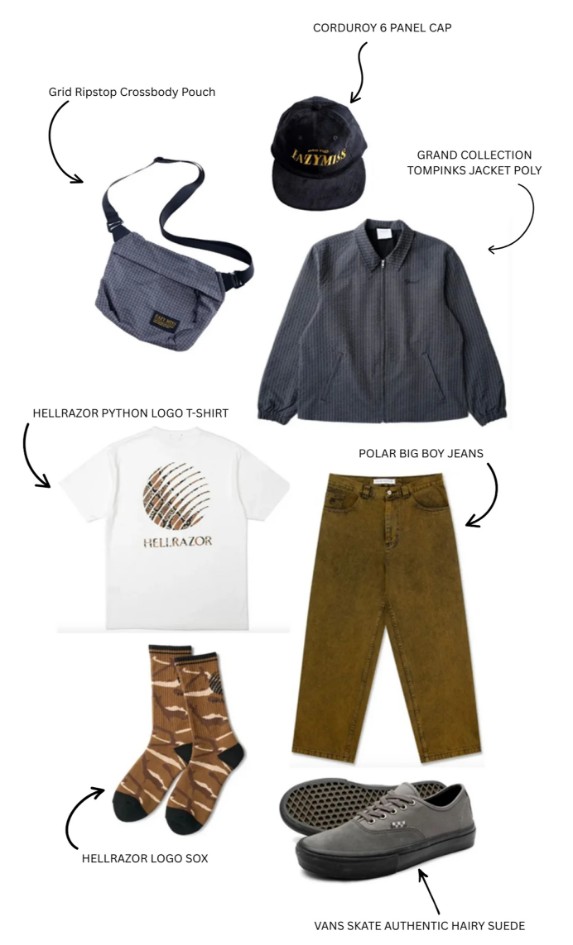
Even if you have never stepped on a board, incorporating some hard-wearing skate pieces into your wardrobe is a straightforward way to update your look. Resunce and Horrible's Project both offer strong selections of authentic skatewear from Japanese and international brands, available via ZenMarket for those ordering from overseas.
Also Read: How to Buy from Recommended Stores