If you've just picked up your first Hobonichi planner, you've probably run into a problem fast. Not every pen works well on the pages. Some inks bleed through. Some feel scratchy. Some smudge the moment you turn the page.
That's not a flaw in your handwriting. It's the paper. Hobonichi planners use a famously thin sheet called Tomoe River paper. Finding the best pen for Hobonichi means understanding the paper first, then matching it to the right ink and nib.
This guide walks through what actually works. You'll see why fountain pens are so popular with Hobonichi users, plus where to source the Japanese pens and ink that make the biggest difference.
What Makes Tomoe River Paper Special (and Tricky)
Tomoe River paper is thin. At around 52gsm, it's roughly half the weight of standard printer paper. That thinness is exactly why Hobonichi fans love it. A full year of daily pages fits into a planner you can still close flat and slip into a bag.
The tradeoff is how it handles wet media. Cheap ballpoints tend to skip and drag on this surface. Felt-tip markers often bleed straight through to the next page. Even some gel pens ghost so heavily that the page underneath becomes hard to read.
Well-suited pens, on the other hand, glide across Tomoe River paper almost effortlessly. Fine-nibbed fountain pens are the classic pairing. A good nib and the right ink let this paper show off its best qualities: rich shading, minimal feathering, and almost no bleed-through.
What Is Hobonichi?
Hobonichi is a Japanese stationery brand behind the wildly popular Hobonichi Techo planner line. The company's name is short for "Hobo Nikkan Itoi Shinbun." That loosely translates to "Almost Daily Itoi Newspaper," a nod to founder Shigesato Itoi's original web project. Over time, the brand became known less for its writing and more for its planners.
Today, Hobonichi planners come in a few formats. The compact Hobonichi A6 Techo, the larger Hobonichi A5 Cousin, and the weekly-format Hobonichi Weeks. All three share the same Tomoe River paper, which is why the pen question comes up no matter which size you choose.
Best Pen for Hobonichi: What to Look For
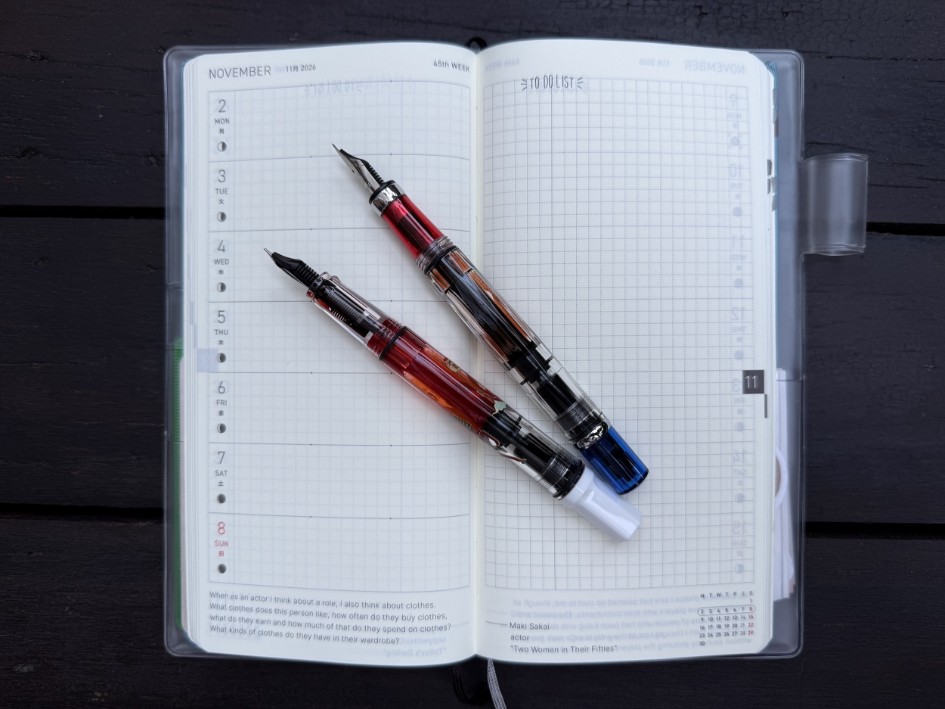
Before jumping into specific brands, it helps to know what separates a great Hobonichi pen from a mediocre one. Look for these traits.
- Fine or extra-fine nib width. Hobonichi's daily grids are small, so a fine or extra-fine tip keeps your writing legible.
- Fast-drying, low-bleed ink. This matters more than the pen itself. Ink formulation decides whether your writing shows through to the next page.
- Smooth glide, not scratch. A well-tuned nib should feel light against the paper, not catch or drag.
- Light to medium hand pressure. Heavier writers may need to test a few pens, since more pressure increases the odds of bleed-through regardless of the ink used.
With those criteria in mind, fountain pens consistently come out on top among the Hobonichi community, closely followed by well-made gel pens and fineliners.
Popular Fountain Pens for Hobonichi Planners
Japan makes some of the finest fountain pens in the world. It's no accident that Hobonichi users gravitate toward them.
Pilot Fountain Pens
A Pilot fountain pen is often one of the first recommendations for new Hobonichi users. The Pilot Kakuno is an affordable, beginner-friendly option with a smiling nib design and reliable performance straight out of the box. Step up to the Pilot Prera or Pilot Custom 74 for finer nib grades and better ink flow control. Both write noticeably smoother, too.
Pilot's own Iroshizuku ink line pairs beautifully with Tomoe River paper. The formulation is quick-drying and shows excellent shading without heavy feathering. That makes it a favorite combination among planner decorators who also layer in Hobonichi stickers and washi tape.
Browse Pilot fountain pens
Sailor Fountain Pens
Sailor fountain pens are known for producing some of the finest, crispest nibs on the market. The Sailor Pro Gear and Sailor Compass models are popular Hobonichi companions, especially in extra-fine or medium-fine grades. Sailor's engineering leans toward precision, so if you write small and want every letter to stay sharp on the page, this is a brand worth testing.
Browse Sailor fountain pens
Other Japanese Fountain Pen Options
Beyond Pilot and Sailor, brands like Platinum also produce excellent budget-friendly Japanese fountain pens well-suited to thin paper. The Platinum Preppy and Platinum Plaisir are common starter picks, prized for reliable ink flow and minimal skipping even at a low price point.
If you're new to fountain pens generally, starting with an inexpensive Japanese model is a smart move. You get the fine nib and quick-drying ink formulation that Tomoe River paper rewards, without a large upfront investment.
Best Gel Pens and Fineliners for Hobonichi
Not everyone wants to commit to fountain pen maintenance, and that's fine. Several gel pens and fineliners perform well on Hobonichi pages too.
- Uni-ball Signo DX (0.28mm–0.38mm) - a longtime favorite for its fine tip and minimal bleed
- Sakura Pigma Micron - a fineliner favorite for bullet journal-style layouts, dries almost instantly
- Zebra Sarasa Clip - reliable gel ink with a wide color range, useful for color-coding entries
Browse Gel Pens on ZenMarket
These options tend to be more forgiving for heavier-handed writers, since gel and fineliner ink generally dries faster than fountain pen ink of comparable line width.
Ink Considerations for Tomoe River Paper
Even with the right pen, the wrong ink can undo all your careful nib selection. A few points worth keeping in mind.
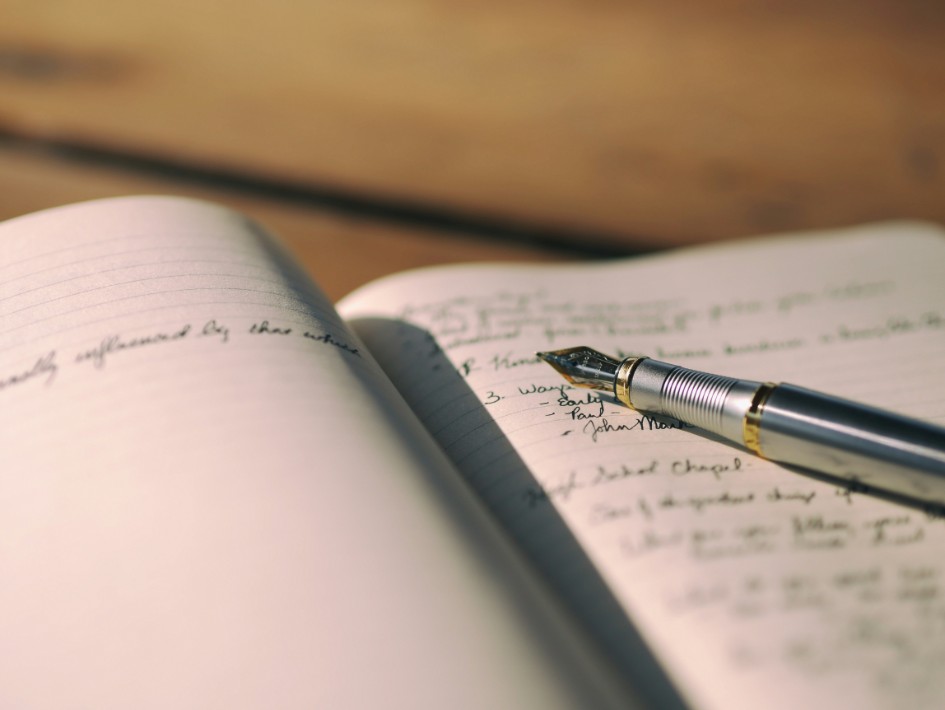
Photo by Aaron Burden on Unsplash
Fast-drying formulations reduce smudging when you close the planner soon after writing. Highly saturated inks show off Tomoe River's shading properties beautifully. But some heavily saturated or sheening inks take longer to dry, and they're more prone to smearing under pressure.
If you're experimenting, test a new ink on a spare page first. This matters even more before you commit it to a page you plan to decorate with hobonichi stickers. Waiting a few extra seconds before closing the cover is a simple habit that saves a lot of smudged pages.
How to Use a Hobonichi Planner With Stickers
Pen choice and sticker choice go hand in hand for a lot of Hobonichi users. Once you've settled on a pen and ink combination that doesn't bleed, decorating the page becomes much less stressful.
Many people write their daily entry first, let the ink fully dry, then layer in stickers around the text. Icon sets work well for tracking habits. Seasonal sheets suit holidays and milestones. Washi-style deco stickers frame photos or handwritten notes nicely.
If you want a deeper look at layout ideas, our guide to decorated journal ideas with Japanese stickers and washi tape walks through several approaches step by step. It also covers how to balance handwriting with decoration on a single spread.
Choosing Between Hobonichi Techo, Weeks & Cousin
Pen performance is fairly consistent across the Hobonichi lineup, since they all use the same Tomoe River paper. Still, format affects how you'll actually use your pen day to day. 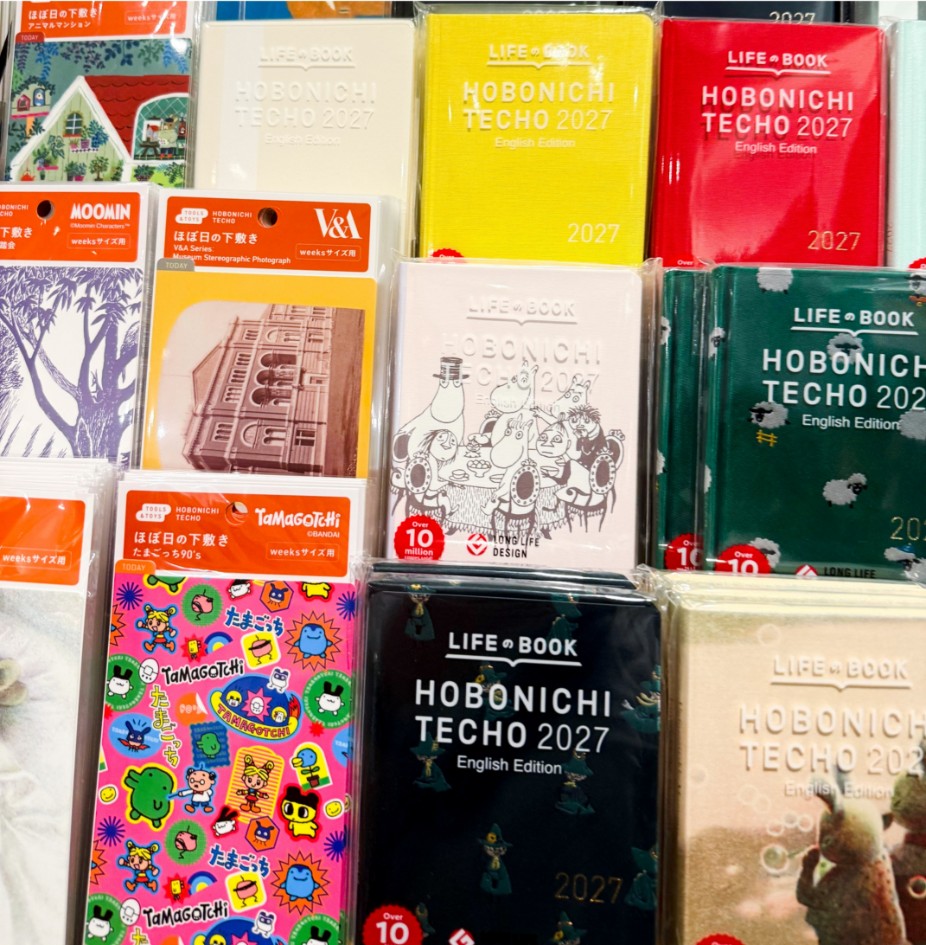
Types of Hobonichi Planners
The A6 Techo is compact and portable, ideal if you carry your planner everywhere and want small, precise handwriting. The A5 Cousin offers more room per day, which suits people who write longer entries or want more space for stickers. Hobonichi Weeks trades daily pages for a weekly grid, which works well for quick notes rather than long journaling.
If you're still deciding between a Hobonichi A5 or A6, or wondering whether planners similar to Hobonichi might suit you better, the pen question stays the same either way: fine nib, fast-drying ink, light touch.
Where to Buy Japanese Fountain Pens and Hobonichi Planners From Japan
Many of the pens covered here, especially specific Sailor and Pilot models, are easier to find and often cheaper when bought directly from Japan rather than through international resellers. Most fountain pen retailers in Japan sell through their own websites rather than through Amazon or Rakuten, which is where a proxy shopping service like ZenMarket really pays off.
ZenMarket's buy from any store feature means you're not limited to a handful of pre-integrated marketplaces. If you find a pen on a Japanese pen specialist's own site, a Sailor or Pilot flagship store, or any other Japanese retailer, here's the process:
- Copy the product page URL (e.g. https://www.1101.com/store/techo/en/2027/pc/detail_cover/oc27_sunsun/) from the store you found it on.
- Paste it into the ZenMarket search bar (or use the "+" button next to your account) and hit search.
- Add it to your cart. ZenMarket checks the price and availability, then handles the purchase, receives the item at their Japan warehouse, and ships it to you internationally.
This works for the vast majority of Japanese pen and stationery retailers, not just the big marketplaces. Since most fountain pen shops list their full catalog on their own storefronts rather than through Amazon Japan, this "any store" method is usually the fastest way to track down a specific Pilot or Sailor model. Our full guide on how to use ZenMarket walks through the entire process step by step, including account setup and shipping.
If you are new to this shopping method, our First Time User guide walks through the basics, and the Shipping Calculator helps you estimate costs before you commit to an order.
Learn how to buy from any Japanese store
Frequently Asked Questions
What is Hobonichi? Hobonichi is a Japanese stationery company best known for its Techo planner line. It's built around thin, high-quality Tomoe River paper and has a strong community focused on daily journaling and decoration.
What's the best pen for Hobonichi? A fine or extra-fine Japanese fountain pen generally performs best on Tomoe River paper, such as a Pilot fountain pen or one of the Sailor fountain pens. Fast-drying gel pens and fineliners are solid alternatives if you'd rather skip fountain pen maintenance.
How to use a Hobonichi planner? Each page in the Techo and Cousin represents one day, while Weeks uses a single page per week. Most people write their entry first, let the ink dry, then decorate with stickers or washi tape around the text.
Are there planners similar to Hobonichi? Yes. Several Japanese and international brands make planners with comparable thin-paper daily formats. Still, few match Tomoe River paper's specific balance of thinness and ink performance. If you're comparing options, test your pen and ink combination on a paper sample first.
Choosing the best pen for Hobonichi comes down to matching a fine nib and fast-drying ink to Tomoe River paper's particular quirks. Once you land on a combination that works, whether that's a Pilot fountain pen, one of the Sailor fountain pens, or a reliable gel pen, the rest of your planning setup, stickers included, falls into place a lot more easily.