If you're interested in Japanese pop culture, you've probably wondered what ranobe is. These are Japanese light novels which have inspired many well-known anime - in Japan, Ranobe are just as popular as anime or manga, which may be more familiar to Western audiences. In our blog, you'll learn interesting details about Japanese light novels and find the best ranobe for beginners.
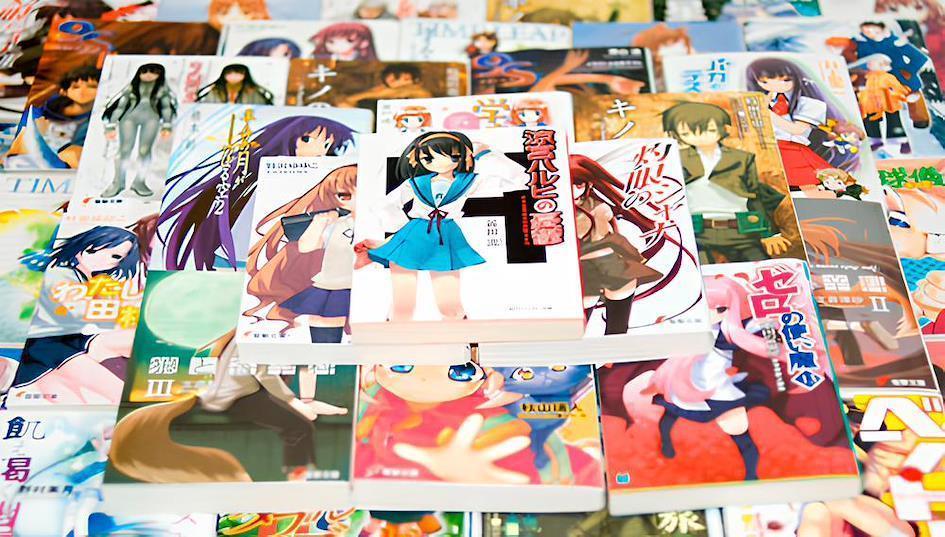
On the shelves of Japanese bookstores, you can find many small-sized paperback books featuring anime characters on the cover. This format includes not only manga but also ranobe—light novels that tell anime-style stories in the form of short serialized novels.
Ranobe are very popular in Japan, and many beloved anime are based on them. In this fun guide, we’ll share which ranobe are best for beginners, what’s the difference between manga and ranobe, and how can you buy ranobe from Japan. Read on for all the details!
What Are Japanese Light Novels (Ranobe)?
What are ranobe, why are they called that, and how are they different from regular literature? Simply put, light novels are books with anime-style plots, written in an easy-to-understand language and contain illustrations in an anime style.
The word “ranobe” (ラノベ) is a Japanese abbreviation of the phrase “light novel” (ライトノベル, raito noberu). It was coined in the 1990s by Keita Kamikita, an admin of a Japanese internet forum on science fiction and fantasy - in fact, the first light novels were mainly in those genres. Today, light novels are a type of fictional novel written for a young audience that enjoys anime and manga.
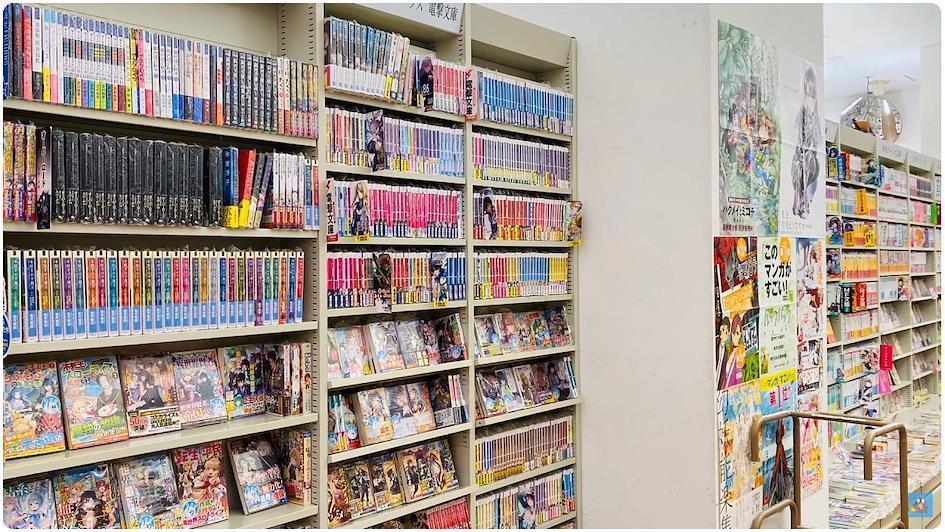
What allowed light novels to win such love from readers? Here are the key features of ranobe (light novels):
- Serialization – a single work is published in a large number of volumes, which are released at intervals ranging from 3 to 9 months.
- Small volume – on average, each volume contains about 50,000 words, so that it doesn't take too much time to read.
- Pocket format – light novels are published in A6 size (10.5 by 14.8 centimeters) as small paperback books of around 300 pages. This small volume is called bunkobon (文庫本) in Japanese – it's easy to carry around, and it also makes buying light novels more affordable (on average, 700 yen per volume). Light novels can also be sold in sets that include the entire series.
- Large print runs – the total circulation of the best-selling light novel Tensei Shitara Slime Datta Ken (That Time I Got Reincarnated as a Slime) reached 45 million copies.
- Simple language – Compared to classic novels, light novels (ranobe) are not only shorter in length but also written in a more accessible and lively language. Simple doesn’t mean dull – light novels are filled with vivid imagery and characters that make them engaging to read. They have a faster narrative pace, more dialogue and action, and less description and moralizing. Often, light novels aren't as refined as classical literature, but their main goal is to entertain a wide audience, which makes them easier and more enjoyable to read in your free time.
How did ranobe come about?
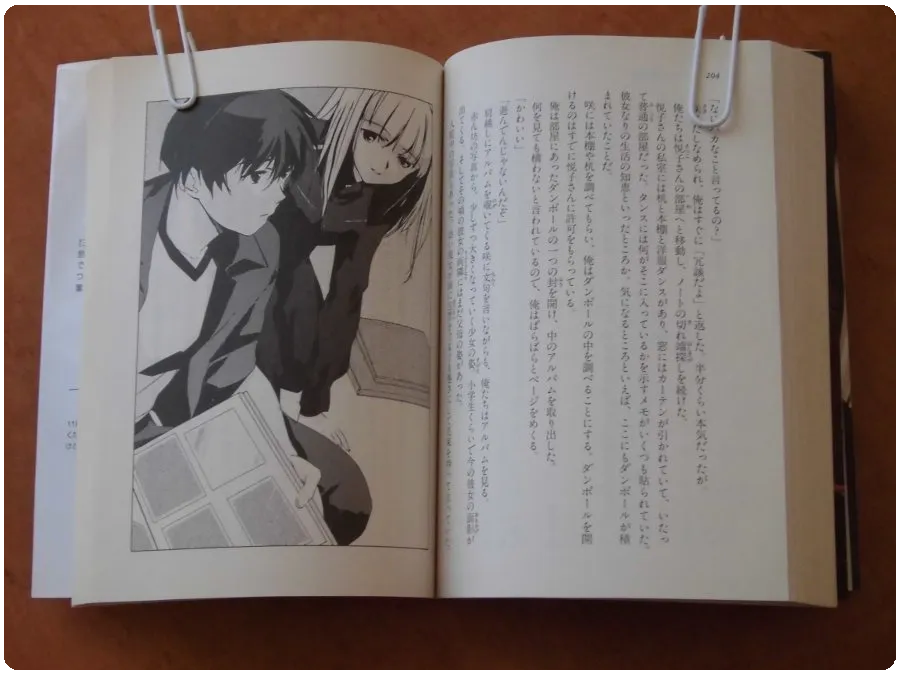
The origins of modern light novels can be traced back to Japanese science fiction novels that were published as excerpts in magazines starting in the 1960s. In the 1980s, these stories began to be accompanied by illustrations from increasingly popular manga artists, which attracted the anime audience.
As a result, light novels caught the attention of major Japanese companies like Kadokawa, which began publishing them under the Dengeki Bunko label, a brand still popular today. The main genres of light novels became the ones favored in magazines: science fiction, fantasy, comedy, and romance.
In 1989, the light novel Slayers! by Japanese author Hajime Kanzaka began publication and was later adapted into a well-known anime. Light novels gained even more popularity with the release of The Melancholy of Haruhi Suzumiya (Haruhi Suzumiya) by Nagaru Tanigawa in 2003.
Its major success became a milestone in the popularization of light novels, especially after the famous anime adaptation by studio KyoAni in 2006. Equally iconic was the Monogatari Series of light novels by Nisio Isin, which also started in 2006. Thanks to its memorable characters and sharp dialogue, it first captivated many readers and later won over viewers with the hit anime adaptation by studio Shaft.
Riding the wave of such tremendous success of light novels, Japanese publishers began actively holding contests for new authors and publishing the winners' works. One of them was Reki Kawahara, whose light novel Sword Art Online became incredibly successful and sparked the true boom of the isekai genre in Japan.
💡 Also read: Frieren: How does it differ from other Isekai anime?
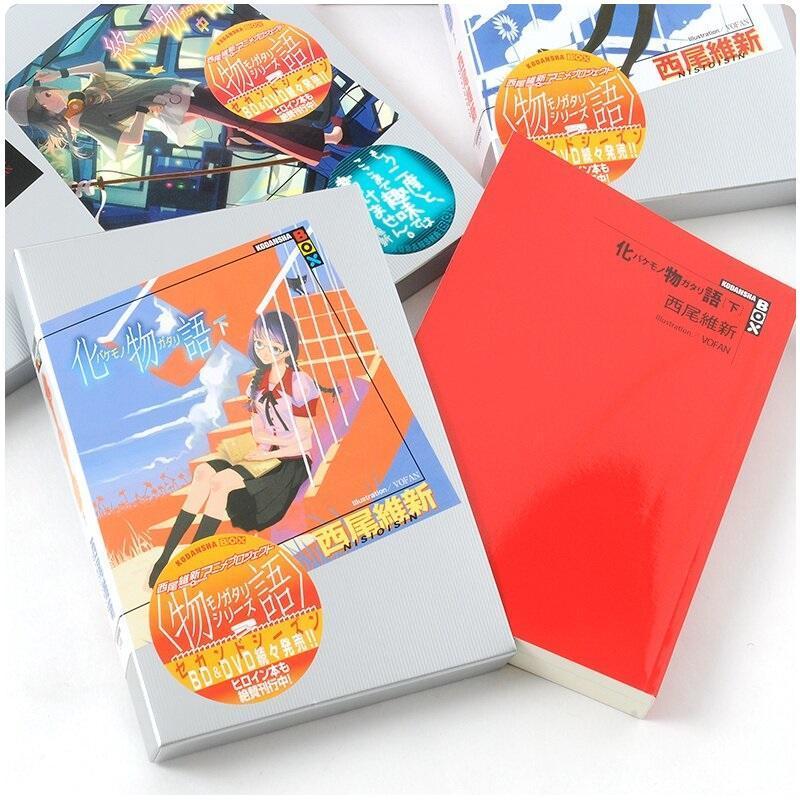
Modern Japanese light novels are primarily aimed at teenagers, similar to the shōnen and shōjo manga genres. They try to attract young readers with colorful covers, clear titles, unobtrusive narration, and anime-style illustrations. However, the actual readership of light novels - like manga - extends far beyond the target audience: ranobe are eagerly read by fans aged 20–35 and even older.
The creator of the term “ranobe,” Keita Kamikita, believed that the audience for light novels couldn’t be confined to any age group. That’s because ranobe can appeal to everyone, regardless of age. Which means you’re likely to enjoy them too—don’t miss the chance to dive in!
Manga vs. ranobe: What’s the difference?
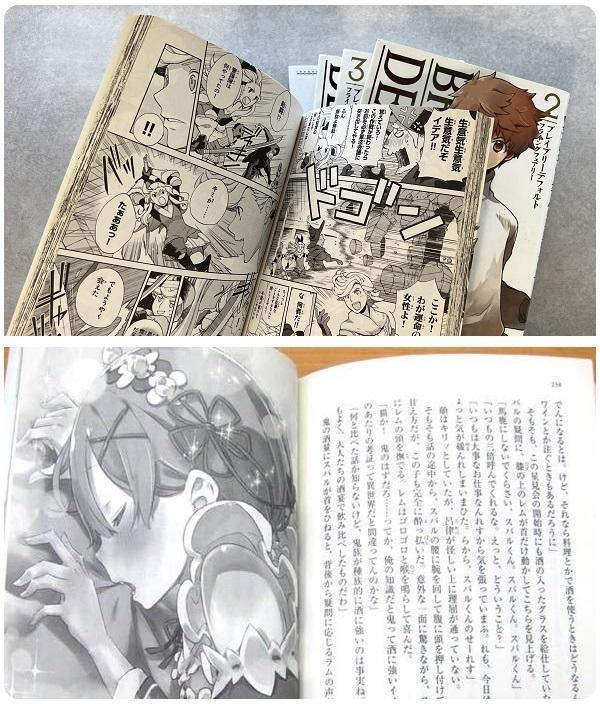
Manga Bravely Default (top) and Ranobe Re:Zero (bottom)
If you love Japanese comics but also want to discover the world of light novels, it’s helpful to understand the difference between manga and ranobe. The difference between them is actually quite significant, although they do share some similarities.
Manga is a comic in which events are presented as pictures divided into frames. The characters' words and thoughts are placed in so-called bubbles—white cloud-like shapes with text. In manga, the graphic component dominates the text, so you do less reading and more looking at pictures.
Light novels (ranobe) are literature, albeit light, which means they contain a substantial amount of text, something readers will appreciate. This allows authors to develop the plot in more detail and give characters more depth compared to manga or anime.
At the same time, light novels are complemented by anime-style illustrations, often created by well-known artists who also draw manga. As a result, in ranobé, the text component dominates over the visual.
Usually, each light novel is created by a duo: a writer responsible for the text, and an illustrator who draws the cover art and key scene illustrations. This kind of collaboration also exists in manga, but less frequently.
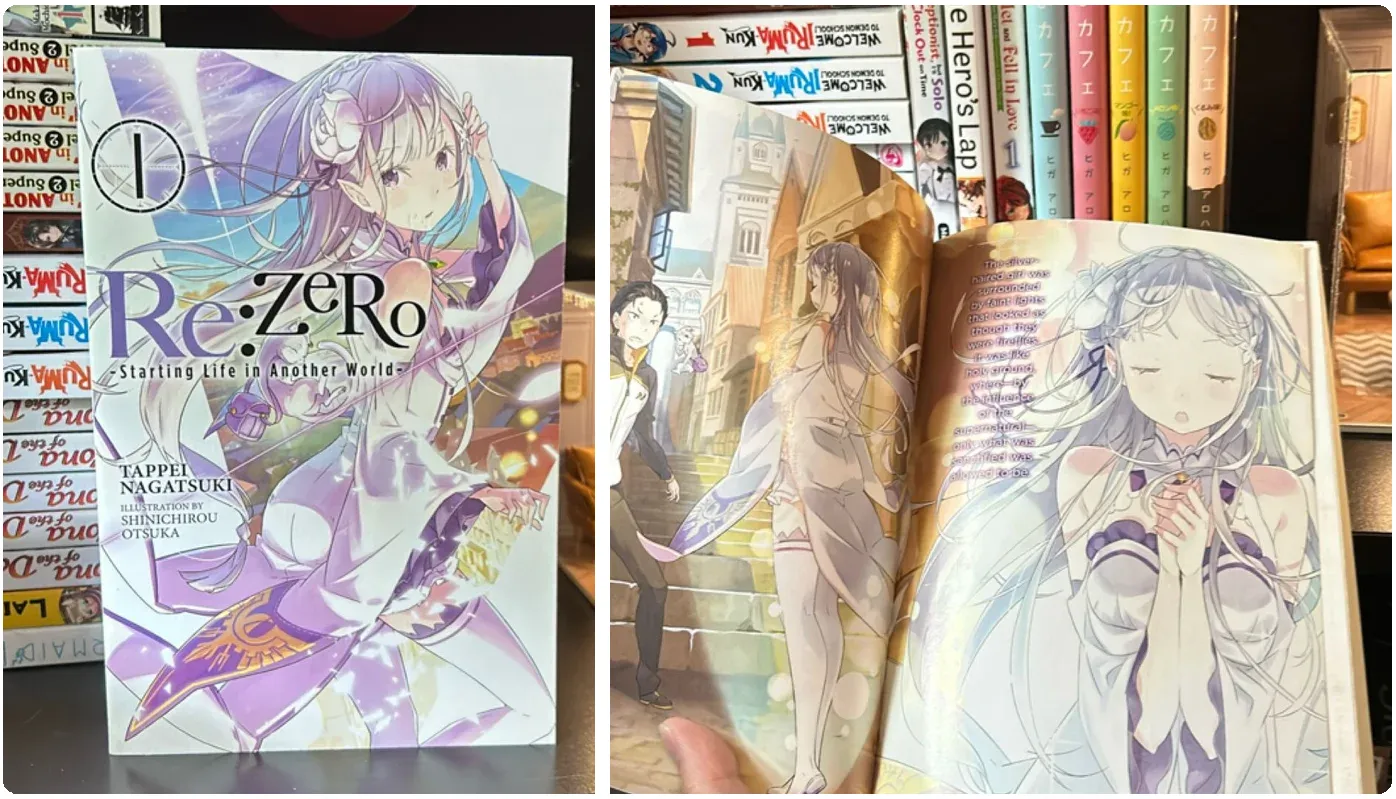
The cover and color illustrations at the beginning of the English edition of the first volume of the Re:Zero light novel.
What do light novels and manga have in common? Both are Japanese printed media aimed at a mass audience. Manga and light novels are initially published in magazines, and later appear on store shelves as small-format paperbacks — tankōbon for manga and bunkobon for light novels, respectively.
Both manga and light novels are serialized, meaning each work has many chapters and is released over a long period of time. The two formats have a similar approach to storytelling — they’re picture books for anime fans, just with different ratios of text to images. That’s why it’s common for a manga adaptation to be made from a light novel, and vice versa.
In Japan, books are traditionally read from top to bottom and right to left, not left to right, as is more familiar to us. That’s why light novels, like manga volumes, appear to be mirrored — the beginning of a Japanese book is where the back cover of our books usually is.
At the start of each light novel and manga volume, there are color illustrations, while the rest is in black and white. And of course, light novels and manga are the main source material for today’s popular anime adaptations. For example, hits like Re:Zero, KonoSuba, Overlord, Spice and Wolf, Monogatari Series, No Game No Life, and many others are all based on light novels.
Top 5 ranobes for beginners
So, if you’re already eager to dive into your first light novel, it couldn’t be easier! Light novels are perfect for beginners, and thanks to their popularity, many titles have been translated into English and other languages. And if you're learning Japanese and want to read Japanese literature in the original language, light novels can be a great place to start!
After all, they’re called “light” because the Japanese versions use simpler kanji, often with furigana (reading guides). In other words, many light novels not only use easier-to-understand characters, but also indicate their correct readings. Here’s a top 5 list of popular light novels for beginners that are great for newcomers!
1. Haruhi Suzumiya Series / 涼宮ハルヒシリーズ
Author: Nagaru Tanigawa
Genre: School, comedy, supernatural
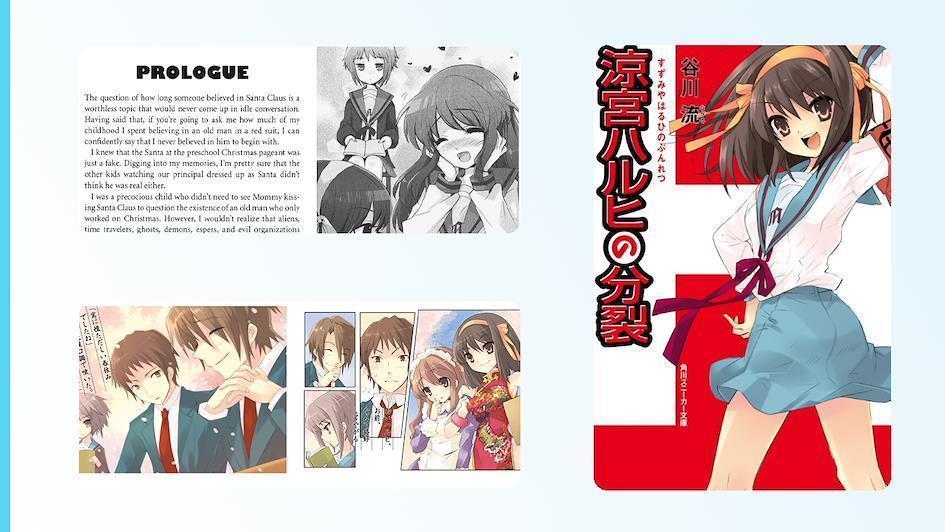
Haruhi Suzumiya is a cult figure in Japanese pop culture who got countless fans around the world hooked on anime. She first appeared in the light novel series of the same name by Nagaru Tanigawa, a starting point into the world of light novels for many readers.
The story follows a quirky girl named Haruhi who is completely uninterested in the boring world around her and ordinary people. At school, along with the main characters Kyon, Yuki, Mikuru, and Itsuki, she forms a club called the SOS Brigade, aiming to find aliens, espers, and time travelers, without realizing they might be closer than she thinks.
The light novel is a very easy read, filled with humor, vivid characters, and unexpected plot twists. It’s available in Japanese and many other languages, including English and Russian, making Haruhi one of the best light novels for beginners.
Buy the Haruhi Suzumiya light novel at shosen.tokyo
2. Spice and Wolf / 狼と香辛料
Author: Isuna Hasekura
Genre: Romance, adventure, supernatural
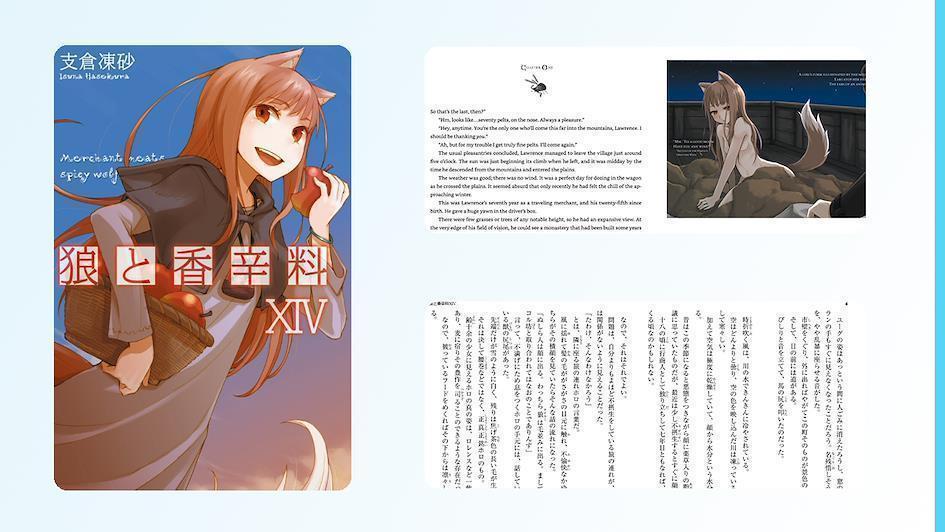
Another great light novel for beginners is Spice and Wolf. Many people know this work from the popular anime, which recently got an excellent remake in 2024. The story of the red-haired wolf girl Holo and the traveling merchant Kraft Lawrence also originates from a light novel series.
According to the plot, the main characters meet in a village when Holo sneaks into Lawrence’s cart full of wheat and asks him to take her back to her homeland. The merchant reluctantly agrees, but soon realizes that the wolf girl’s wit could bring him great profit, and he gradually falls for her bold and cheerful personality.
Together, they travel through pastoral towns and villages, and the light novel invites the reader to join Holo and Lawrence on this calming 24-volume journey. The novel delights with its pleasant prose and has been translated from Japanese into English and other languages.
Buy the light novel Spice and Wolf from Japan
3. Re:Zero − Starting Life in Another World / Re:ゼロから始める異世界生活
Author: Tappei Nagatsuki
Genre: Isekai, drama, supernatural
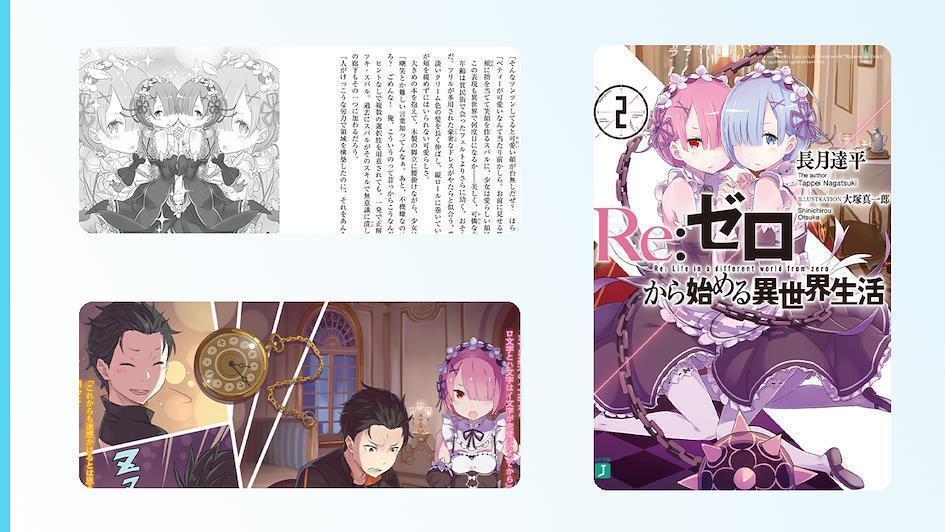
The Re:Zero franchise has become one of the most popular anime projects in recent years, with Rem, Ram, and Emilia winning the hearts of many fans and receiving tons of figurines and merchandise. None of this would have been possible without the light novel by Tappei Nagatsuki, which served as the original source of the famous story.
As is typical for an isekai, the main character, Subaru Natsuki, is transported to another world filled with magic and fantasy. He falls in love with a girl named Emilia and does everything he can to save her, though his only ability is to rewind time. However, this comes at a harsh price — giving up his life.
The world of Re:Zero is quite brutal and dangerous, with assassins and dark mages constantly taking the lives of those important to Subaru. Dying over and over again, he tries to fix everything and prevent anyone from dying, gradually traumatizing his psyche more with each attempt.
The famous light novel is a gripping read and has been translated from Japanese into many languages: English, Spanish, French, Italian, Russian, and others.
Buy the Re:Zero light novel now
4. KonoSuba: God’s Blessing on This Wonderful World! / この素晴らしい世界に祝福を!
Author: Natsume Akatsuki
Genre: Isekai, comedy
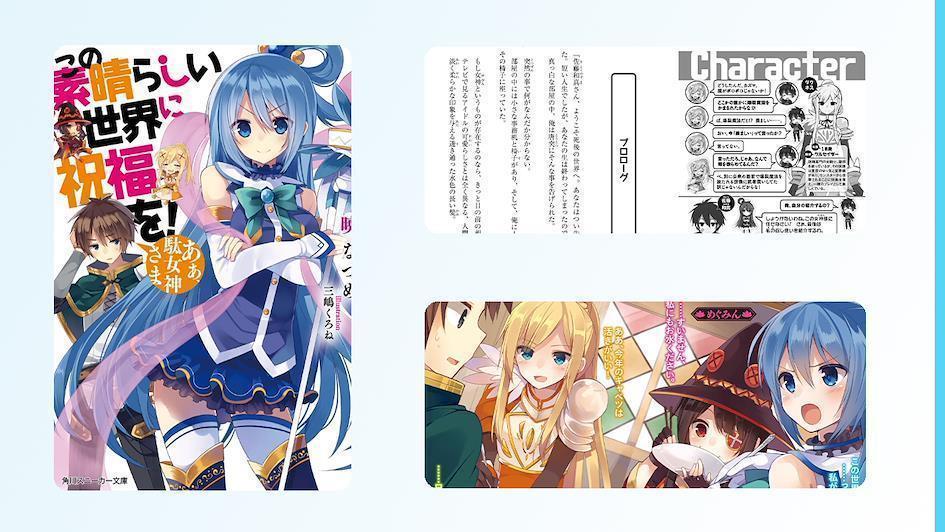
One of the funniest fantasy comedies of recent years also originates from the world of light novels. KonoSuba tells the story of high school student Kazuma Satou, who is reincarnated in another world with the goal of defeating the Demon King.
Instead, he ends up forming a guild with a damegami (useless goddess) named Aqua, an explosion-obsessed mage named Megumin, and a masochistic knight named Darkness. Their main goal? To travel, make money, have as much fun as possible, and avoid doing anything serious.
The excellent humor and characters made the light novel incredibly successful, just like its three-season anime adaptation. You can enjoy it and have a good laugh either in the original Japanese (with furigana for difficult kanji) or in English and Russian translations.
Buy KonoSuba light novels with us
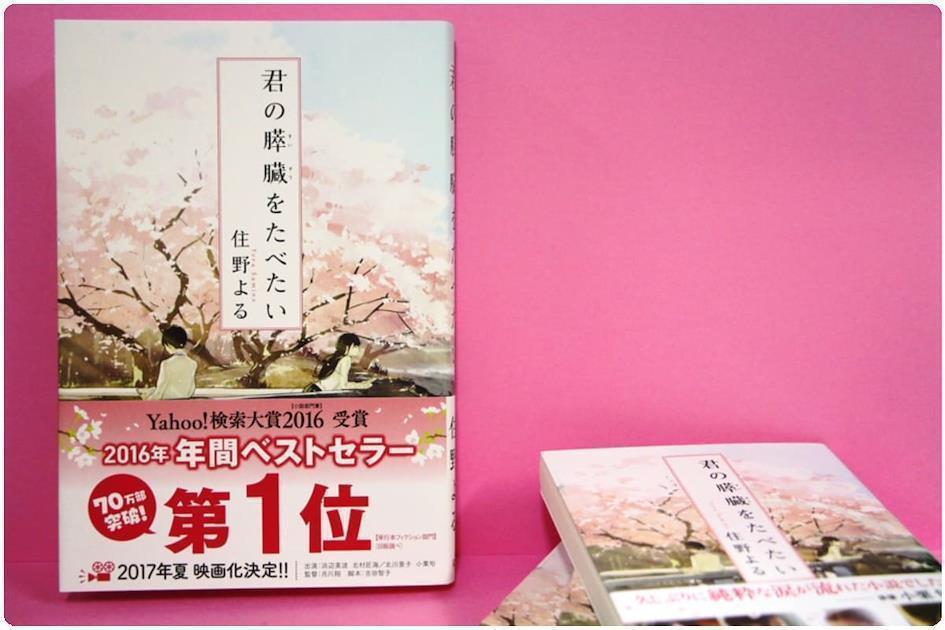
5. I Want to Eat Your Pancreas / 君の膵臓をたべたい
Author: Yoru Sumino
Genre: Drama, romance
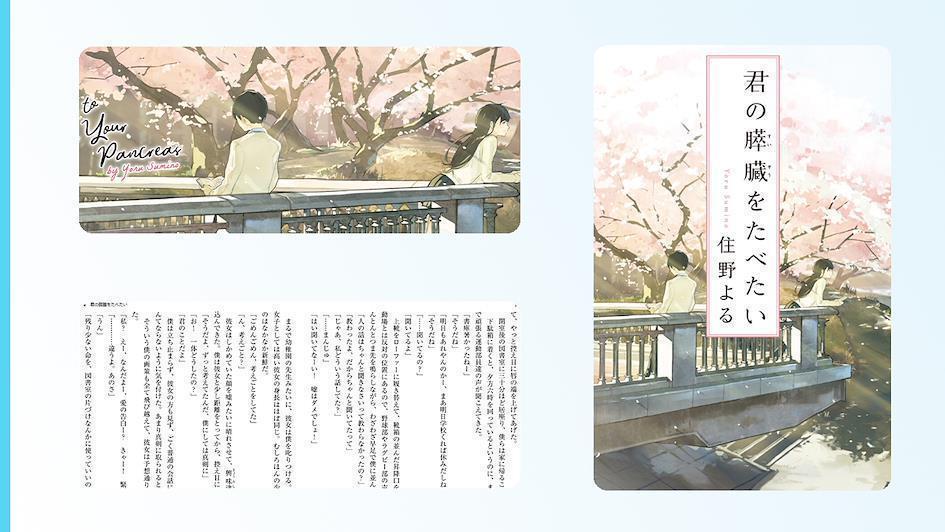
If you prefer drama over comedy, try not to cry while reading the light novel with the unusual title "I Want to Eat Your Pancreas." It's a story about the relationship between a reserved main character and a cheerful girl named Sakura Yamauchi, who suffers from a terminal pancreatic illness. They spend their remaining time together, trying to better understand themselves and each other.
However, the tragic ending—though inevitably known in advance—can unfold in a completely unexpected way. This emotional light novel has been adapted twice: as a live-action film and an anime movie, and has been translated into English and other languages.
Buy the light novel I Want to Eat Your Pancreas through ZenMarket
How to Buy Japanese Light Novels Online
If you want to buy original light novels from Japan, it's much easier than you think. With ZenMarket, you can purchase new and used light novel volumes from various Japanese online stores. Here are the most popular ones.
We recommend ZenMarket as the most convenient store to buy new original light novels from Japan. To find the light novel you’re interested in, use the search bar. Keep in mind that you’ll need to enter the title in Japanese, which you can find and copy from Wikipedia.
Shosen.tokyo is great for keeping up with new printed anime releases — light novels and manga — and they also sell other literature such as idol photobooks, textbooks, and children’s books. Domestic shipping within Japan costs 700 yen and is free for orders over 9,800 yen.
To buy a light novel on shosen.tokyo, simply go to the site and add the desired item to your ZenMarket cart through the pop-up window. You can read a step-by-step shopping guide for recommended stores in a separate blog post.
💡 Also read: How to Buy from Recommended Stores

The Japanese Amazon offers a huge selection of various products, including all kinds of light novels. It's convenient to shop here because you can search for light novels on Amazon without leaving the ZenMarket site, and this well-known Japanese marketplace often offers free shipping within Japan. Moreover, you can find entire collections of light novel volumes on Amazon and buy the whole series in one go!
A well-known Japanese online bookstore that's convenient for browsing and searching various printed anime-related products. It offers light novels and manga, and you can even preview the first pages of any book for free—just click the 試し読み (tameshi yomi, sample reading) button below the cover of the light novel you're interested in.
Bookwalker also allows you to purchase digital copies of light novels and other literature (電子書籍, denshi shosetsu, e-books), which you can start reading on your device immediately.
Light novels are a great mix of manga and literature, perfect for anyone who loves reading and has ever wished for something like “what if anime were a book?” Even if you don’t usually read books, light novels might still interest you, with their accessibility, simplicity, and engaging stories. Try reading your first light novel—let’s enjoy Japanese pop culture together!
Have you signed up for ZenMarket yet?
ZenMarket is the place to get your hands on goods directly from Japan!
Sign up