There is beauty in imperfection - nothing has been made more apparent than the masterpieces illustrated in the form of Japanese art and design. The concept of wabi sabi revolves around the idea of embracing flaws and imperfections. This philosophy was introduced in the global sphere by renowned Japanese designers such as Issey Miyake, Rey Kawakubo, and Yohji Yamamoto.
The idea has caught on successfully and many modern designers are mirroring the concepts in their own works. What makes wabi sabi so fascinating? Let’s find out.
What is Wabi Sabi?
Wabi sabi is a Japanese aesthetic concept that revolves around the appreciation for “beauty that is imperfect, impermanent, and incomplete in nature.”
The character for wabi stands for “subdued, austere beauty”. It represents refined and elegant simplicity through natural colours, textures, and forms, as well as materials such as wood, stone, and clay.
Sabi can be translated as “rust” or “patina,” and represents beauty that develops throughout the passage of time. It also embraces the idea that there is beauty even in decay and imperfection.
The philosophy of wabi sabi is derived from the Buddhist teachings about the three marks of existence - namely impermanence, suffering, and absence of self-nature.
The ideas of wabi sabi can be found present in works such as fashion, landscaping, interior design, and many more.
Also Read: THE APPEAL OF JAPANESE FASHION: WHY GLOBAL SHOPPERS SEEK OUT HARAJUKU, LOLITA, AND VISUAL KEI STYLES
History of Wabi Sabi
(Image source)
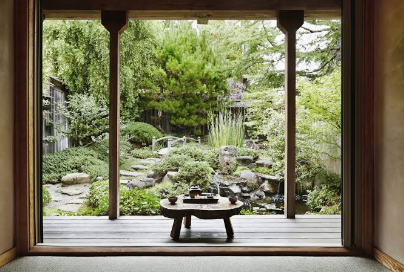
Wabi sabi originated from ancient Taoism and Zen Buddhism, which were brought over from China. The zen priest Murata Jukō first manifested this influence during the changes in tea ceremonies, which replaced gold, jade, and porcelain instruments with wood and clay.
Between 1522 and 1598, Sen no Rikyu introduced the concept to royalty with his teahouse design. The teahouse was built with a low door, requiring the emperor to bow his head to enter. This concept emphasized the importance of humility and has since been adapted into other forms, such as those in gardens, architecture, and poetry, eventually making its way to fashion and even technology.
(Image source)
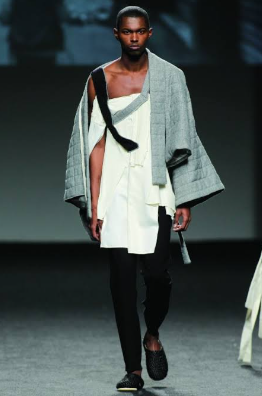
The introduction of wabi sabi in global fashion stemmed from three very influential Japanese designers - Issey Miyake, Rey Kawakubo, and Yohji Yamamoto, who brought the concept to the West in the 80s.
Their unique and expressive takes on fashion were considered controversial as they took a completely different direction when it came to beauty standards as well as fashion and gender norms. However, these served as influences that revolutionized standards and concepts of beauty in global fashion.
Shop Fashion from Japan
Also Read: THE FUTURE OF JAPANESE STREET FASHION: EMERGING TRENDS FROM TOKYO'S UNDERGROUND SCENE
Qualities in Wabi Sabi Style
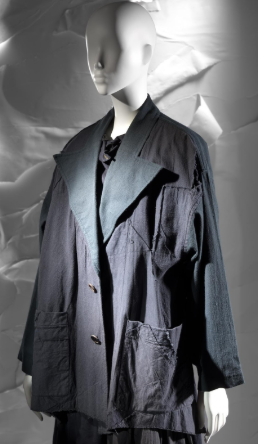
Wabi sabi embraces different qualities and characteristics that make up its philosophies. These are the typical traits of fashion in the wabi sabi style.
(Image source)
Also Read: HOW TO BUY DEARMYLOVE CLOTHES FROM DREAMS JAPAN
1. Simplicity
The idea of simplicity and minimalism is prevalent in wabi sabi culture. Garments in this style are simple but well-designed in structure, avoiding elaborate details and accessories and instead focusing on comfort, function, and durability.
2. Organic form
Structures are presented in rounded, organic shapes rather than fitted and body-hugging.
3. Natural materials
Garments and accessories are mainly crafted using natural materials like cotton, linen, hemp, wood, and stone.
4. Handmade or rustic appearance
There is often a semblance of wear and tear to wabi sabi clothing to represent the passage of time. Garments appear handmade rather than manufactured.
5. Imperfection
The style highlights flaws and imperfections as something beautiful and worth celebrating. The art of kintsugi, which mends broken ceramics and items and whose cracks are painted over with gold, is an excellent example of this application.
6. Asymmetry
Wabi sabi embraces imperfection, including skewed and unnatural angles. Many clothing pieces are tailored to be asymmetrical.
7. Subdued Colors
Because of the simple and natural concept, the style is often expressed in muted or subdued colors. Garments are often monotone or earthy tones.
8. Sustainability
As a culture that has a close connection with nature, products are made with green practices in mind. Many items are recycled, upcycled, or use innovative methods to reduce waste and lengthen product life.
Practices and Applications
Japan is home to many techniques that can transform old or damaged pieces into renewed, artistic masterpieces. The following are examples of such.
1. Kintsugi
(Image source)
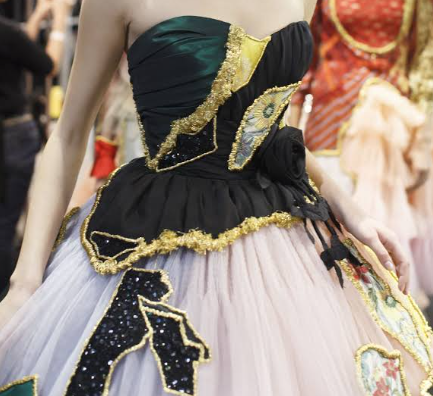
Kintsugi is a technique wherein broken items like vases and ceramics are mended and brushed with lacquer. The cracks are painted over with gold or other metals. In the fashion world, the appearance is often mimicked to highlight the beauty in imperfection. Kintsugi is also applied to jewelry, where cracked or damaged gemstones are restored and enhanced using the technique.
2. Boro
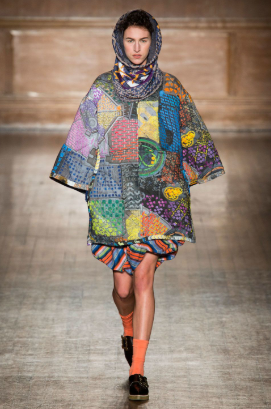
(Image source)
Boro is a patchwork type of mending. It follows a linear fashion of sewing, incorporating patches into the garment. This style has been adapted in fashion and is often associated with quilting and patchwork to create an eclectic style of clothing.
3. Sashiko
 (Image source)
Sashiko mends garments using white stitching done in a repetitive design or pattern. Boro is a result of the process of sashiko, and the latter can have different forms. Sashiko often incorporates nature in its stitching such as grass or waves.
4. Kaketsugi
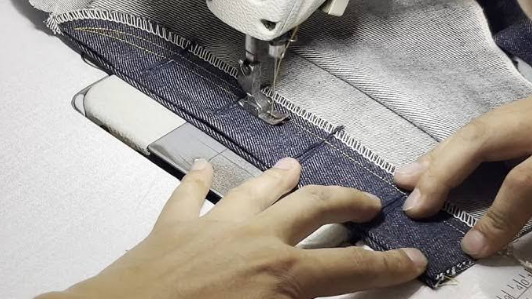 (Image source)
Kaketsugi is another patchwork style of repair. It takes a piece in a hidden area of the garment and uses it to seamlessly repair damaged areas. Kaketsugi has been widely acclaimed due to its meticulous detail whose results show no signs of damage ever being present.
Looking for the perfect look? Whatever style or brand of choice you desire, Zenmarket will bring it to you. Zenmarket specializes in authentic, brand name products imported all the way from Japan. Whether you’re looking for something particular or just a window shop, Zenmarket is open for a visit anytime.
Also Read: SUKAJAN SOUVENIR JACKETS FROM JAPAN
Wabi Sabi Designers
There are many designers who proudly manifest the concept of wabi sabi in their work. These designers are some of the most influential and well-respected in the field:
1. Rey Kawakubo

(Image source)
Kawakubo, founder of Comme des Garçons, came to Paris Fashion week in the 80s and brought something unique that challenged the Western beauty ideals. Her 1981 runway concept included sloppily dressed models, warpaint smeared on their faces as they strutted to the beat of drums. She was considered controversial for the era but soon became a highly influential figure in the world of fashion.
Her designs and techniques are still being admired and replicated to this day.
2. Yohji Yamamoto
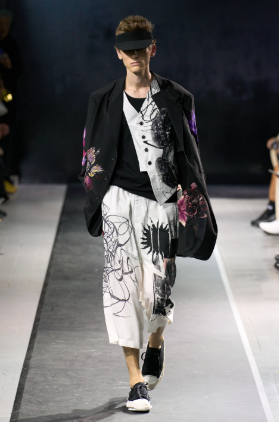 (Image source)
Yohji Yamamoto popularized the idea of “ma” that focused on blank space and the use of irregular shapes. This idea was a sharp contrast to the Western concept of fashion and gender. He continuously challenged gender boundaries with his designs that reflected flowing silhouettes, predominant use of black, and gender fluidity.
3. Issey Miyake
Issey Miyake was most known for blending Eastern and Western elements in his runways and other designs. His collection, “A Piece of Cloth,” featured a large piece of fabric on the model. Excess fabric was used to make exaggerated and unique accessories in the form of long, draping scarves and sleeves. His work in the West opened the doors for designers like Yamamoto and Kawakubo and signaled a revolution in the fashion industry.
The philosophy of wabi sabi is highly acclaimed - foreign designers have adapted to its philosophies and have utilized them in their own creations.
Shop Fashion from Japan
Martin Margiela, a Belgian designer, took inspiration from Japanese designers. Many of his works incorporate the concept of imperfection and deconstruction. He often uses oversized silhouettes as well as unusual materials, many of them secondhand. Visible reconstruction as well as unnatural proportions are visible in his works.
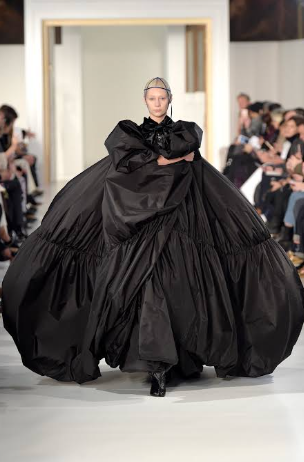
(Image source)
Another Belgian designer, Ann Demeulemeester, worked as an assistant for Margiela and eventually started her own brand. Her avante garde aesthetic is gothic and bohemian, often highlighting elongated silhouettes. Her style is also often described as dark romanticism mixed with minimalism.
Conclusion
Elements of wabi sabi can be found everywhere - from the runways in Paris and Milan to the architectures and interior designs all around the world, the idea of beauty in imperfection has been embraced and translated into art in various manners. This goes to show that Japan’s culture, aesthetics, and values continue to attract and enchant people from all around the world.
Do you want to replicate the wabi sabi aesthetic? Shop for quality fashion brands like A Bathing Ape and Comme des Garçons on Zenmarket. Visit now!