Whilst our impatience festers for the launch of Resident Evil 9: Requiem, and we wait hungrily for more news on the long-promised remakes of earlier titles, we think it’s a good time to look back over the chronicles and timeline of this epic franchise and saga that just keeps on expanding, mutating, and infecting the minds of millions.
We have a lot to thank the Biohazard / Resident Evil series for. Not only did it drag the survival-horror genre kicking and screaming into mainstream appeal, it also laid the groundwork for some magnificent competition with the likes of Silent Hill (which has had a brilliant resurgence in the last couple of years with the Silent Hill 2 remake and the now critically acclaimed Silent Hill f), Siren, Fatal Frame, Dead Space, and countless more beloved series.
This list compiles the ups, downs, and gangrenous missteps of this lumbering behemoth of survival horror. We’ve counted all the mainline games for you and delved into most—if not all—of the wildest and wonkiest spin-offs and special re-releases. (This is an almost entirely comprehensive list, so buckle up!). We’ve also done our best to keep things sterile from major spoilers, but please proceed with caution on any title you haven’t played yet—or are yet to finish!
ZenMarket wants you to get all the biohazardous material we can legally assist you with from Japan – click here to take a peek at what’s out there. Grab your choice of Herb, a Jill Sandwich, and a steaming hot cup of Tea...virus (sorry) with a tiny Umbrella in it (we’ll stop). Then kick back and read through the list in its entirety.
Please note we may be using the terms Biohazard / Resident Evil interchangeably. First appearance of each game is in the titles only. All ports and releases are listed in a table at the end of the article.
Open to See Contents
Contents
- Biohazard/ Resident Evil (1996, PlayStation)
- Biohazard / Resident Evil Director’s Cut + Director’s Cut: DualShock Version (1997 & 1998, PlayStation)
- Biohazard 2 / Resident Evil 2 (1998, PlayStation)
- Biohazard 2 Dual Shock Ver. / Resident Evil 2 DualShock Ver. (1998, PlayStation)
- Biohazard 3: Last Escape / Resident Evil 3: Nemesis (1999, PlayStation)
- Biohazard Gun Survivor / Resident Evil Survivor (2000, PlayStation)
- Biohazard CODE: Veronica / Resident Evil CODE: Veronica (2000, Dreamcast)
- Biohazard Code: Veronica Complete / Resident Evil Code: Veronica X (2001, Dreamcast / PlayStation 2)
- Gun Survivor 2: Biohazard Code: Veronica / Resident Evil Survivor 2: Code: Veronica (Arcade 2001 / PlayStation 2 2002)
- Biohazard / Resident Evil Remake (2002, GameCube)
- Biohazard Zero / Resident Evil Zero (2002, GameCube)
- Gun Survivor 4: Biohazard Heroes Never Die / Resident Evil: Dead Aim (2003, PlayStation 2)
- Biohazard Outbreak / Resident Evil Outbreak (2003, PlayStation 2)
- Biohazard Outbreak File #2 / Resident Evil Outbreak File #2 (2004, PlayStation 2)
- Biohazard 4 / Resident Evil 4 (2005, GameCube)
- Biohazard: The Umbrella Chronicles / Resident Evil: The Umbrella Chronicles (2007, Wii)
- Biohazard 5 / Resident Evil 5 (2009, PlayStation 3 & Xbox 360)
- Biohazard: The Darkside Chronicles / Resident Evil: The Darkside Chronicles (2009, Wii)
- Biohazard Revelations / Resident Evil Revelations (2012, Nintendo 3DS)
- Biohazard Operation Raccoon City / Resident Evil: Operation Raccoon City (2012, PlayStation 3 & Xbox 360)
- Biohazard 6 / Resident Evil 6 (2012, PlayStation 3 & Xbox 360)
- Biohazard HD Remaster / Resident Evil HD Remaster (2014, PlayStation 3 – 2015, PlayStation 4, Xbox 360, Xbox One & PC)
- Biohazard Revelations 2 / Resident Evil Revelations 2 (2015, PlayStation 3, PlayStation 4, Xbox 360, Xbox One & PC)
- Biohazard 0 HD Remaster / Resident Evil 0 HD Remaster (2016, PlayStation 3, PlayStation 4, Xbox 360, Xbox One & PC)
- Biohazard 7: Resident Evil / Resident Evil 7: Biohazard (2017, PlayStation 4, Xbox One & PC)
- Biohazard RE:2 / Resident Evil 2 Remake (2019, PlayStation 4, Xbox One & PC)
- Biohazard RE:3 (+ Resistance) / Resident Evil 3 Remake (+ Resistance) (2020, PlayStation 4, Xbox One & PC)
- Biohazard Village / Resident Evil Village (2021, PlayStation 4, PlayStation 5, Xbox One, Xbox Series X|S & PC)
- Biohazard RE:4 / Resident Evil 4 Remake (2023, PlayStation 4, PlayStation 5, Xbox Series X|S & PC
- Handheld Oddities & Other Oddballs
- Resident Evil 2 (1998, Tiger game.com)
- Resident Evil 2 (1999, Nintendo 64)
- Biohazard Gaiden / Resident Evil Gaiden (2001, Game Boy Color)
- Biohazard 2 / Resident Evil 2, Biohazard 3: Last Escape / Resident Evil 3: Nemesis, Biohazard Code: Veronica X / Resident Evil Code: Veronica X — Nintendo GameCube Releases (2003-2004)
- Biohazard: Deadly Silence / Resident Evil: Deadly Silence (2006, Nintendo DS)
- Biohazard 4 Wii Edition / Resident Evil 4: Wii Edition (2007, Nintendo Wii)
- Biohazard 4 Mobile Edition / Resident Evil 4: Mobile Edition (2008, Feature Phones)
- Biohazard Archives: Biohazard & Biohazard 0 / Resident Evil Archives: Resident Evil & Biohazard 0 (2008–2009, Nintendo Wii)
- Biohazard / Resident Evil: Degeneration (2009, iOS)
- Biohazard 5: Alternative Edition / Resident Evil 5: Gold Edition (2010, PlayStation 3 & Xbox 360)
- Biohazard 4 (Zeebo) / Resident Evil 4 (2010, Zeebo)
- Biohazard: Outbreak Survive (2011, GREE Mobile – Japan Only)
- Biohazard: The Mercenaries 3D / Resident Evil: The Mercenaries 3D (2011, Nintendo 3DS)
- Biohazard Chronicles HD Selection / Resident Evil: Chronicles HD Selection (2012, PlayStation 3)
- Minna to Biohazard: Clan Master (2012, GREE Mobile – Japan Only)
- Biohazard VS. (2013, GREE Mobile – Japan Only)
- Biohazard Revelations / Resident Evil: Revelations – Console Ports (2013, PlayStation 3, Xbox 360, Wii U & PC)
- Biohazard Umbrella Corps / Resident Evil: Umbrella Corps (2016, PlayStation 4 & PC)
- Biohazard/Resident Evil Cloud Versions Nintendo Switch
- Rejects and Reworked Resi Titles
- Full Table
Biohazard/ Resident Evil (1996, PlayStation)
The iconic adventure that started it all. The game that introduced us to the Umbrella Corporation, taught us not to trust guys wearing sunglasses at night, and very nearly served us a delectable Jill Sandwich.
Yes, it’s janky, wonky, and laughable in places by today’s standards, but this mostly just adds to the charm. Despite its limitations, this was a well-designed and considered experience from start to finish, and it still shines in places. Earlier 3D horror with tank controls did exist—see Alone in the Dark (also set in a mansion, no less)—but play that and then this, and you’ll see how much the formula improved in gameplay alone.
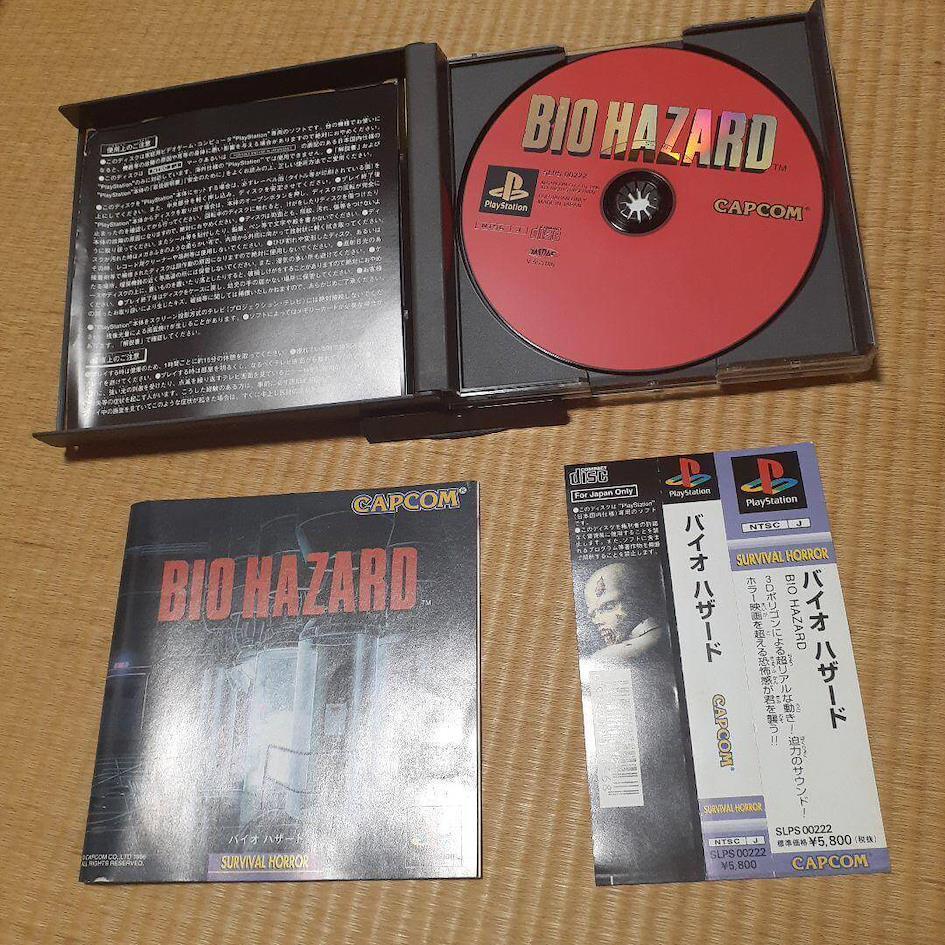
This release was an absolute game-changer back in the day: then-unmatched levels of action and violence, a big Hollywood-esque conspiracy, and a live-action intro that’s the most ’90s thing on earth. Even better, most of that intro’s original cast have since reunited to work on fan projects together. Who knew biological warfare, corruption, and terror could be so wholesome?
Please also note: the Japanese version had more gore in cutscenes, and some wildly over-the-top songs for both the intro and end credits that are seriously worth checking out.
Biohazard / Resident Evil Director’s Cut + Director’s Cut: DualShock Version (1997 & 1998, PlayStation)
The first Director’s Cut release was Capcom’s stopgap while the fanbase waited for Resident Evil 2. Essentially the same game as the original, it added three modes (Original, Beginner, and Arrange) to mix up difficulty and item/enemy placement. Marketed as the “uncut” version, it restored the bloodier cutscenes from the Japanese release across the board.
This is generally considered to be the best version of the original game by the fanbase, but Capcom added further changes with the follow-up Director’s Cut: DualShock Version, released the following year. The added rumble support gave bites, gunshots, and shocking moments extra impact. The new analog stick controls, however, weren’t quite the upgrade players expected, and many still preferred the d-pad to better match the classic tank-control style.
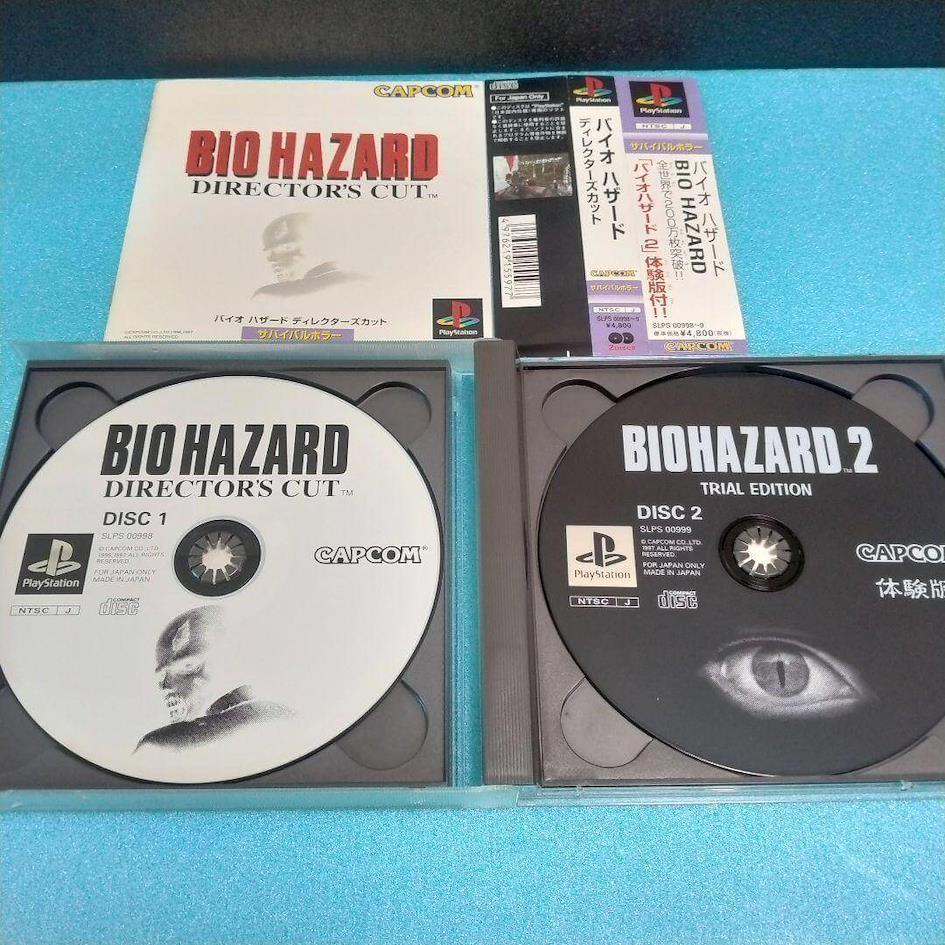
What the DualShock version of Resident Evil: Director’s Cut is most infamous for, though, is the replacement of the original soundtrack with a new score credited to Mamoru Samuragochi, a composer once celebrated in Japan as the “New Beethoven” for continuing to create music despite claiming to be deaf. Years later it emerged that the work had actually been ghostwritten by someone else entirely, alongside other pieces he had been credited for. Wild.
Biohazard 2 / Resident Evil 2 (1998, PlayStation)
One of the greatest sequels of all time, Resident Evil 2 raised the bar across the board: scope, atmosphere, storytelling, and cinematic ambition. Development was troubled, with the infamous scrapped “1.5” build nearly finished before being rebooted (see the “Laboratory Rejects and Reworked Resi Titles” section for more on this). Even so, the turnaround was remarkably fast considering how polished the final product was. The Raccoon City Police Department (RPD) became an instant fan-favourite setting, packed with mood, detail, and expert-level design that still holds up today.
The dual-protagonist structure, with two overlapping campaigns, brought a new sense of replayability and narrative layering. Add in bigger set pieces, grotesque boss fights, and a city-wide descent into chaos, and you had a sequel that redefined survival horror. The A/B system effectively gave players four full campaigns, encouraging multiple playthroughs. It also created a sense of continuity: Leon and Claire weren’t just parallel characters, they were interacting with each other’s actions. For example, if Leon picked up certain ammo in his A scenario, it wouldn’t appear in Claire’s B scenario.
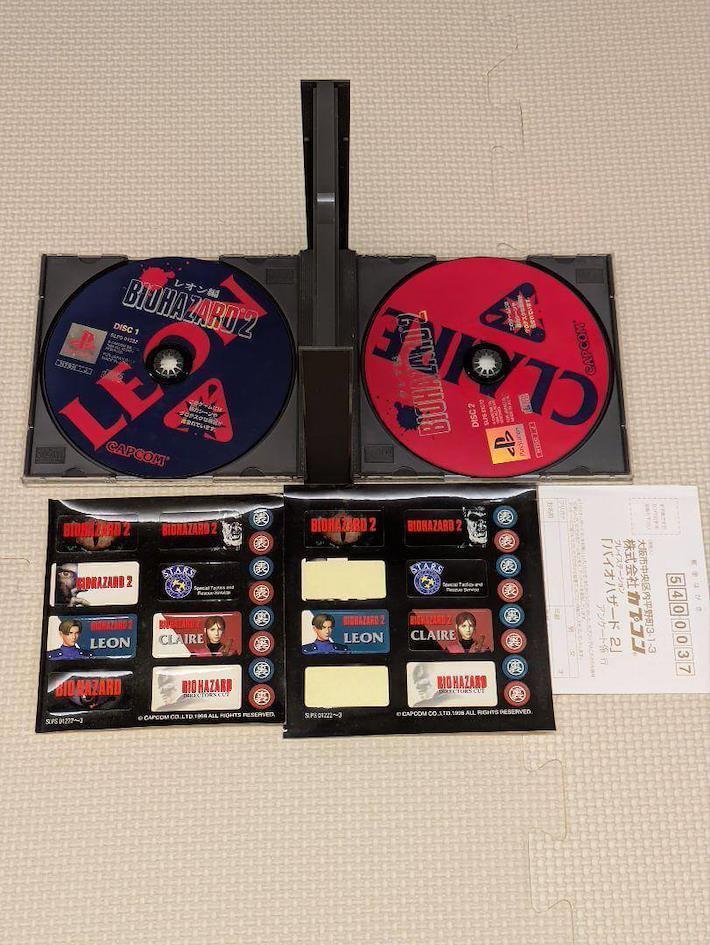
Once players finished these campaigns, they could unlock The 4th Survivor, where you play as HUNK, an Umbrella special operative. Even more memorably, there was a scenario where you controlled a sentient chunk of Tofu. Ambitious for its time, these extras gave Resident Evil 2 a reputation for depth and replay value that few survival horror games of the era could match.
We still find it highly amusing that this was Leon’s first day on the job as an RPD officer. Probably quite a memorable one for him.
Biohazard 2 Dual Shock Ver. / Resident Evil 2 DualShock Ver. (1998, PlayStation)
This reissue arrived only months after the original Resident Evil 2 and was designed to showcase Sony’s then-new DualShock controller. Analog stick input and vibration feedback gave the classic tank controls a fresh edge, but the real value lay in even more bonus content.
Extreme Battle Mode—an arcade-style gauntlet featuring Leon, Claire, Ada, and even Chris Redfield—offered randomized challenges and extra replay value. A new Rookie/Arrange Mode also gave beginners an easier on-ramp, starting with an infinite-ammo SMG and extra supplies.
The Japanese release included a “U.S.A. Version” difficulty, which mirrored the tougher Western balance of stronger enemies and scarcer ammo. Quality-of-life tweaks, like more accessible auto-aim settings, rounded out the package. Importantly, this became the base version for most later ports (PC, Dreamcast, GameCube), ensuring its extras reached a wider audience.
The only element some fans didn’t like was the change to the orchestral soundtrack over the original. It’s purely a matter of taste, but it does arguably alter the atmosphere slightly.
Biohazard 3: Last Escape / Resident Evil 3: Nemesis (1999, PlayStation)
Set during the same window of time—and slightly past the events of Resident Evil 2—Resident Evil 3 sees players take control of fan favourite Jill Valentine once again.
Considered by many to be the highlight of the original trilogy, this entry added a big dose of action to the mix. The new live-selection events affected your routes and the game’s outcome, keeping you on your toes. Combined with the looming threat of Nemesis, there was an element of stress and tension arguably unmatched elsewhere in the series.
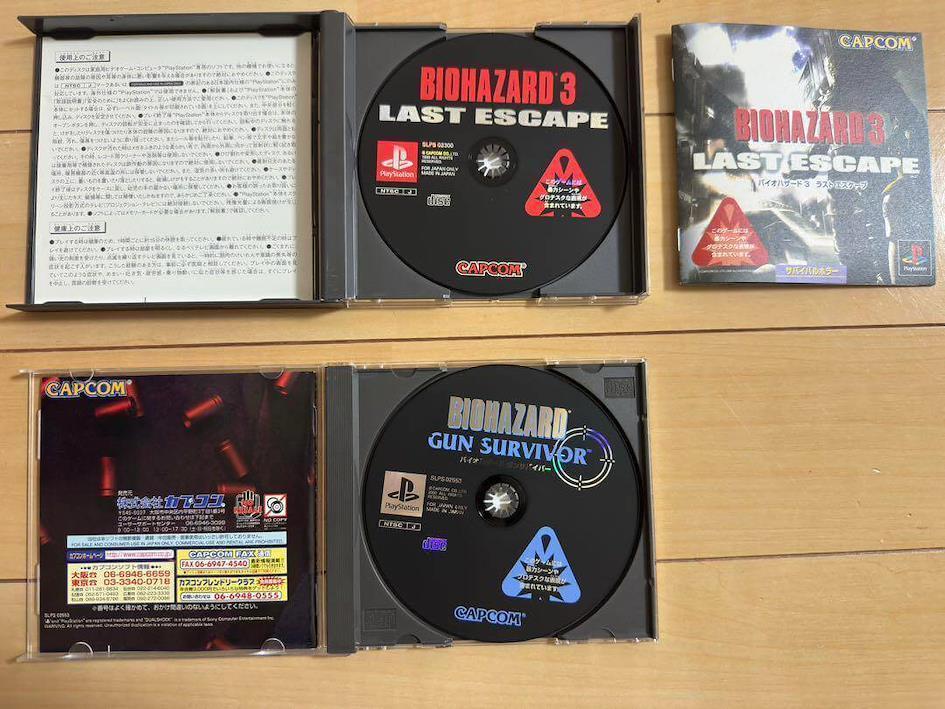
The gameplay was higher octane this time around, with more guns and faster pacing. Though the campaign was shorter, it packed a hell of a punch.
In terms of unlockable content, this time players had eight epilogue file scenarios, The Mercenaries mode, plus unlockable guns and costumes. There was plenty to come back for. We miss the way games used to handle unlockable content and secrets—no paywalls, just trial and error, raw progression, or even digging through cheat books and gaming magazines. Those were the days.
Biohazard Gun Survivor / Resident Evil Survivor (2000, PlayStation)
Ambitious, rough around the edges, and kind of fascinating, though fundamentally a bit pants. This was Resident Evil experimenting with fully free-movement, first-person play—an “off-rails” light-gun FPS years before that was common on consoles, and it’s very clear the formula wasn’t quite perfected yet.
In Japan and Europe it supported the GunCon / G-Con 45, but the North American release dropped light-gun support entirely, which didn’t help its reputation. Still, the idea was bold: take classic RE tension and put it directly behind the sights. This meant you could see familiar enemies from a new perspective, albeit often with inferior character models.
It doesn’t overstay its welcome, but the presentation and pacing are uneven, and the visuals feel low budget compared to the mainline PS1 entries. That said, there’s a gloomy late-era PS1 charm to it, and it really isn’t so offensive if you know how low to set your expectations.
Interestingly, this also received a straight port to PC in Japan in 2002, offering USB light-gun support.
Biohazard CODE: Veronica / Resident Evil CODE: Veronica (2000, Dreamcast)
This is the point where Resident Evil leaned into its campier, more theatrical side whilst proving it had truly come into its own as a series. There are still scares here, but the Ashford twins’ eccentric melodrama pushes the narrative into wilder thematic territory—equal parts gothic horror and soap opera. The game carried forward much of the classic formula, upgrading it for its first leap into a new console generation.
Not everything was perfect: difficulty spikes were common, and there’s a notorious section where careless resource use can essentially soft-lock your progress (a quick guide check is highly recommended to avoid heartbreak). Still, it remains a great entry in the series from most perspectives.
On the technical side, CODE: Veronica was a landmark. Gone were the static pre-rendered backdrops; instead, the Dreamcast delivered full 3D environments with dynamic camera angles. It was a genuine showcase for Sega’s hardware, and visually felt like a generational leap forward for the series.
The Dreamcast release even came bundled in a special edition with a custom console and controller—one of the standout collector’s bundles of the era.
(See article for other interesting special edition controllers)
Biohazard Code: Veronica Complete / Resident Evil Code: Veronica X (2001, Dreamcast / PlayStation 2)
While Japan received an updated Dreamcast “Complete” edition of Code: Veronica, the rest of the world got the enhanced “X” release. This version quickly became the definitive edition and the base for future ports.
The core game remains intact, but key cutscenes were expanded and rebalanced, giving more weight to Albert Wesker (the daylight-shade-wearing extraordinaire) and tightening the overall story pacing.
It was this version that cemented Code: Veronica in the wider fan consciousness, thanks to its accessibility on the PlayStation 2’s massive player base. That presence only grew with its GameCube port, later inclusion in physical PS3 Biohazard collections, and ongoing digital releases.
Gun Survivor 2: Biohazard Code: Veronica / Resident Evil Survivor 2: Code: Veronica (Arcade 2001 / PlayStation 2 2002)
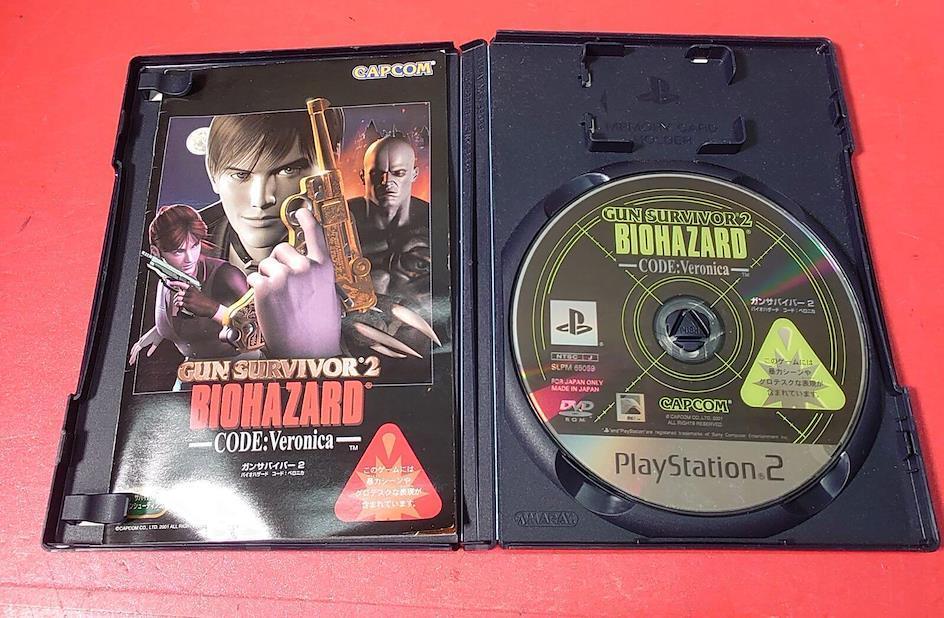
The second Gun Survivor game was a curious spin-off: essentially a light-gun remix of Code: Veronica. Instead of a full campaign, it condenses locations, enemies, and bosses from the original into a rail-shooter framework. The game first appeared in Japanese arcades on Namco’s System 246 hardware, before making its way to the PlayStation 2—though it never released in North America.
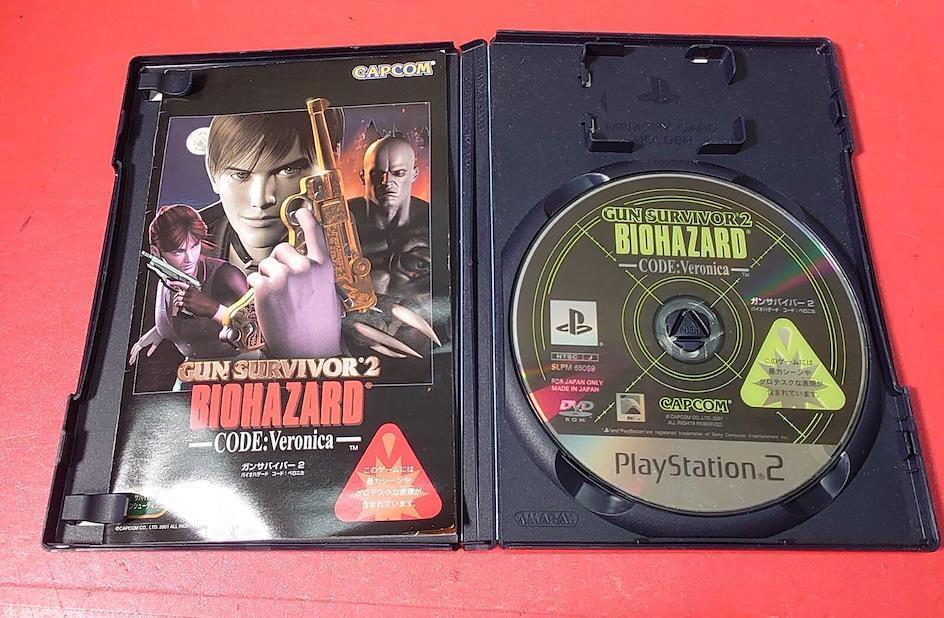
While the novelty of revisiting Code: Veronica’s settings in arcade form was appreciated by some, the game really isn’t all that hot. The PS2 version allowed for both controller play and light-gun support, but the repetitive design, lack of significant content, and the complete absence of co-op hurt its appeal. (A split-screen mode could at least have added something.)
In many ways this is a weaker addition to the series than the first Gun Survivor title. That game might have been rough, but it felt less like a blatant cash grab than this one.
Biohazard / Resident Evil Remake (2002, GameCube)
It was a surprise to many that this game launched as a GameCube exclusive (at least until the later HD Remaster). Looking back, we’re glad it did—because the end result was one of the console’s defining titles, alongside its slightly less admired but still strong prequel, Resident Evil 0.
Sales were perhaps somewhat limited by the GameCube’s reputation as a console for kids, but that’s exactly why Nintendo pursued the series: bringing Resident Evil onboard was a way to buck that reputation and add a mature edge to the system’s library.
Utilising the power of the friendly little Cube to render characters, weapons, and interactable items—while relying heavily on fixed camera angles and stunning pre-rendered backgrounds—this entry turned out to be both a stunning homage to the original and a visual masterpiece. Compare its presentation to most other games of the era, and there’s little contest.
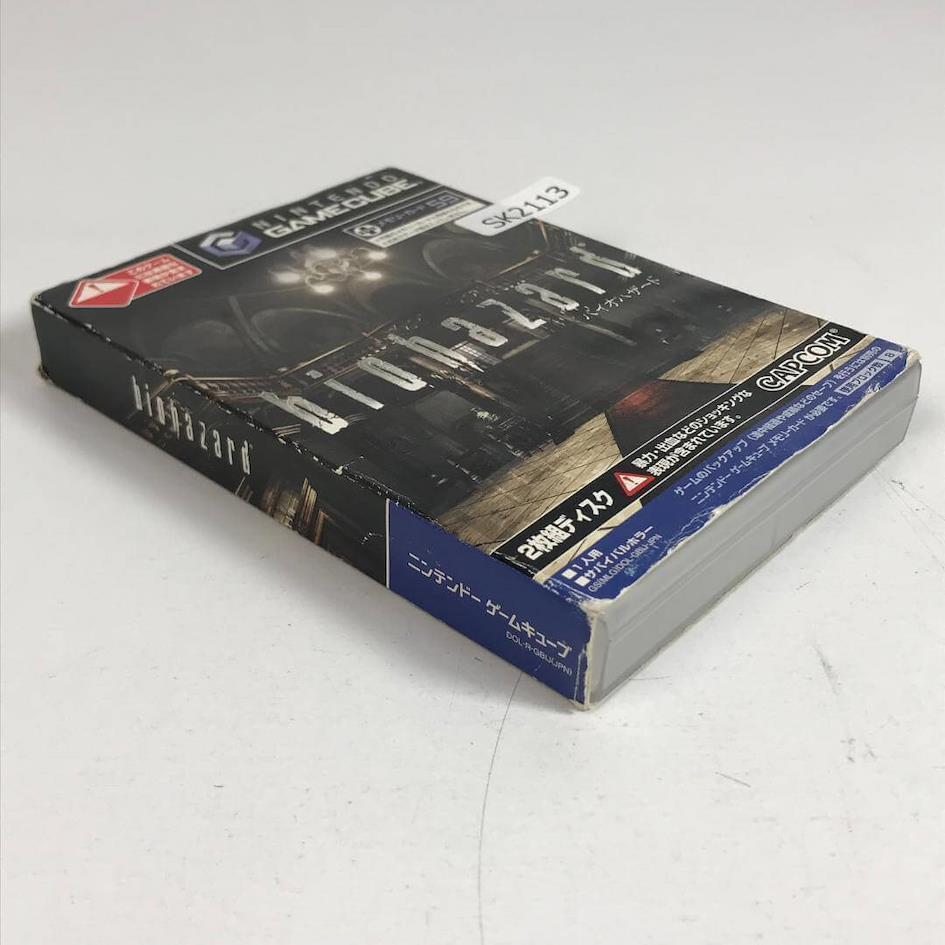
Subtle gameplay improvements and a reworked mansion, facilities, and grounds made it all feel familiar but more refined and optimised—an absolute joy (and terror) to explore. Expanded lore, extra bosses, and genuinely solid voice acting this time around (which, sadly, does detract a little from the original’s cheesy charm) helped cement this as an essential title for the console.
Recommending it today isn’t hard, though you may as well go for the Remastered version, now available across almost all modern systems.
Biohazard Zero / Resident Evil Zero (2002, GameCube)
A prequel to the original game and developed alongside the celebrated Remake, Resident Evil Zero was a visual showcase for the GameCube and still looks striking today. The opening aboard the Ecliptic Express is one of the series’ most cinematic introductions, setting the stage with moody lighting and tense pacing.
That said, Zero has always been divisive. The removal of item boxes—a series staple—meant players had to drop gear on the floor, leading to heavy backtracking. The new partner system, letting you switch between Rebecca Chambers and Billy Coen at will, was innovative but sometimes clumsy, with AI quirks and resource juggling that could become frustrating. Some players even found themselves soft-locked late in the game if items or character positioning weren’t managed carefully.
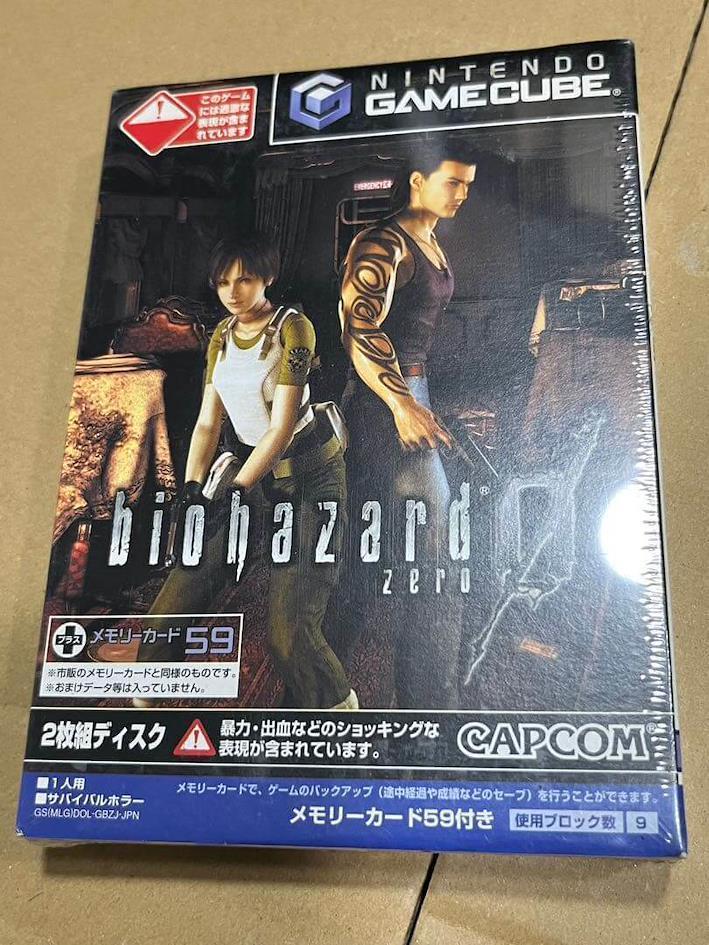
Still, despite its missteps, Zero delivered lore fans appreciated, particularly around Umbrella’s early experiments and James Marcus’ leech-driven storyline, while further cementing Rebecca Chambers and newcomer Billy Coen as memorable parts of the saga.
Gun Survivor 4: Biohazard Heroes Never Die / Resident Evil: Dead Aim (2003, PlayStation 2)
This one is ambitious—if somewhat divisive. This time around you’re combating B.O.W.s on a cruise ship with hybrid third- and first-person gameplay. Yep: Gaiden dragged itself across the deck so Dead Aim could shamble.
First point of note: this is a Resident Evil game with light-gun support—the G-Con 2, which included a D-pad for movement. It’s actually mostly competent and a lot of fun. Honestly, this one likely gets more hate than it deserves for not being on the level of the mainline games (or Code: Veronica), but it’s a huge step up from the Gun Survivor titles and shows how light-gun gameplay can fit into the series. Thankfully, we’d only have to wait half a decade for the definitive Resident Evil light-gun experience.
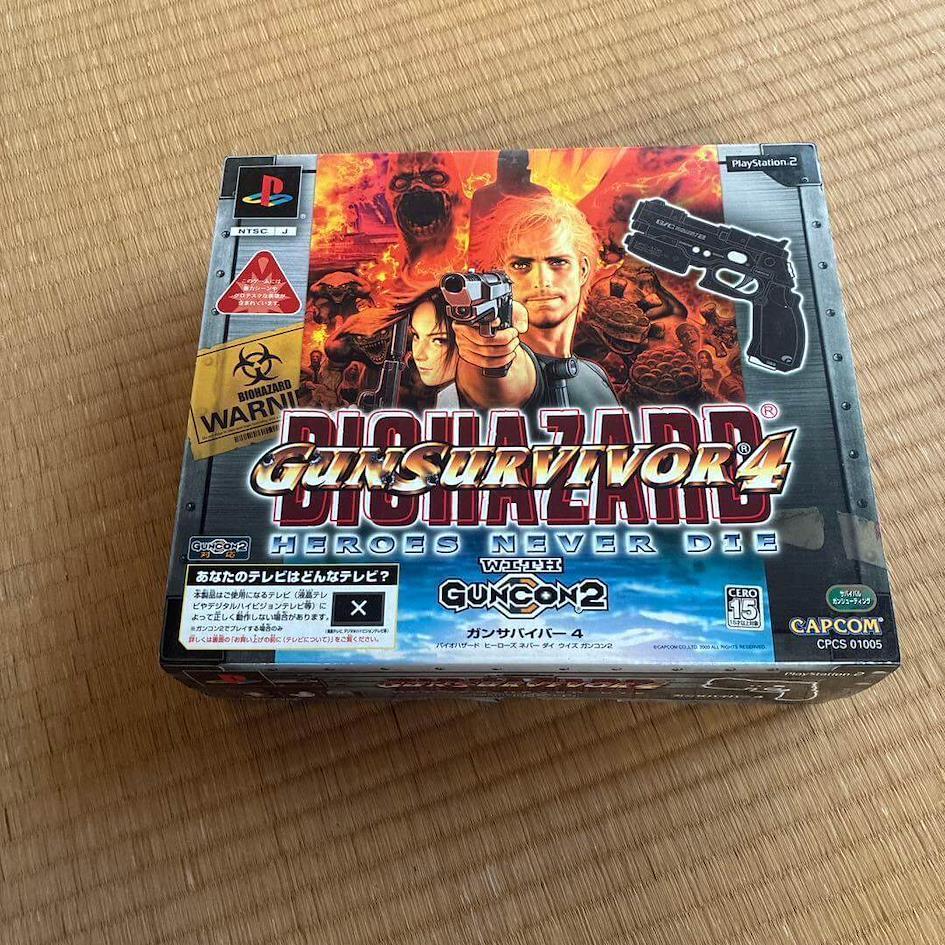
Dead Aim doesn’t overstay its welcome. The characters are half-decent, the main villain is interesting, and the gameplay has enough variety to stay fresh (minus a couple of boss battle missteps). The presentation is solid, and the music is a highlight—the save-room theme especially is to die for: liminal, spooky, serene, and calm all at once. We love it.
Biohazard Outbreak / Resident Evil Outbreak (2003, PlayStation 2)
An idea ahead of its time, packed with potential and some genuinely great concepts—it just didn’t quite stick the landing. Back in the early 2000s, the thought of an online co-op horror game where you managed resources and fought off waves of undead sounded like a dream come true. The problem? Once you started asking around, you quickly realized you knew exactly zero people actually playing PS2 games online.
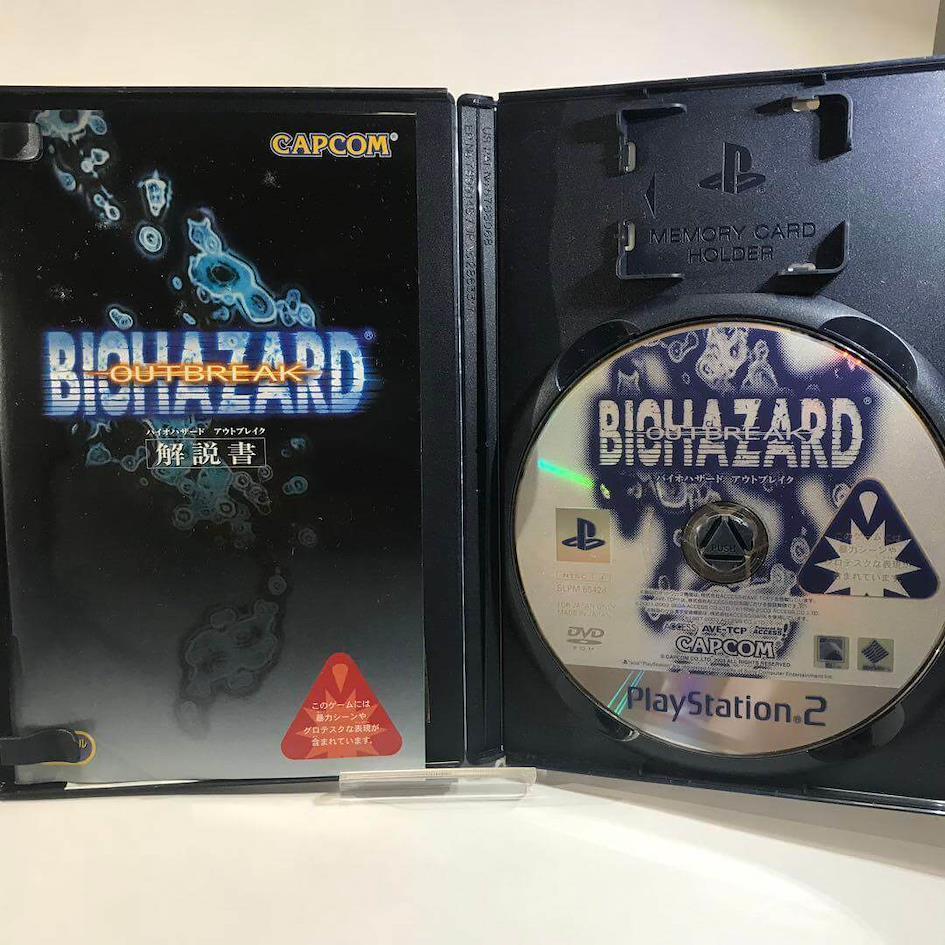
Resident Evil Outbreak put you in the shoes of eight playable characters during the same night as Resident Evil 2, offering a more civilian perspective on the Raccoon City disaster. The timeline runs parallel to the events of RE2 and RE3, showing how ordinary people tried (and mostly failed) to survive while the main series heroes were busy elsewhere.
It’s a solid title, but one that is arguably outshone by its sequel.
Biohazard Outbreak File #2 / Resident Evil Outbreak File #2 (2004, PlayStation 2)
This is a prime candidate for a remake Capcom should be working on. Why we haven’t had another good team-based online co-op Resident Evil / Biohazard like this is a mystery—there’s no shortage of players who’d want to jump back in.
This follow-up introduced fresh scenarios and new mechanics that built on the first game’s foundation. You could crawl while injured, explore new maps, and even face off against zombie animals—including a rather perturbed undead elephant. Co-op systems were refined, making teamwork feel smoother and more natural, while the overall package delivered welcome quality-of-life upgrades.
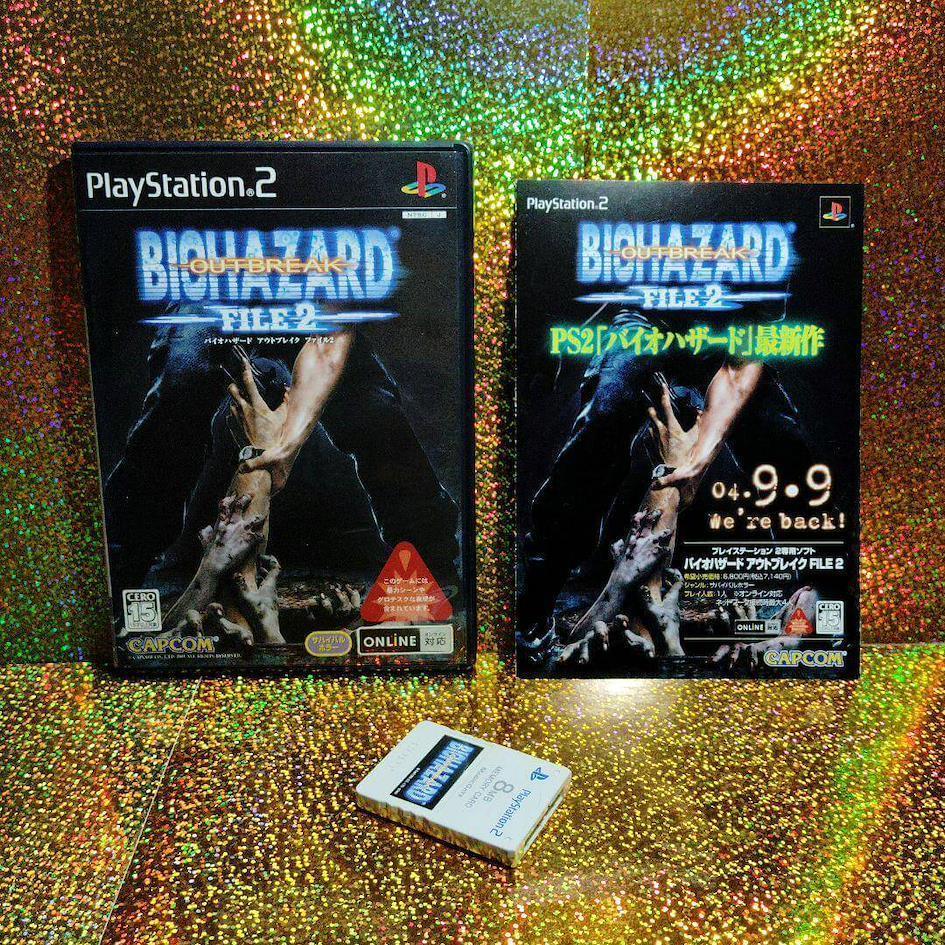
Of course, the servers eventually gave up the ghost, but fan-run servers keep the game alive to this day. Outbreak File #2 remains a cult favorite—a reminder of how much potential Resident Evil had (and still has) in the online survival space.
Biohazard 4 / Resident Evil 4 (2005, GameCube)
Considered by many to be the best in the series, this one was a long time in the making (check out our article on the prototype builds and spin-offs that grew out of its development).
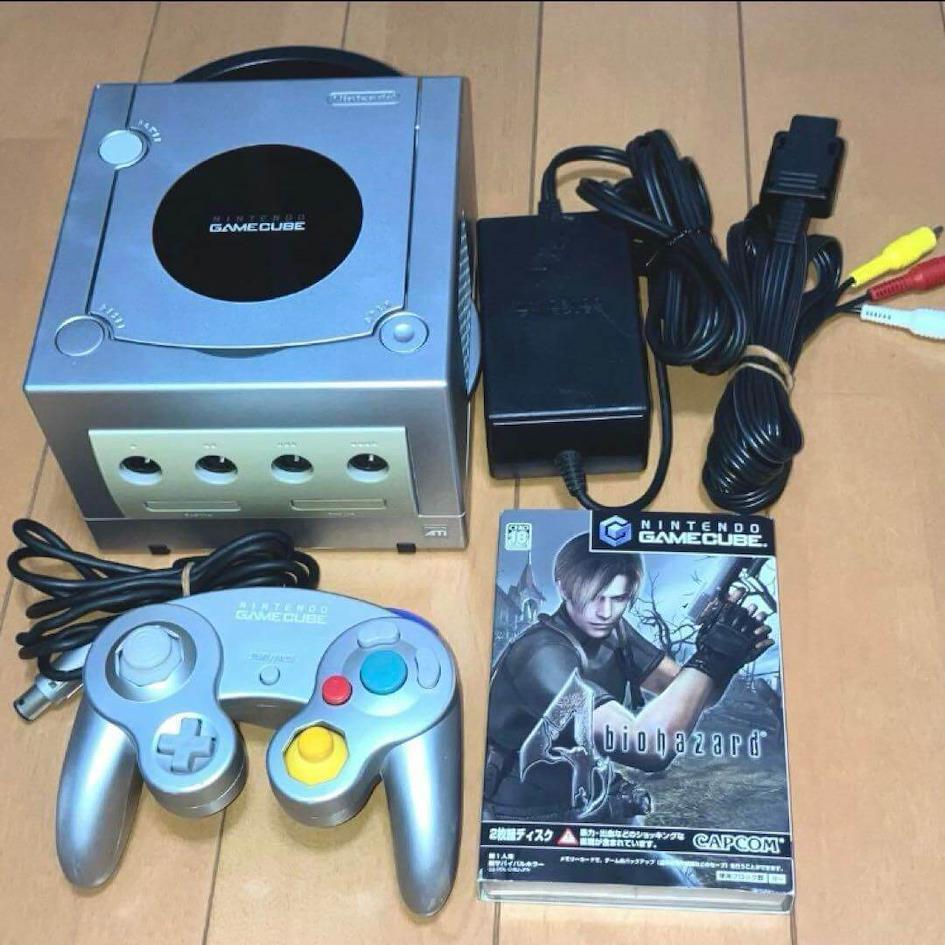
We do lament the death of the fixed-camera angles, and many questioned the shift toward a more action-oriented style, but the presentation, graphics, inventory system, weapon upgrades, and sheer replayability set this one at an almost unique level of quality for its era.
The Remake is fantastic (and we’ll cover it later in this list), but the original still stands apart as an essential must-play in the series.
Originally intended as a GameCube exclusive under the so-called “Capcom Five” (2002)—Resident Evil 4, P.N.03, Viewtiful Joe, Killer7, and Dead Phoenix—this exclusivity plan turned out to be somewhat ill-fated:
- Resident Evil 4 went multi-platform, famously hitting the PS2 in 2005, and has since been ported to nearly every console under the sun.
- Viewtiful Joe and Killer7 (both stunning games) also went multi-platform.
- P.N.03 (less stunning) remained GameCube-only.
- Dead Phoenix (well… just dead) never shipped.
The more you know.
Biohazard: The Umbrella Chronicles / Resident Evil: The Umbrella Chronicles (2007, Wii)
The Wii did light-gun games remarkably well, and this is easily one of the standouts on the system. Umbrella Chronicles takes you back through the events of Resident Evil 0, 1, and 3, while also sprinkling in new background lore that fleshes out the deep dark chapters and heinous doings of the Umbrella corporation. In many ways, it’s as much an education in Biohazard history as it is a fast-paced co-op shooter.
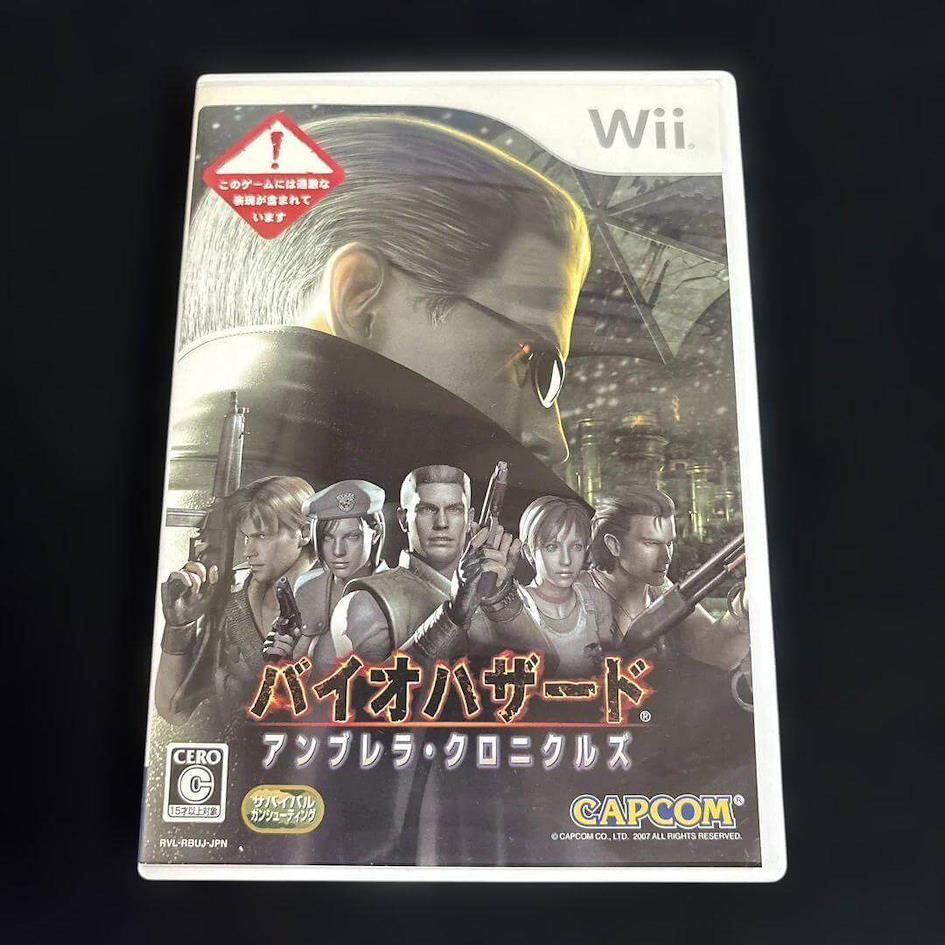
It’s not the deepest experience, but it keeps things engaging with a wide arsenal of weapons, a satisfying critical headshot mechanic, and a surprisingly strong atmosphere considering the on-rails chaos. For fans, it’s both a lore fix and a fun excuse to blast through the series’ key moments with a friend.
Biohazard 5 / Resident Evil 5 (2009, PlayStation 3 & Xbox 360)
Some will tell you this is where things started going a bit wrong for the mainline series. After the absolute home run—technically, commercially, and critically—that its predecessor was, Biohazard 5 couldn’t quite match the same impact.
It’s a bit of an action slugfest in the end, with only loose horror themes. Still, some great characters are introduced and reintroduced, and the game maintains a consistent production quality throughout. The new African setting is refreshing and helps hold the experience together, but overall it’s far more action-oriented. Despite its gameplay similarities to RE4, thematically it may have felt like too far a departure for some fans.
Playing single-player did highlight the horror themes and stress, but this was undermined by the utterly terrible partner AI. The game feels like a compromise and a step down in quality from Resident Evil 4. That said, the co-op is highly entertaining, the Mercenaries mode is great fun, and the array of weapons is always enjoyable to muck about with.
And of course, there’s the notoriously meme-worthy boulder-punching scene that we shan’t elaborate on.
Biohazard: The Darkside Chronicles / Resident Evil: The Darkside Chronicles (2009, Wii)
The second of the “true” light-gun spin-offs, Darkside Chronicles sticks to the on-rails formula of Umbrella Chronicles but sharpens the cinematic edge. This time the spotlight falls on retelling of both Resident Evil 2 and Code: Veronica, with an added Leon-and-Krauser side story that bridges neatly into Resident Evil 4.
Some players actually rate this higher than Umbrella Chronicles, while others prefer the first—it really comes down to which scenarios resonate with you and how tolerant you are of the game’s infamous shaky-cam. On the plus side, it heightens the cinematic feel and makes boss encounters more dramatic. On the downside, it can make aiming a little nauseating.
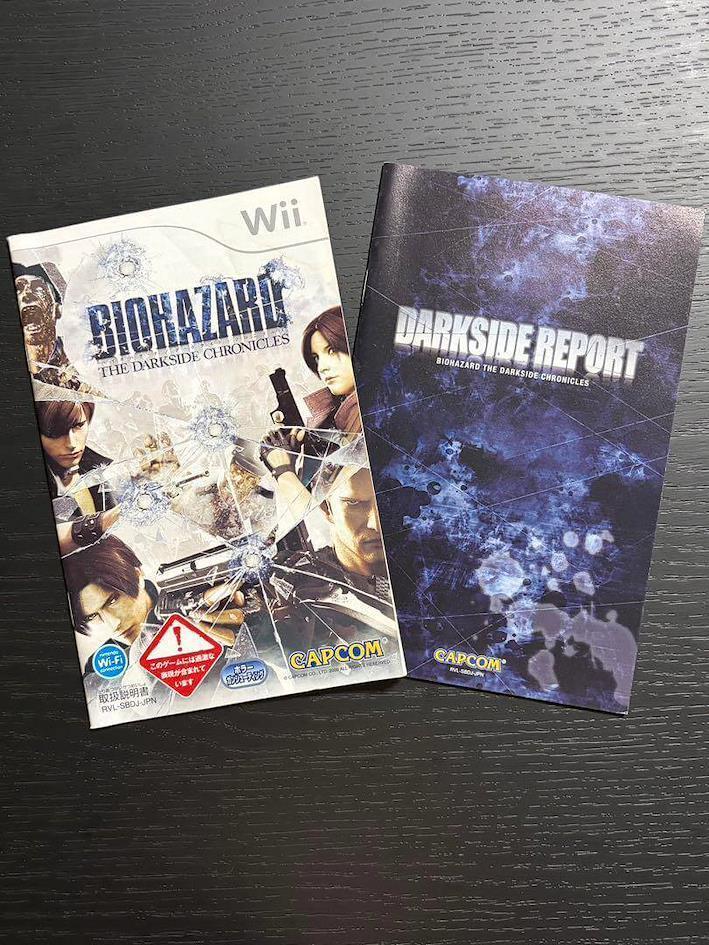
With revamped boss fights, slicker storytelling, and a stronger sense of atmosphere, Darkside Chronicles is a worthy companion piece to Umbrella Chronicles. Together they form one of the Wii’s best showcases of just how well Resident Evil could translate into light-gun chaos.
Biohazard Revelations / Resident Evil Revelations (2012, Nintendo 3DS)
Another boat-based entry, this one anchored firmly between the events of RE4 and RE5. Revelations looked stunning on the 3DS and, more importantly, brought the series back toward genuine survival horror after the more action-heavy RE5. Set aboard the Queen Zenobia cruise ship, it leaned into atmosphere, tight corridors, and a creeping sense of dread that many fans had missed.
The game was praised as a “return to horror” and stood out as one of the handheld’s technical showpieces. It also introduced Raid Mode, a score-attack co-op side mode that quickly became a fan favorite, along with the Genesis Scanner, which let players sweep environments for hidden supplies and DNA samples.
Claustrophobic, moody, and surprisingly ambitious for a portable title, Revelations proved that Resident Evil could still deliver tension in smaller, handheld-sized doses.
Biohazard Operation Raccoon City / Resident Evil: Operation Raccoon City (2012, PlayStation 3 & Xbox 360)
A bit of a wasted opportunity as far as co-op games in this series go. Developed by Slant Six Games, the team behind the SOCOM series (a fairly realistic, mostly hardcore squad-based military shooter), it reimagined Resident Evil as a squad-based combat spin-off.
You play as an elite Umbrella unit let loose in the streets of Raccoon City during the events of RE2 and RE3. On paper, it’s a fascinating premise—PvPvE chaos where you fight rival squads while the undead swarm both sides.
In execution, though, it stumbled. As a single-player experience, it’s rough: poor AI, bullet-sponge enemies, and a general lack of polish make it more frustrating than frightening. With friends, the co-op can be dumb fun if you’re in the right mindset, but it never quite lives up to its potential.
The class-based characters with unique skills and abilities were a nice touch, and the team-versus-team-plus-zombies setup was at least ambitious. But in the end, Operation Raccoon City is remembered more as a curiosity than a classic—a side experiment that never quite hit the mark.
Biohazard 6 / Resident Evil 6 (2012, PlayStation 3 & Xbox 360)
If Resident Evil 5 teed the series up for an action trajectory Resident Evil 6 smashed it into orbit. This is a messy, silly and truly massive game, featuring four full campaigns—Leon & Helena, Chris & Piers, Jake & Sherry, and Ada Wong—each offering its own style and perspective, all intertwining into one globe-spanning outbreak narrative. On paper, it’s the ultimate Resident Evil epic right? In practice, we know that bigger doesn't always mean better...
The game threw in everything: a melee combat system, sprint-and-shoot mechanics, cover-based gunplay, quickfire set pieces, and even vehicular sections. Leon’s campaign leaned more into classic horror, Chris’s into military action, Jake’s into survival with a Nemesis-style pursuer, and Ada’s tied the whole story together. But the variety often tipped into bloat, leaving the pacing uneven and the identity muddled.
Co-op is where the chaos shines. With a friend, the goofiness, variety, and sheer unpredictability can be great fun, even if the polish isn’t always there. As a single-player experience, though, it’s rough, unfocused, and sometimes downright exhausting.
Stack this up against the Resident Evil 2 Remake or RE7, and you’d be forgiven for thinking it came from an entirely different series. Resident Evil 6 remains one of the franchise’s most divisive entries—ambitious, overloaded, and unforgettable, even if not always for the right reasons.
Biohazard HD Remaster / Resident Evil HD Remaster (2014, PlayStation 3 – 2015, PlayStation 4, Xbox 360, Xbox One & PC)
The definitive way to experience the 2002 GameCube remake, polished up for modern hardware with just enough tweaks to make it accessible without losing the original atmosphere. This version added widescreen 16:9 support with clever camera panning, optional modern-style controls alongside the classic tank setup, and full trophy/achievement support.
On PS4, Xbox One, and PC it ran at 1080p, 30fps, while the PS3 and Xbox 360 versions were capped at 720p, 30fps with slightly downgraded textures and lighting. Aside from these performance differences, the content was identical across platforms.
It remains the gold standard for classic Resident Evil—slow, tense, deliberate survival horror that still holds up beautifully today. For many fans, this is the game they return to again and again, and it’s one of the easiest recommendations for anyone looking to step into the series for the first time in the modern era.
Biohazard Revelations 2 / Resident Evil Revelations 2 (2015, PlayStation 3, PlayStation 4, Xbox 360, Xbox One & PC)
We’ll never say no to more Barry Burton. Revelations 2 may not be a technical showpiece, but it carved out its own space in the series with an interesting mix of characters and themes. The dual campaigns pair Claire and Moira in one thread, and Barry and Natalia in the other, unravelling an island-prison mystery tied to the shadowy Alex Wesker.
This was also the first Resident Evil to be released episodically, with four main episodes rolled out weekly alongside two bonus chapters. The format gave the game uneven pacing, but when it clicked, the gameplay was slick and satisfying. The partner-switch mechanics kept puzzles engaging, and while the lack of an online co-op campaign baffled many, the expanded Raid Mode 2.0 offered plenty of multiplayer fun to make up for it.
Some players rolled their eyes at Moira, but her arc—alongside Barry’s relentless “Magnum Dad” energy—added some surprisingly adult themes about family, legacy, and responsibility. It might not be a series standout, but it’s a solid entry that balances pulpy action with more grounded character beats.
Biohazard 0 HD Remaster / Resident Evil 0 HD Remaster (2016, PlayStation 3, PlayStation 4, Xbox 360, Xbox One & PC)
We won’t hammer on about this one too much since it’s a re-release, but Resident Evil 0’s HD Remaster gave the GameCube original a fresh coat of paint. The visuals were nicely upgraded with sharper assets, widescreen support, and modern control options, making it a pretty slick-looking game even by today’s standards.
The package came with a few extras too, including alternate costumes and the tongue-in-cheek Wesker Mode, where you could replay the campaign with Albert Wesker replacing Billy, complete with glowing eyes and superpowers.
Not a reinvention, but a necessary update to a solid entry in the series.
Biohazard 7: Resident Evil / Resident Evil 7: Biohazard (2017, PlayStation 4, Xbox One & PC)
When the demo first dropped, many fans let out a collective sigh of relief—horror was finally back at the center of Resident Evil. At the time, the teaser built huge anticipation, and the full release more than lived up to the hype.
Graphically stunning and with a simple but effective hook—Ethan Winters searching for his missing wife Mia—the game’s real stars are the unhinged Baker family. Jack smashing through walls like a Southern Kool-Aid Man never gets old, and each family member delivers their own twisted brand of horror through tense, inventive boss battles. The mix of grotesque comedy, body horror, and moments of pure survival terror is balanced beautifully against the catharsis of finally turning the tables with just the right weapon at the right time.
Not everything was perfect: the “Molded” enemy type are scary initially but wear out their welcome really living up to their moldy old name as the game goes on. Still, the atmosphere, pacing, and sheer sense of dread more than make up for it. And for the brave, the entire game could be played in VR—one of the most intense horror experiences ever put to a headset.
Built on the then-new RE Engine and presented in first-person for the first time in the main series, Resident Evil 7 was a true return to form, proving Capcom could still terrify while reinventing the franchise for a new era.
Biohazard RE:2 / Resident Evil 2 Remake (2019, PlayStation 4, Xbox One & PC)
Rarely does a remake surpass the original in any medium, but Capcom has made a habit of it—and this may be the crown jewel. The 1998 classic was reimagined from the ground up, expanding technically and thematically into one of the most celebrated survival horror games ever made. The graphics are jaw-dropping, the physics visceral, and the gameplay satisfying enough to keep you coming back for multiple playthroughs.
The iconic night of terror in Raccoon City is reborn here, with Claire, Leon, and Ada’s intertwined stories retold in a way that feels fresh while staying true to the original. Solid puzzles, inventive boss fights, and just enough extra screen time for fan-favorites like Marvin give the game depth—though, as always, don’t get too attached.
This was the first Resident Evil to use the RE Engine with an over-the-shoulder perspective, combining modern combat mechanics with tense survival horror pacing. The addition of a fully systemic Mr. X, stalking you relentlessly through the police station, made exploration both terrifying and unpredictable.
Universally praised and endlessly replayable (TOFU and 4th Survivor scenarios have returned too!), Resident Evil 2 Remake isn’t just a great remake—it’s one of the finest entries in the series, full stop.
Biohazard RE:3 (+ Resistance) / Resident Evil 3 Remake (+ Resistance) (2020, PlayStation 4, Xbox One & PC)
This one’s a bit of a mixed bag. On the surface it looks and plays beautifully thanks to the RE Engine, with slick action and some spectacular set pieces. Jill’s desperate escape from Raccoon City has never looked better, and Nemesis got a flashy overhaul with modern mechanics that keep you on edge.
But for many fans, the cuts hurt. Iconic locations from the 1999 original were missing, leaving the game feeling streamlined to the point of being short. As a standalone action-horror experience it’s solid, but compared directly to its source material, it feels like a missed opportunity.
Worth mentioning is the “Raccoon City Demo”, which gave players an early taste before release and did a lot to stoke hype—even if the final game didn’t fully deliver on the expectations it set.
The bundled multiplayer spin-off, Resident Evil Resistance, didn’t help matters: a 4v1 asymmetrical experiment that launched buggy, unbalanced, and quickly fizzled out. Instead of being the big celebration for the series’ imminent 25th anniversary, it wound up more of a footnote.
Polished, fast, and fun while it lasts, Resident Evil 3 Remake ultimately left players wanting more—both in content and in ambition.
Biohazard Village / Resident Evil Village (2021, PlayStation 4, PlayStation 5, Xbox One, Xbox Series X|S & PC)
This game shares a lot of the same feel as series highs like Resident Evil 4 with its setting, weapon upgrades, and even a bigger (maybe better) merchant replacement, all while expanding on the first-person gameplay introduced in Biohazard 7. Village is a big, bossy return to action horror, combining themes and mechanics from the post-RE4 era into a satisfying package.
The supporting cast is where the game truly shines: iconic, meme-worthy figures like the towering Lady Dimitrescu and the eccentric, oversized merchant The Duke easily steal the spotlight. The story itself is a bit wacky and uneven, but it delivers some unforgettable moments—including one unexpected chase sequence that’s as terrifying as it is applause-worthy.
The PS5’s haptic triggers are a neat touch—maybe a little gimmicky, but when you’re unloading a shotgun into some grotesque monster trying to tear your throat out, the heavy trigger feedback feels remarkably good.
Unfortunately, the later Shadows of Rose DLC was rough: well-intentioned but clunky in execution, and nowhere near as memorable as the main game.
All in all, Village is another great addition to the series—stylish, scary, silly, and unforgettable.
Biohazard RE:4 / Resident Evil 4 Remake (2023, PlayStation 4, PlayStation 5, Xbox Series X|S & PC
Considered by many as the best remake of all time—rivalled only by Silent Hill 2, Dead Space, and Resident Evil 2—Capcom’s reimagining of RE4 managed to modernize a classic without losing sight of what made it iconic.
Not every fan agrees with the changes, though. Some questioned why Leon’s over-the-top bravado was toned down, shifting the tone of his dynamic with Ashley. But nearly everyone agreed her AI was vastly improved, with far less of the dreaded escort frustration that hung over the original.
The gameplay is superb: fluid combat, reactive physics, terrifying new enemy types, and of course, the triumphant return of the Merchant. Expanded roles for characters like Luis added surprising depth, even if the overall tone leaned a little different from the OG. For purists, the heart still belongs to 2005, but this version is undeniably a must-play.
The addition of a fully fleshed-out Separate Ways DLC was also a major improvement, transforming what was once a bonus side scenario into a robust, narrative-driven expansion. With new mechanics like parrying, knife durability, stealth take-downs, and expanded side quests, Resident Evil 4 Remake doesn’t just retell the original—it refines it into something new and essential.
Handheld Oddities & Other Oddballs
For the sake of global health we wanted to keep track of all the other monstrosities that have escaped from Capcom's laboratories of terror. Please find more spicy re-releases, hideous handheld releases and meaty off cuts below:
Resident Evil 2 (1998, Tiger game.com)
What the…? The fact this even exists is wild—and perhaps it’s the best game for the system, though that’s not saying much. Thankfully it’s short, because calling it “not the best way to play Resident Evil 2” would be putting it incredibly kindly. The Tiger.com handheld was hardly a compelling console, and cramming one of 1998’s killer apps into a gray-scale, near-music-free package makes for a very different kind of nightmare—an eerily quiet one at that. Even at the time it was technically underwhelming, and the compromises to the gameplay experience were obvious.
In its own right, it functions: gameplay revolves around navigating screens in an almost grid-like fashion. It even gets the dubious honor of being the best handheld Resident Evil at the time—purely by virtue of being the only one. But with only a single scenario (compared to the console’s two), weaker fixed-camera direction, and a generally messier presentation, it struggles to feel cohesive.
Tracking down a physical copy today is a serious challenge for collectors, but if you’re curious, watching a playthrough online will give you the idea—and save you from any unnecessary trauma from having to actually play it.
Resident Evil 2 (1999, Nintendo 64)
Now we’re talking—this version of the game is a technical marvel for a number of reasons. Those familiar with the N64 and PS1 will know their design philosophies and technical capabilities were wildly different compared to later competitors. The PS1, with its CD format, could store a huge amount of audio and video. The N64, though more powerful in raw hardware terms, was limited by the capacity of cartridges. This often meant games were smaller in scope, and games across multiple discs on the PS1 really had no business being on the Nintendo 64 at all.
And yet, some very clever people managed to cram this massive game into a single N64 cart (with a couple of minor tweaks to the format). Those clever folks were Angel Studios, who would go on to develop Smuggler’s Run (a game that actually prototyped a fair amount of content for Grand Theft Auto III) before later becoming the Rockstar San Diego team behind Red Dead Revolver and Red Dead Redemption.
Biohazard Gaiden / Resident Evil Gaiden (2001, Game Boy Color)
By the Game Boy Color era, a whole host of big series were drooling like zombies hungry for a slice of the portable gaming market pie. For better or worse, this was the dish Capcom served up for Resident Evil—and trust us, it’s not great, but still a huge step up from a certain other handheld title we’ll be mentioning later.
To be fair, any time spent playing as our bearded friend Barry Burton is time well spent, so this game earns some points on that front. Where it loses us is with the clunky gameplay and the general nonsense of it all.
The story takes place on a cruise ship and features a hybrid FPS-style combat system (believe it or not, this isn’t the only Resident Evil game to try this approach—you’ll see another later in this article). As Barry, you’re tasked with tracking down Leon S. Kennedy, who has mysteriously disappeared, all while navigating a boatload of zombies and fending off a B.O.W. that can disguise itself as people.
As you might have already gathered, this one was pretty ambitious, but it’s far more interesting in theory than it is in reality. Getting hold of a physical copy today is expensive, and it’s not especially fun to play. Still, we recommend checking out a playthrough online just to see what Capcom was aiming for.
Biohazard 2 / Resident Evil 2, Biohazard 3: Last Escape / Resident Evil 3: Nemesis, Biohazard Code: Veronica X / Resident Evil Code: Veronica X — Nintendo GameCube Releases (2003-2004)
We’re bundling these together since they all hit the GameCube around the same time, as part of Capcom’s push to position the Cube as the “Home of Resident Evil.” They’re still solid games, but arriving late in the console’s life and offering little in the way of new content or visual upgrades, they felt underwhelming next to the high bar set by the 2002 Remake and Resident Evil 0.
Resident Evil 2 and Resident Evil 3: Nemesis both arrived in January 2003, followed a few months later by Code: Veronica X. The release window stretched into 2004 thanks to a delayed PAL launch. For most players, these were simply faithful ports with little to distinguish them from their earlier PlayStation and Dreamcast versions.
One odd bit of trivia: the title-screen announcer was re-recorded for the GameCube versions to match the voice used in Resident Evil and Resident Evil 0 on the same system — a tiny tweak meant to make the games feel more uniform as a collection.
Biohazard: Deadly Silence / Resident Evil: Deadly Silence (2006, Nintendo DS)
Another take on the original, this time filtered through the lens of Nintendo DS oddities. At its core it’s still the classic mansion adventure, but now sprinkled with touch-screen quirks and microphone gimmicks. The standout is the stylus-as-knife feature—surprisingly fun, and one of the better uses of the DS hardware.
The game included two distinct modes. Classic Mode was a faithful port of the 1996 original, while Rebirth Mode layered on all the DS gimmicks: knife battles, quick-turns, a map on the top screen, and even moments where you had to blow into the mic (yes, the infamous candle puzzle still frustrates emulator users today).
It’s a strange little spin on RE1, but a novel one, and for handheld fans it remains one of the more interesting ways to revisit the nightmare. For many, this is considered the best portable-only release in the series.
Biohazard 4 Wii Edition / Resident Evil 4: Wii Edition (2007, Nintendo Wii)
Arguably the definitive version of the game before the later HD remasters, Resident Evil 4: Wii Edition was an absolute banger for Nintendo’s motion-control machine. It kept everything that made the original so groundbreaking while layering in pointer-based aiming that felt instantly natural and precise.
With Wii Remote IR aiming, popping headshots and pulling off quick reflex shots had never felt smoother, and the inclusion of all the PS2 extras (including Ada’s Separate Ways) made it the most complete package at the time.
For many fans, this is still considered one of the best ways to play RE4. This one also sold very well, shifting over 2 million copies worldwide.
Biohazard 4 Mobile Edition / Resident Evil 4: Mobile Edition (2008, Feature Phones)
Interesting as a novelty and surprisingly impressive given the hardware, this cut-down Resident Evil 4 almost feels like a PS1-style demake project. If you didn’t know it existed, you could be forgiven for mistaking it as some kind of fan experiment.
Not a good way of experiencing of the series' peak titles—but is it fascinating? Absolutely. This release would also serve as the foundation for a later port onto the Zeebo, mentioned further down this list.
Biohazard Archives: Biohazard & Biohazard 0 / Resident Evil Archives: Resident Evil & Biohazard 0 (2008–2009, Nintendo Wii)
Released under the “Archives” banner, these Wii versions were essentially straight ports of the 2002 GameCube Remake and Resident Evil 0. The main addition was Wii Remote support for menus and basic functions, but beyond that the core games remained unchanged.
The first Archives release brought back the gorgeous and atmospheric reimagining of the original mansion adventure, while the second repackaged the train-to-laboratory prequel starring Rebecca Chambers and Billy Coen. Neither was a reinvention, but together they offered Wii owners a chance to revisit two of the series’ most important entries on newer hardware.
Biohazard / Resident Evil: Degeneration (2009, iOS)
A curious spin-off tied to the CGI film of the same name, this iOS-exclusive was a full 3D action title starring Leon S. Kennedy in a zombie-ridden airport scenario. For its time it was a technical novelty, showing off what Apple’s handhelds could manage, but it never quite rose above a modest tie-in.
The controls were clunky even back then, but it did feature some returning mechanics including a more boring version of the merchant. Today it’s hard to play at all—even via ROMs (and yes, please stick to the law when it comes to downloading). Obscure? Absolutely. Still, it’s at least worth mentioning that this one existed.
Biohazard 5: Alternative Edition / Resident Evil 5: Gold Edition (2010, PlayStation 3 & Xbox 360)
What’s better than boulder-punching? Boulder-punching with bonus content. Alternative Edition (later rebranded as “Gold Edition” in the West) bundled Resident Evil 5 with everything Capcom had cooked up post-launch — and it actually felt like a definitive package rather than just a marketing excuse.
The headline additions were the two story episodes. Lost in Nightmares sent Chris and Jill creeping through a gothic mansion dripping with nostalgia, deliberately echoing the Spencer Mansion’s puzzle-box pacing and atmosphere. Then came Desperate Escape, which threw you head-first into an all-guns-blazing escape sequence with Jill and Josh, leaning into co-op chaos and relentless waves of enemies. Between the two, you got a surprisingly balanced reminder of both sides of Resident Evil’s personality: eerie atmosphere and dumb, loud fun.
Also included: Mercenaries Reunion, a refreshed spin on the series’ arcade mode, with new characters and team-ups that let you live out some gloriously odd match-ups. And if you happened to be in Japan, you even got PlayStation Move motion controls (later patched worldwide), which were either immersive or hilarious, depending on how much you flailed around in your living room.
This Gold Edition would later become the basis for the PlayStation 4 and Xbox One re-releases, which bundled the extra content by default and remain the versions most people play today.
Biohazard 4 (Zeebo) / Resident Evil 4 (2010, Zeebo)
One of the strangest stops in Resident Evil 4’s long tour of platforms was the Zeebo, a little-known microconsole sold mainly in Brazil and Mexico. Released in 2010, this version was essentially the aforementioned mobile release, but upscaled.
It might be a release that many find hard to wrap their heads around, but for players in regions where mainstream consoles were expensive or hard to get, it offered a rare chance to at least get a taste of Capcom’s classic—albeit in a highly compromised form.
We recommend taking a look at this one on YouTube, even just for curiosity’s sake.
Biohazard: Outbreak Survive (2011, GREE Mobile – Japan Only)
Just for clarification: GREE was a mobile social gaming platform popular in Japan during the early 2010s, with a surprisingly healthy player base and a handful of notable Biohazard-themed games.
Outbreak Survive was Capcom’s attempt to take Biohazard into the wild west of Japanese mobile gaming back in 2011, before smartphones had really settled into what they are now. Instead of creeping through corridors with tank controls, you were tapping through missions on a feature phone, trading items with friends, and hoping your squad of allies didn’t crumble against the endless undead grind.
Yes, it was lightweight and repetitive, but for a while it proved popular. Over two million people signed up, and the game shambled along for four years, surviving long enough to celebrate multiple holidays with special events and exclusive characters before the servers finally shut down in 2015.
Was it scary? Not really. Was it Biohazard-themed? Absolutely. While it’s not easy to dig up much on this title today, there are still traces online, enough to show how it carved out a strange little corner in the series’ history.
Biohazard: The Mercenaries 3D / Resident Evil: The Mercenaries 3D (2011, Nintendo 3DS)
The Mercenaries 3D is what happens when you take Resident Evil’s beloved Mercenaries bonus mode from RE4 and RE5, inflate it into a full release, and then stubbornly glue the save data to the cartridge forever. The save system ended up as much of a talking point as the gameplay itself.
At its core, Mercenaries 3D is a standalone score-attack survival gauntlet with tight controls, flashy melee finishers, and enough exploding heads to make you forget there was no campaign to be found. Running around as Chris, Jill, HUNK, and more fan favorites (though oddly no Leon), it was undeniably dumb fun, and it looked sharp on the then-new 3DS hardware.
The catch? At launch, your progress was permanent. Unlocks, stats, and scores couldn’t be reset — meaning if you wanted to start fresh or sell the game on, tough luck. This decision baffled fans and critics alike, overshadowing what was otherwise a solid slice of portable action.
Still, if you can get around the odd save system, The Mercenaries 3D remains a fun little time capsule.
Biohazard Chronicles HD Selection / Resident Evil: Chronicles HD Selection (2012, PlayStation 3)
A neat little package bundling Umbrella Chronicles and Darkside Chronicles together in HD, complete with PlayStation Move support and trophy integration.
Both games now looked sharper than ever, upscaled to 1080p, and while the Move wasn’t exactly beloved hardware, it turned out to be a surprisingly capable fit for these titles. For anyone who missed these rail-shooter spin-offs on the Wii, this collection was the best way to experience them.
Minna to Biohazard: Clan Master (2012, GREE Mobile – Japan Only)
Another mobile/GREE title, Minna to Biohazard: Clan Master was a Japan-only mobile/social experiment that mashed up survival horror with collectible card game mechanics. Players built decks of familiar faces and items from the series to push through missions generated by the in-game “Vasilisk” system. The idea was that this system recreated Biohazard outbreaks and incidents from previous titles, while also introducing some new spins and curveballs.
As with other GREE games, this one never left Japan, and today it survives mostly in screenshots, old forum posts, and a handful of low-view YouTube videos. Not scary, and definitely not canon—but another interesting Biohazard curio/offshoot.
Biohazard VS. (2013, GREE Mobile – Japan Only)
Yet another mobile/GREE title, Biohazard VS. reworked the classic Mercenaries formula into short, timed missions where players scored points by mowing down waves of enemies and chaining combos. The aim was efficiency — clear enemies quickly, keep the combo meter alive, and outscore rivals on the leaderboards.
Like most GREE titles, it leaned heavily on daily events, character unlocks, and monetization hooks, and it also never left Japan. With GREE’s decline, the servers were shut down, making it a short-lived experience. Still, the arcadey, short-session design actually fit the platform surprisingly well, so it deserves some credit as an idea that made sense — even if it didn’t last.
Biohazard Revelations / Resident Evil: Revelations – Console Ports (2013, PlayStation 3, Xbox 360, Wii U & PC)
In 2013, the previously 3DS-exclusive game resurfaced on home consoles and PC with a fresh coat of HD polish, and the results were remarkably competent and well received.
Upgrades included sharper textures, improved lighting, boosted frame rates, and cleaner audio that enhanced the game’s cinematic presentation. Raid Mode also got some extra goodies, with new costumes and refinements that kept the arcade side of things humming along nicely.
Surprisingly, the Wii U version was arguably the crown jewel of the bunch. With the GamePad screen, players could flick through inventory, maps, and the Genesis scanner without cluttering the main screen, while Off-TV play meant you could enjoy the best Biohazard boat ride from the comfort of your couch, bed, or anywhere else the GamePad could reach. It didn’t reinvent the game, but it made it uniquely tactile in a way the other ports couldn’t quite match.
Biohazard Umbrella Corps / Resident Evil: Umbrella Corps (2016, PlayStation 4 & PC)
A case could easily be made for this being the low point of the series. As a multiplayer title it’s fine as a quick throwaway distraction, but even at its best the servers were laggy, the game buggy, and the balance questionable. Strip away the branding and what you’re left with is a generic team shooter awkwardly dressed in a Resident Evil skin.
Short, round-based firefights, cover mechanics and chaotic action in tight maps set in familiar RE locales may sound passable—but the execution just never clicked. Poor controls, shallow content, and frustrating matchmaking made the whole thing feel more like a shameless cash grab than a worthy spin-off.
Put this one straight in the Biohazard waste bag, burn it, and move on. You might even want a tetanus shot after.
Biohazard/Resident Evil Cloud Versions Nintendo Switch
Capcom brought modern Resident Evil to the Switch not with native ports but as cloud-streamed versions. The idea was simple: stream the full console experience directly to your Switch, bypassing hardware limits—provided your internet connection could keep up.
On paper, it meant handheld horror at a fidelity the Switch could never dream of running natively. In practice, results varied. With a strong connection, the experience held up well; with weaker Wi-Fi, the horror wasn’t just the monsters but the stuttering frame rates and input lag.
All four titles—RE7, RE2, RE3, and Village—offered Switch players a way to sample the series’ modern chapters, though with the same cloud-related caveats.
Rejects and Reworked Resi Titles
Resident Evil 1.5 (PlayStation)
The sequel that almost was. Before Claire Redfield rode into Raccoon City, we had Elza Walker — a motorbike-riding student paired with rookie cop Leon S. Kennedy. Development reportedly reached around 60–80% before Capcom deemed it too dull and scrapped the whole thing. A “40% build” leaked in 2013 and has since been lovingly patched by fans, keeping its legend alive. Officially? Don’t expect a release — but RE2 Remake’s Elza-inspired costume for Claire was a classy nod.
Resident Evil Zero / Biohazard Zero (Nintendo 64)
Before it became a GameCube exclusive, Resident Evil Zero started life on the N64. Development even got far enough to show working footage, but the cartridge’s storage limits strangled the project. Zero was scrapped and reimagined for disc, leaving the N64 build as one of the series’ most famous unreleased versions.
Resident Evil (Game Boy Color)
Capcom actually had a finished Game Boy Color port of the original Resident Evil — tank controls and all. HotGen (who also created a solid conversion of Tony Hawk's Pro Skater for GBC) handled the work, somehow squeezing Spencer Mansion into 8-bit form. The project was canned in 2000, with Capcom citing technical compromises. A near-complete prototype leaked years later, letting curious fans finally explore this tiny, pixelated nightmare.
Resident Evil 4 Offcuts
RE4’s rocky road gave us more than one masterpiece. One of the early prototypes, aiming for a more stylish and gothic theme, was scrapped but morphed into the foundations of Devil May Cry, birthing an entirely new franchise. Other abandoned concepts — such as a dog-command mechanic — found their way into the cult horror gem Haunting Ground (Demento in Japan). And of course, there’s the infamous “Hook Man” build (though only shown in demos) was a surreal ghostly spin on RE4 that leaned hard into psychological horror. All in all quite an interesting feast from leftovers.
Biohazard / Resident Evil Portable (PSP)
It’s still surprising that no Resident Evil title ever came to the PSP. Capcom briefly announced one at E3 2009, promising a new handheld Biohazard built from the ground up, but nothing ever materialized. Mysterious...
Inbound Bio-Threats and the Remake Rumour Mill
Capcom isn’t letting up with this behemoth of a horror franchise. All eyes are on the next numbered entry: Resident Evil 9: Requiem. The recent demo shown at PAX suggests the series is still holding strong nearly a decade into its modern resurgence. From the footage we’ve seen, Requiem looks genuinely scary — a darker, more atmospheric swing that should please those who enjoyed the first-person horror of RE7 and Village. The main character even has ties to a figure fans may remember from Outbreak File #2, which serves as both a neat throwback and an intriguing direction for the series’ lore.
Beyond the ninth mainline title, Capcom has also revealed the mobile project Resident Evil: Survival Unit, which, to its credit, looks like it could rise above the usual mobile fare. It has also announced an arcade title based on the Resident Evil 2 / Biohazard 2 remake, which has already seen site testing.
The far bigger talking point remains the endlessly speculated remakes Capcom has confirmed are in the works. Will it be Resident Evil 0 that gets the full brush-up treatment? Will it be 5? Or will Capcom finally give Code: Veronica the mainstream adoration it’s been denied for over two decades? The rumor mill is relentless, but nothing is official.
For the dreamers among us, there’s always hope Capcom completely loses the plot and announces a Gregory Horror Show remake instead (please?).
So, this concludes our deep dive into the world of survival horror. Despite a few slips of the crown along the way, Resident Evil is still the king after nearly three decades — and there are plenty of scares left in the tank.
For the full game series release time-line cast your gaze across this big old table below:
|
Title / Version
|
Platform
|
Region / Year
|
|
Biohazard / Resident Evil
|
PlayStation
|
JP (1996) - US (1996) - EU (1996)
|
| |
Sega Saturn
|
JP (1997) - US (1997) - EU (1997)
|
| |
PC (Windows)
|
Worldwide (1997)
|
| |
GameBoy Color
|
(Cancelled)
|
|
Biohazard Director’s Cut / Resident Evil Director’s Cut
|
PlayStation
|
JP (1997) - US (1997) - EU (1997)
|
|
Biohazard Director’s Cut – DualShock Ver. / Resident Evil Director’s Cut – DualShock Version
|
PlayStation
|
JP (1998) - US (1998) - EU (1998)
|
|
Biohazard 2 / Resident Evil 2
|
PlayStation
|
JP (1998) - US (1998) - EU (1998)
|
| |
PC (Windows)
|
Worldwide (1999)
|
|
Biohazard 2 – DualShock Ver. / Resident Evil 2 – DualShock Version
|
PlayStation
|
JP (1998) - US (1998) - EU (1999)
|
| |
Dreamcast
|
JP (1999) - US (1999) - EU (2000)
|
| |
GameCube
|
JP (2003) - US (2003) - EU (2003)
|
|
Biohazard 2 / Resident Evil 2 (N64)
|
Nintendo 64
|
US (1999) - EU (1999) - JP (2000)
|
|
Biohazard 3: Last Escape / Resident Evil 3: Nemesis
|
PlayStation
|
JP (1999) - US (1999) - EU (2000)
|
| |
PC (Windows)
|
Worldwide (2000)
|
| |
Dreamcast
|
JP (2000) - US (2000) - EU (2000/2001)
|
| |
GameCube
|
JP (2003) - US (2003) - EU (2003)
|
|
Biohazard Gun Survivor / Resident Evil Survivor
|
PlayStation
|
JP (2000) - EU (2000)
|
| |
PC (Windows)
|
Asia (2002)
|
|
Biohazard CODE: Veronica / Resident Evil CODE: Veronica
|
Dreamcast
|
JP (2000) - US (2000) - EU (2000)
|
|
Biohazard Gaiden / Resident Evil Gaiden
|
Game Boy Color
|
EU (2001) - US (2001) - EU (2001)
|
|
Gun Survivor 2: Biohazard Code: Veronica
|
Arcade (Sega NAOMI)
|
JP (2001)
|
|
Gun Survivor 2: Biohazard Code: Veronica / Resident Evil Survivor 2 – Code: Veronica
|
PlayStation 2
|
JP (2001) - EU (2002)
|
|
Biohazard Code: Veronica Complete / Resident Evil Code: Veronica X
|
PlayStation 2
|
JP (2001) - US (2001) - EU (2001)
|
| |
Dreamcast
|
JP (2001)
|
| |
GameCube
|
JP (2003) - US (2003) - EU (2004)
|
| |
PS3 / Xbox 360 (HD)
|
Worldwide (2011) - JP (2011)
|
|
Biohazard (REmake) / Resident Evil (REmake)
|
GameCube
|
JP (2002) - US (2002) - EU (2002)
|
|
Biohazard 0 / Resident Evil Zero
|
GameCube
|
US (2002) - JP (2002) - EU (2003)
|
|
Biohazard: Gun Survivor 4 Heroes Never Die/ Resident Evil: Dead Aim
|
PlayStation 2
|
JP (2003) - US (2003) - EU (2003)
|
|
Biohazard Outbreak / Resident Evil Outbreak
|
PlayStation 2
|
JP (2003) - US (2004) - EU (2004)
|
|
RE2 / RE3 / CVX — Nintendo GameCube Ports
|
GameCube
|
RE2: JP (2003) - US (2003) - EU (2003) · RE3: JP (2003) - US (2003) - EU (2003) · CVX: JP (2003) - US (2003) - EU (2004)
|
|
Biohazard Outbreak File #2 / Resident Evil Outbreak File #2
|
PlayStation 2
|
JP (2004) - US (2005) - EU (2005)
|
|
Biohazard 4 / Resident Evil 4
|
GameCube
|
JP (2005) - US (2005) - EU (2005)
|
| |
PlayStation 2
|
JP (2005) - US (2005) - EU (2005)
|
|
Biohazard: Deadly Silence / Resident Evil: Deadly Silence
|
Nintendo DS
|
JP (2006) - US (2006) - EU (2006)
|
|
Biohazard: The Umbrella Chronicles / Resident Evil: The Umbrella Chronicles
|
Wii
|
JP (2007) - US (2007) - EU (2007)
|
|
Biohazard 4: Wii Edition / Resident Evil 4: Wii Edition
|
Wii
|
JP (2007) - US (2007) - EU (2007)
|
|
Resident Evil 4: Mobile Edition
|
Mobile (Java/BREW)
|
Regional (2008)
|
|
Biohazard Archives: Resident Evil / Resident Evil Archives: Resident Evil
|
Wii
|
JP (2008) - US (2009) - EU (2009)
|
|
Biohazard Archives: Resident Evil 0 / Resident Evil Archives: Resident Evil Zero
|
Wii
|
JP (2008) - US (2009) - EU (2009)
|
|
Biohazard: The Darkside Chronicles / Resident Evil: The Darkside Chronicles
|
Wii
|
JP (2009) - US (2009) - EU (2009)
|
|
Biohazard 5 / Resident Evil 5
|
PlayStation 3
|
JP (2009) - US (2009) - EU (2009)
|
| |
Xbox 360
|
JP (2009) - US (2009) - EU (2009)
|
| |
PC (Windows)
|
Worldwide (2009)
|
|
Biohazard 5: Alternative Edition / Resident Evil 5: Gold Edition
|
PlayStation 3
|
JP (2010) - US (2010) - EU (2010)
|
| |
Xbox 360
|
JP (2010) - US (2010) - EU (2010)
|
|
Biohazard: Degeneration / Resident Evil: Degeneration
|
iOS
|
Regional (2009)
|
|
Outbreak Survive
|
Mobile (GREE)
|
JP (2011)
|
|
Biohazard: The Mercenaries 3D / Resident Evil: The Mercenaries 3D
|
Nintendo 3DS
|
JP (2011) - US (2011) - EU (2011)
|
|
Biohazard Chronicles HD Selection / Resident Evil Chronicles HD Collection
|
PlayStation 3 (PSN)
|
JP (2012) - US (2012) - EU (2012)
|
|
Minna to Biohazard: Clan Master
|
Mobile (GREE)
|
JP (2012)
|
|
Biohazard VS.
|
Mobile (GREE)
|
JP (2013)
|
|
Biohazard Revelations / Resident Evil Revelations (3DS)
|
Nintendo 3DS
|
JP (2012) - US (2012) - EU (2012)
|
|
Biohazard Revelations / Resident Evil Revelations (Console Ports)
|
PlayStation 3
|
JP (2013) - US (2013) - EU (2013)
|
| |
Xbox 360
|
JP (2013) - US (2013) - EU (2013)
|
| |
Wii U
|
JP (2013) - US (2013) - EU (2013)
|
| |
PC (Windows)
|
Worldwide (2013)
|
|
Resident Evil: Operation Raccoon City
|
PlayStation 3
|
US (2012) - EU (2012) - JP (2012)
|
| |
Xbox 360
|
US (2012) - EU (2012) - JP (2012)
|
| |
PC (Windows)
|
Regional (2012)
|
|
Biohazard HD Remaster / Resident Evil HD Remaster
|
PlayStation 3
|
JP (2014) - US (2015) - EU (2015)
|
| |
PlayStation 4
|
JP (2015) - US (2015) - EU (2015)
|
| |
Xbox 360
|
US (2015) - EU (2015)
|
| |
Xbox One
|
US (2015) - EU (2015)
|
| |
PC (Windows)
|
Worldwide (2015)
|
|
Biohazard Revelations 2 / Resident Evil Revelations 2
|
PlayStation 3
|
Worldwide (2015)
|
| |
PlayStation 4
|
Worldwide (2015)
|
| |
Xbox 360
|
Worldwide (2015)
|
| |
Xbox One
|
Worldwide (2015)
|
| |
PC (Windows)
|
Worldwide (2015)
|
|
Biohazard 0 HD / Resident Evil 0 HD
|
PlayStation 3
|
Worldwide (2016)
|
| |
PlayStation 4
|
Worldwide (2016)
|
| |
Xbox 360
|
Worldwide (2016)
|
| |
Xbox One
|
Worldwide (2016)
|
| |
PC (Windows)
|
Worldwide (2016)
|
|
Biohazard Umbrella Corps / Resident Evil Umbrella Corps
|
PlayStation 4
|
JP (2016) - US (2016) - EU (2016)
|
| |
PC (Windows)
|
Worldwide (2016)
|
|
Biohazard 7: Resident Evil / Resident Evil 7: Biohazard
|
PlayStation 4
|
Worldwide (2017)
|
| |
Xbox One
|
Worldwide (2017)
|
| |
PC (Windows)
|
Worldwide (2017)
|
|
Biohazard RE:2 / Resident Evil 2 (Remake)
|
PlayStation 4
|
Worldwide (2019)
|
| |
Xbox One
|
Worldwide (2019)
|
| |
PC (Windows)
|
Worldwide (2019)
|
|
Biohazard RE:3 / Resident Evil 3 (Remake) + Resistance
|
PlayStation 4
|
Worldwide (2020)
|
| |
Xbox One
|
Worldwide (2020)
|
| |
PC (Windows)
|
Worldwide (2020)
|
|
Biohazard Village / Resident Evil Village
|
PlayStation 4
|
Worldwide (2021)
|
| |
PlayStation 5
|
Worldwide (2021)
|
| |
Xbox One
|
Worldwide (2021)
|
| |
Xbox Series
|
Worldwide (2021)
|
| |
PC (Windows)
|
Worldwide (2021)
|
|
Biohazard 7 Cloud Version / Resident Evil 7 Cloud Version
|
Nintendo Switch (Cloud)
|
JP (2018)
|
|
Biohazard Village Cloud Version / Resident Evil Village Cloud Version
|
Nintendo Switch (Cloud)
|
JP (2022) - US (2022) - EU (2022)
|
|
Biohazard RE:4 / Resident Evil 4 (Remake)
|
PlayStation 4
|
Worldwide (2023)
|
| |
PlayStation 5
|
Worldwide (2023)
|
| |
Xbox Series
|
Worldwide (2023)
|
| |
PC (Windows)
|
Worldwide (2023)
|
|
Biohazard RE:2 Arcade / Resident Evil 2: Dead Shot (arcade)
|
Arcade
|
US (2025, location test) - EU (2025, location test) - JP (2026, location test)
|