While the quality of Japanese steel is world-renowned, understanding how to choose a Japanese knife can be a daunting task. Between the vast regional variations, specialized blade shapes, and the unique touch of individual artisans, finding the perfect match requires a little insider knowledge.
In this comprehensive guide, we’ll break down the main types of Japanese knives, compare materials like carbon vs. stainless steel, and provide expert tips on maintenance. Whether you are a home cook or a professional chef, here is everything you need to know to find your perfect blade.
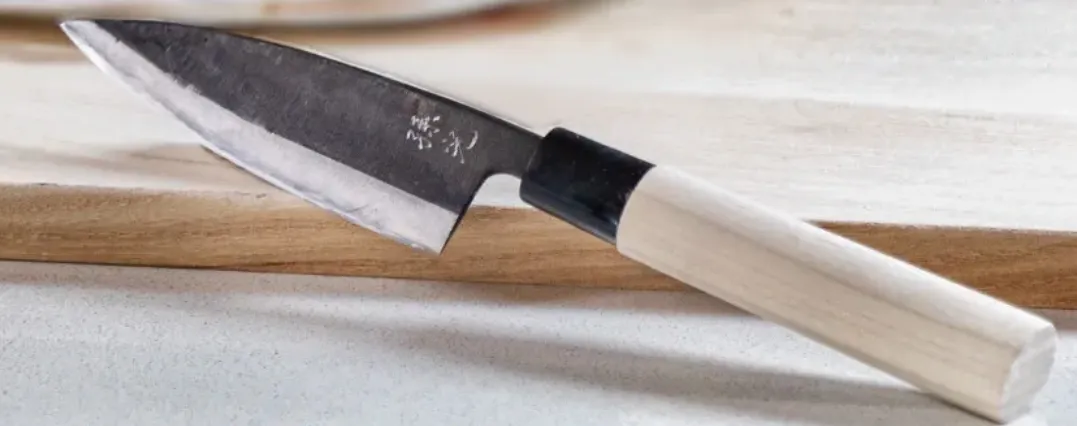
Which Japanese Knife is Right for You?
| Knife Type |
Japanese Name |
Best For |
Edge Type |
Skill Level |
| Multi-Purpose |
Santoku |
Vegetables, Meat, Fish |
Double-Bevel |
Beginner |
| Chef's Knife |
Gyuto |
All-around slicing & rocking |
Double-Bevel |
Beginner / Int. |
| Butchery/Fish |
Deba |
Filleting fish, heavy tasks |
Single-Bevel |
Intermediate |
| Sashimi |
Yanagiba |
Precision slicing raw fish |
Single-Bevel |
Advanced |
| Slicer |
Sujihiki |
Carving cooked meat/roasts |
Double-Bevel |
Intermediate |
Unlike Western knives which are often "jacks-of-all-trades," Japanese blades are specialized tools. To choose the right one, evaluate these four critical features:
Materials
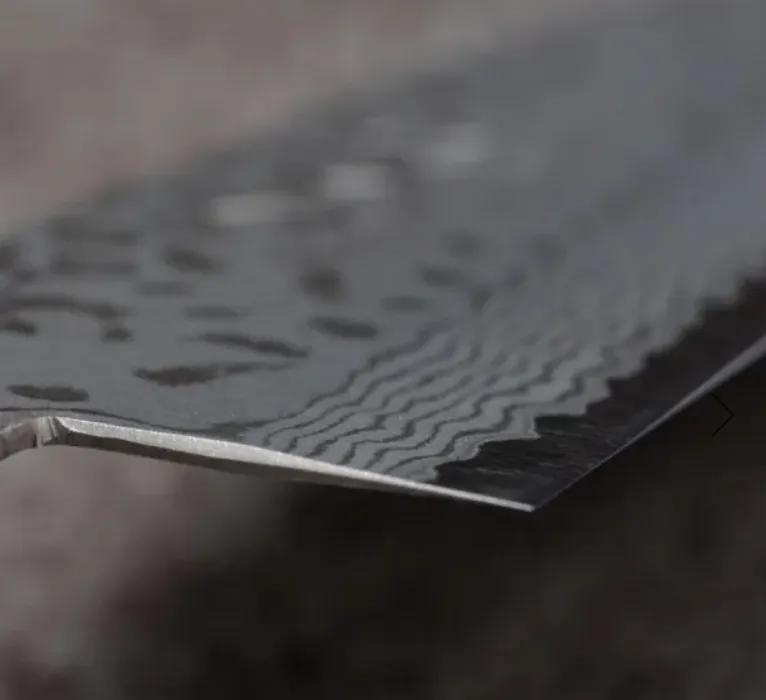
Stainless steel, semi-stainless steel, high-carbon steel, high-carbon-stainless steel, Damascus steel; a confusing variety of metals are used in the construction of Japanese knives. And it goes without saying that the choice of materials will strongly influence both the performance of the knife and the way in which the knife must be cared for.
The pros and cons of these materials are too numerous for us to go into in any depth here, however the two most commonly-used metals can be typified as follows:
Stainless steel knives resist corrosion and require little upkeep, though they typically lose their edge faster than a carbon steel knife.
Carbon steel knives are particularly prized by chefs for their razor-sharp edges, easy sharpening, and the distinctive patina they develop with use. However, they require a greater degree of care than stainless steel blades.
Blade Length and Shape
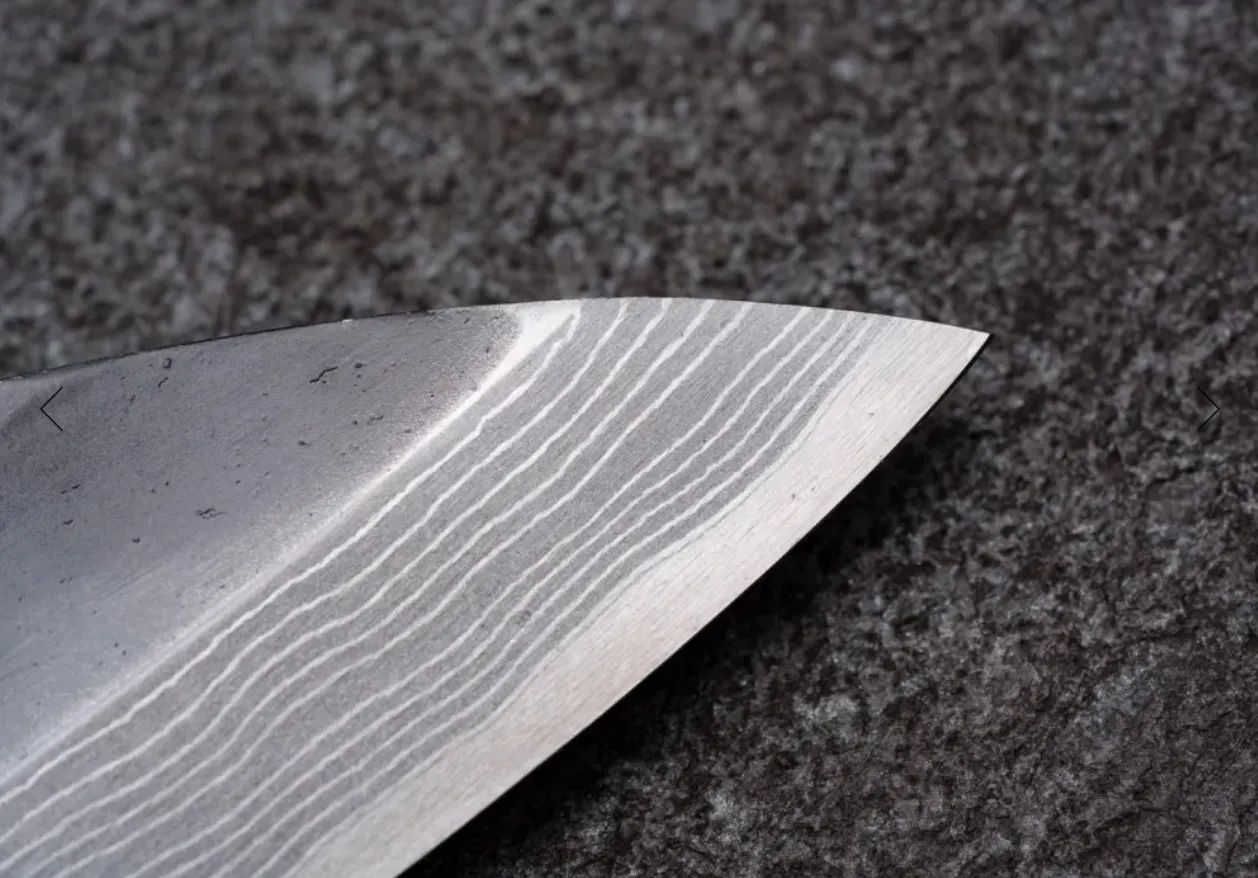
Thicker blades will be better suited to hacking through bone-heavy hunks of meat, while for more precision cutting a slimmer profile will be the way to go. Blade length, too, can make a major difference to both application and ease of use. While both of the preceding points are equally valid for Western knives, Japanese knife-makers often give special attention to the shape of the knife tip, too, as this can play an important role in facilitating certain cutting tasks.
Handle
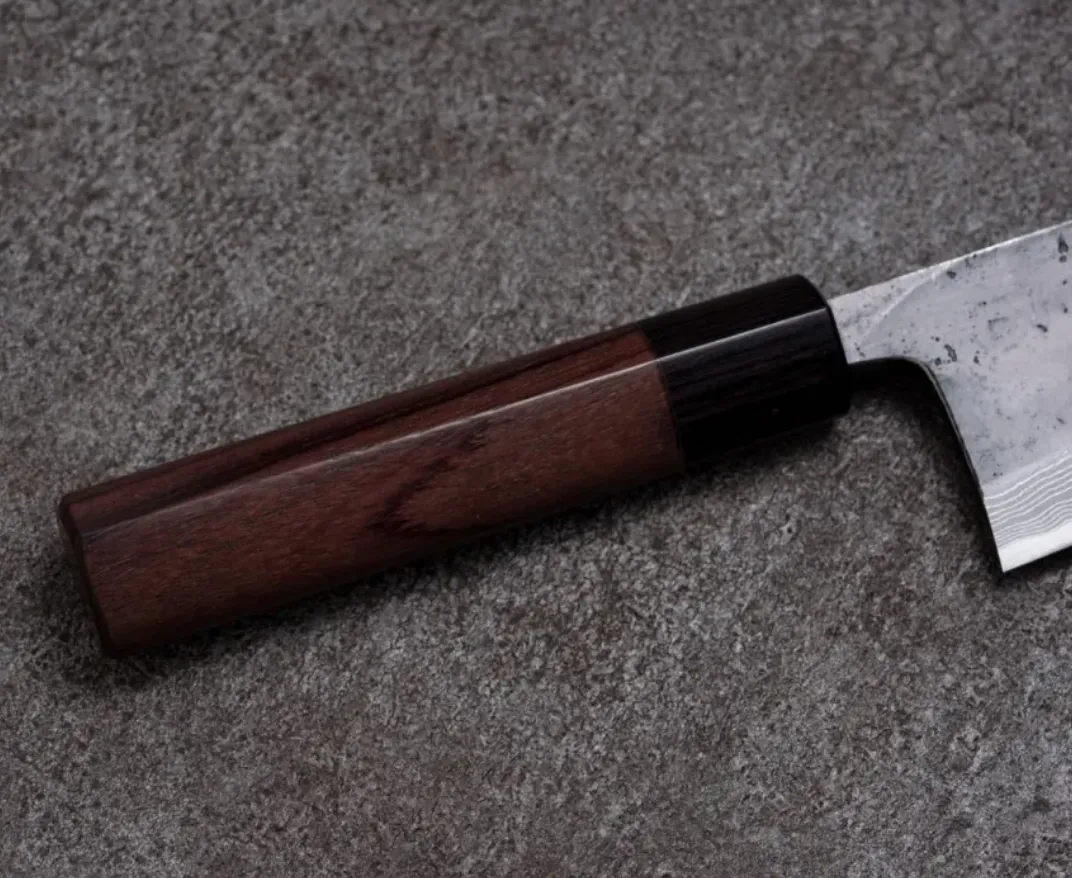
A knife’s handle plays a crucial role in its balance, comfort, and overall performance, so choosing one that fits your hand well is essential for control and ease of use. Japanese knives typically feature either lightweight wooden handles – usually octagonal, D-shaped, or cylindrical – offering agility and a harmonious balance with the blade, or weightier and more robust Western-style handles that can be better suited to heavy cutting-work.
Beyond these practical considerations, a handle made from a tactile and aesthetically-pleasing material will also play a big part in determining how you feel when working with the knife – indeed, whether you feel inclined to work with it at all.
Hand-Forged or Factory-Made
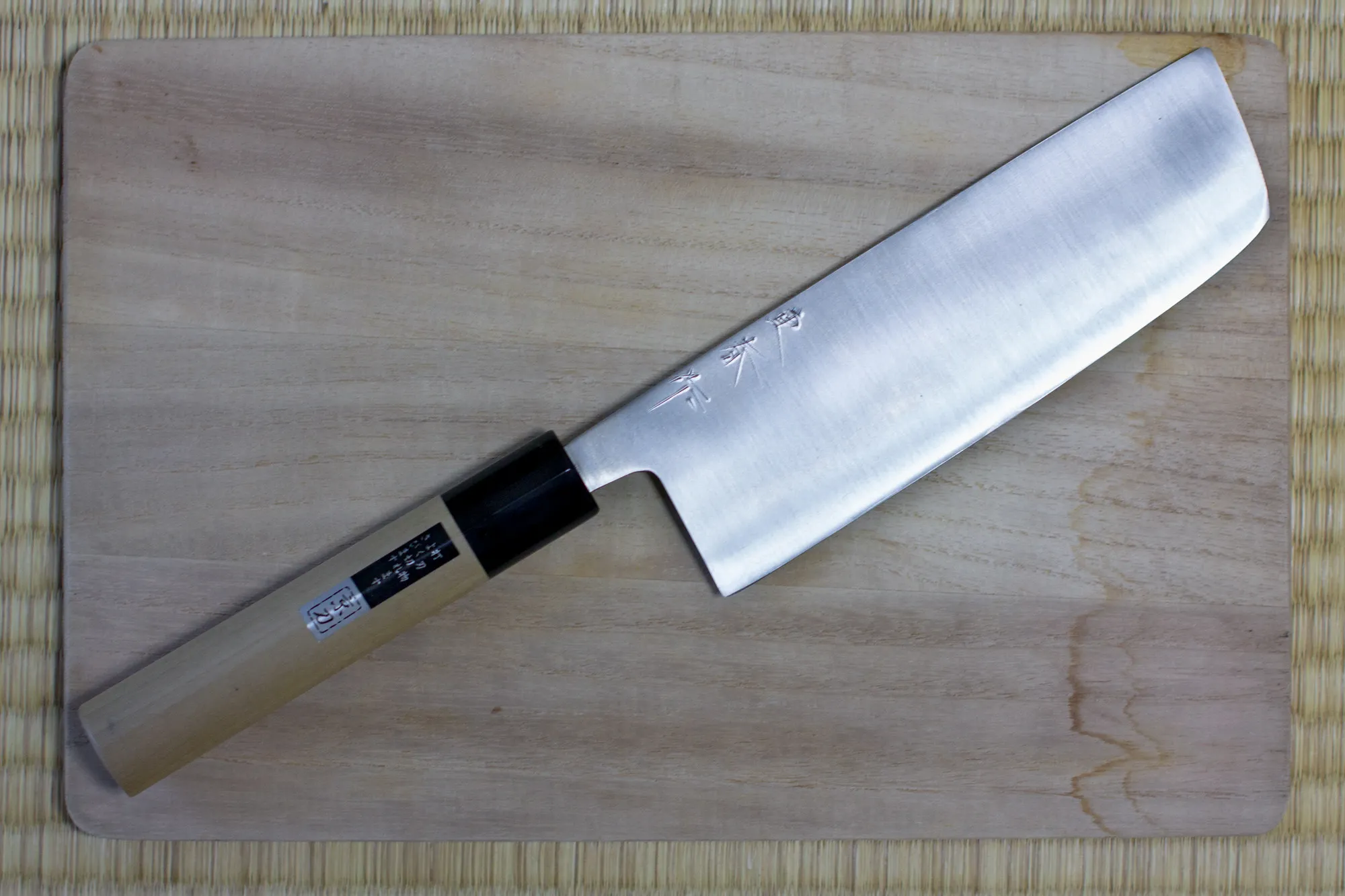 Image credit.
Both modern factory-produced knives and traditional hand-forged blasksmith’s varieties can be found in Japan today. While the former clearly offer an advantage in terms of price, they often lack the level of quality (and “story”) provided by the latter.
Also keep in mind that a great many Japanese knives today are made by hybrid hand/machine techniques. I.e. the knife may be forged in a small workshop by just one or two artisans, but often a degree of modern machinery will be used in the process, with perhaps only the final stages – shaping, grinding, polishing – done purely by hand.
Emotional Affinity
 Image credit.
Practical performance, utility, and aesthetics aside, it’s also worth keeping in mind that a big part of why we choose to buy anything often boils down to an emotional affinity with that item. And this often comes from the item’s back-story. Knowing that the person who forged your knife comes from an unbroken line of knife-makers reaching back several centuries will not necessarily make that knife any sharper nor stronger. It may, however, create an affinity between yourself and that knife like no other.
Although some may see this as superficial, storytelling is psychologically more important than many of us might think, and can give a great deal of pleasure. As a result, attention to this romantic element should be considered a legitimate part of the knife-choosing process. If a certain knife both meets your practical needs and speaks to you on an emotional level, it’s clearly meant to be yours!
Choosing by Use-Case: What’s on Your Menu?
Fish
The cutting of fish can be divided into two main subcategories: chopping through mass and bone, and precision cutting of boneless flesh.
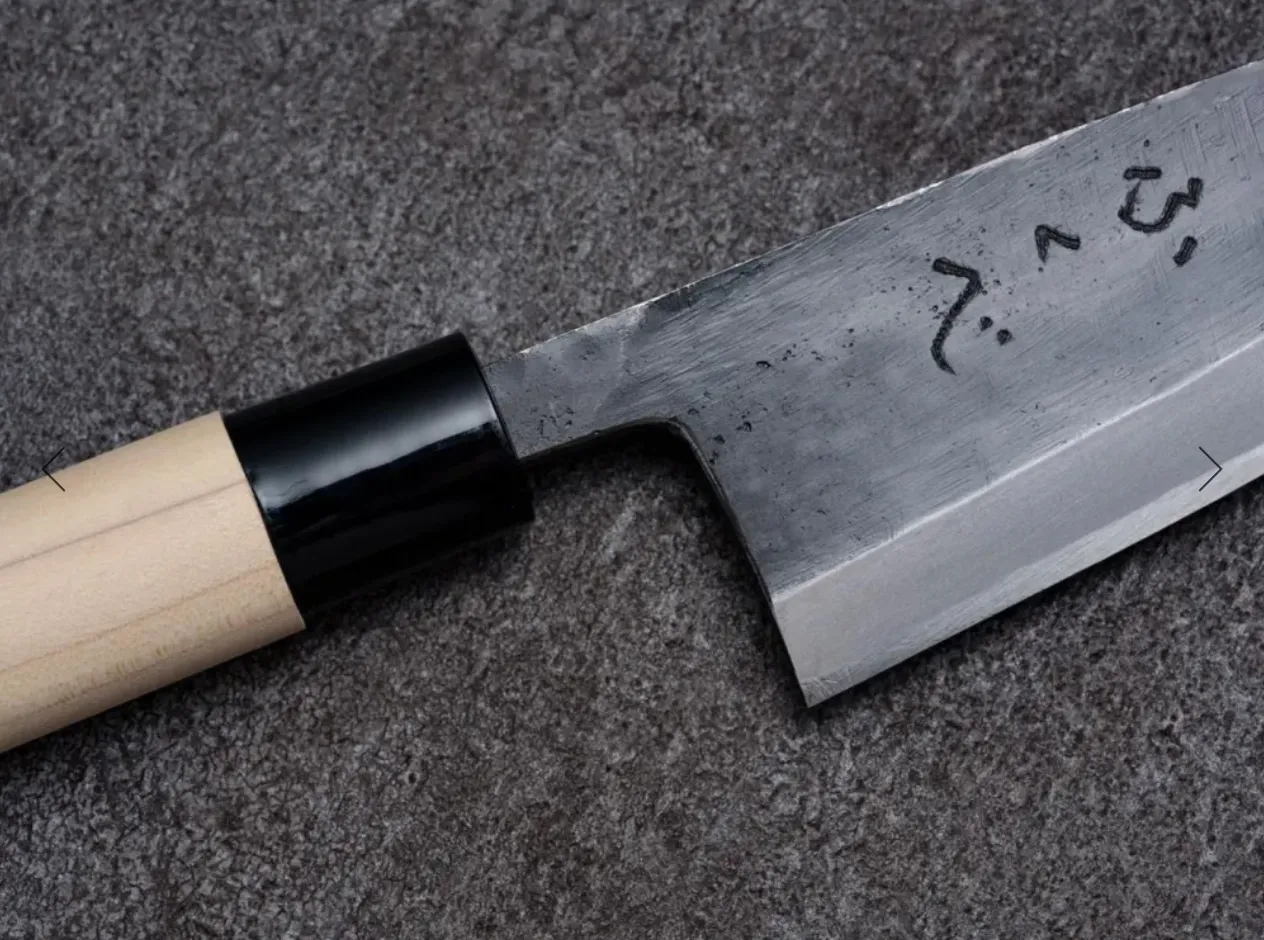
For the former task, you will want something like the Deba (above); a thick, single-beveled knife with a sharp, curved tip. Ideal for filleting fish and breaking down small-boned meats thanks to its sturdy heel and efficient design.
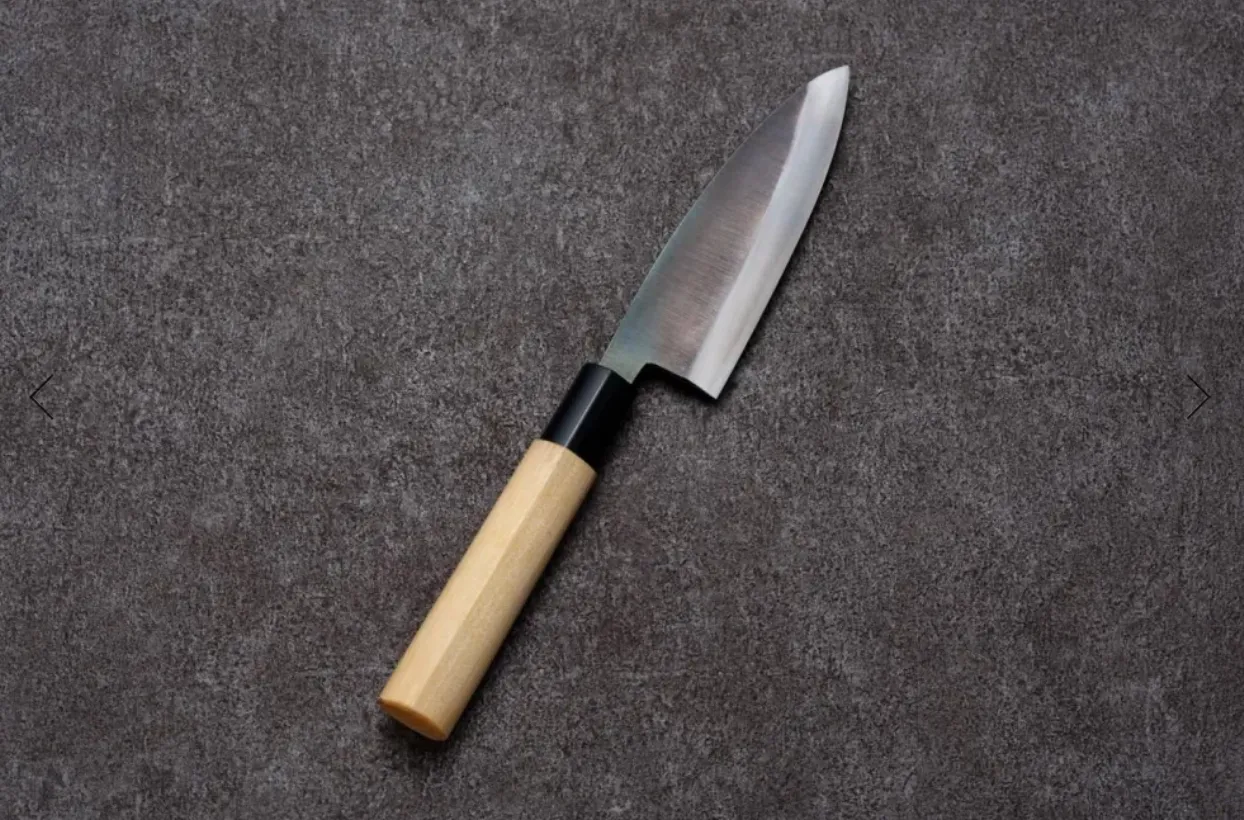
And although these mini-Deba from the Noto region (above) were traditionally used only for filleting squid, they are now favored as a useful all-round fish knife, making them an excellent choice for those with smaller fingers.
Meanwhile, for accurate slicing, you should perhaps choose a Kiritsuke. With its straight cutting-edge and angled tip, the Kiritsuke blends the best features of both sushi and vegetable knives. Once the reserve of top chefs due to its unwieldy single-beveled design, modern double-beveled Kiritsuke combine similar degrees of precision with greater ease of use.
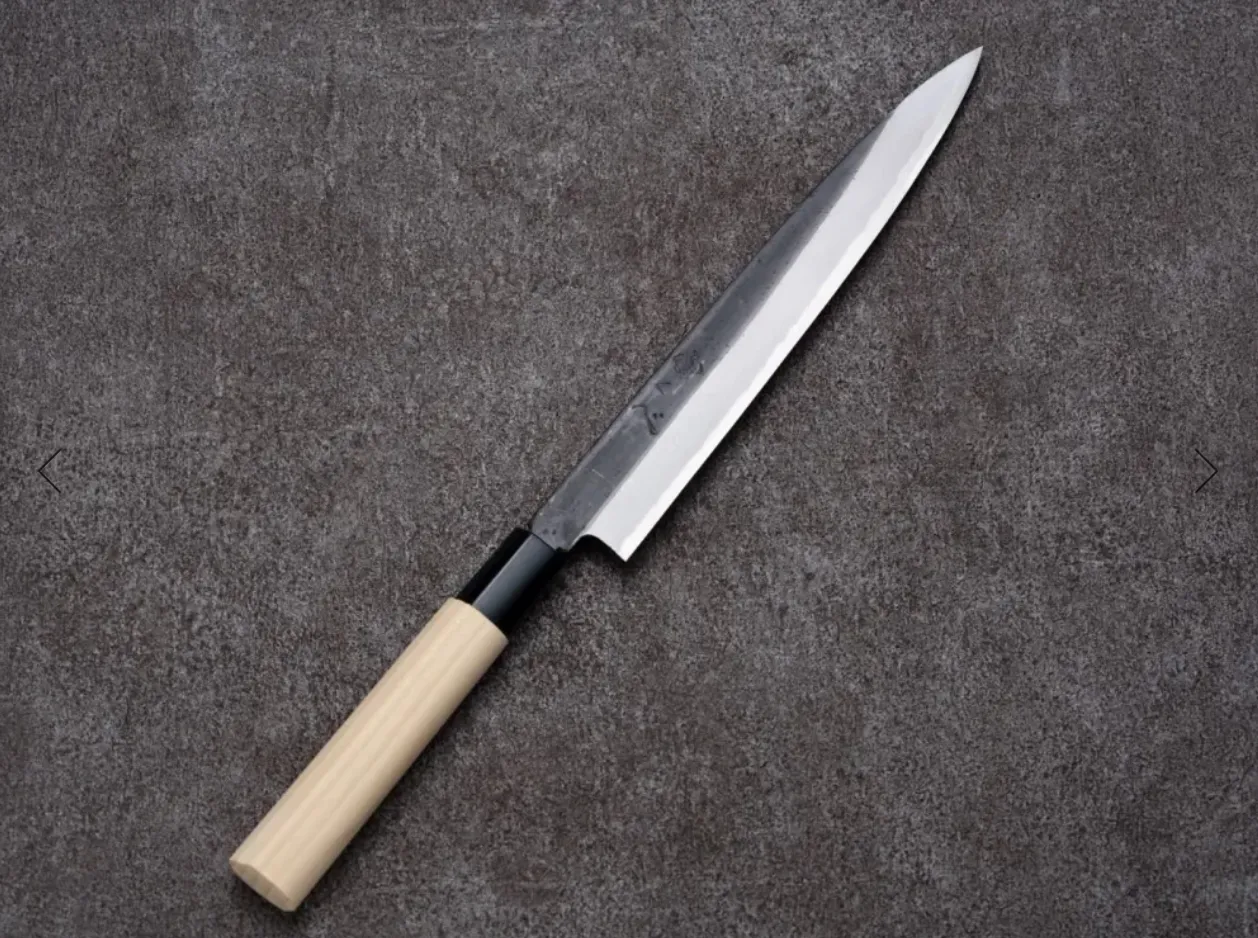
Alternatively, although Yanagiba can also serve well in skinning fish, they are primarily used for filleting and slicing boneless fish for sushi and sashimi. And Fukube Kaji offers Yanagiba in a variety of sizes and designs.
Discover Your Perfect Fish Knife
Meat
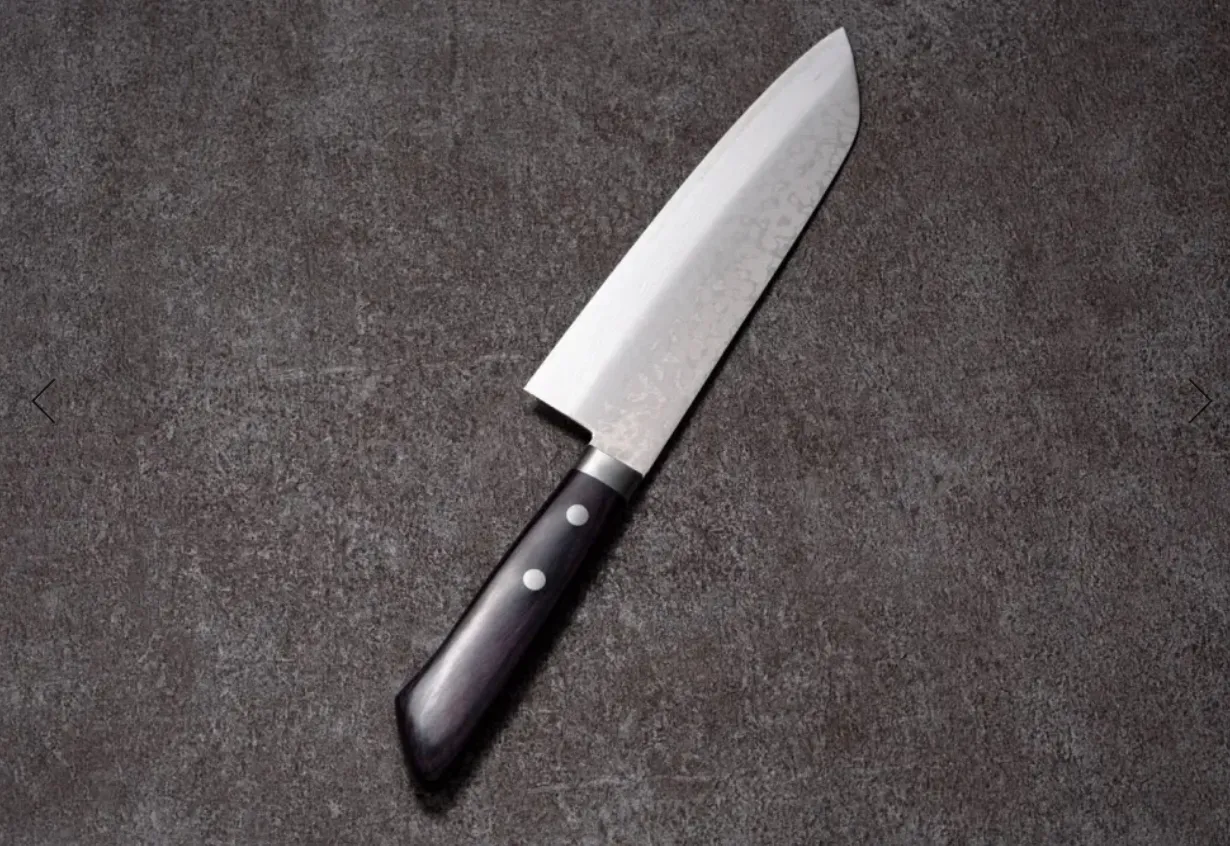
For carnivores, the Santoku (above) will likely be your go-to kitchen blade. Meaning "three virtues," a Santoku is a versatile Japanese knife favored by home cooks for precise slicing, dicing, and mincing of meat, vegetables, and more.
Alternatively, the Sujihiki is a slim, double-beveled Japanese slicing knife designed for smooth, low-friction cuts through delicate fish and large meats like roasts or poultry. For a less specialized option, the Gyuto – or “cow blade” – is the Japanese counterpart to a Western chef’s all-purpose cooking knife. It features a double-edged, gently curved blade; ideal for precise, lightweight tasks and rocking cuts.
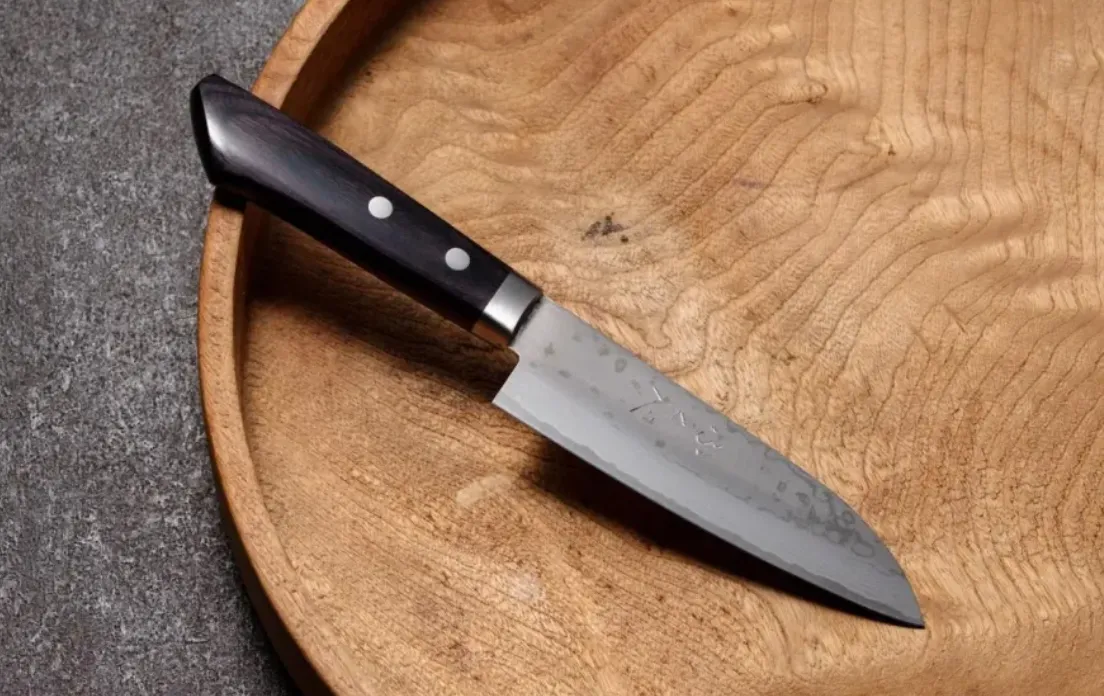
Finally, those with smaller hands may want to check out the versatile mini-Santoku pictured above; one of Fukubekaji’s most popular models.
Shop the Perfect Knife for Meat
Professional Use
As pro-chefs typically put their knives through daily punishment, they demand a level of craftsmanship and durability that would be superfluous for most home cooks. While all the knives we’ve recommended here feature excellent design, high quality materials, and outstanding workmanship, those looking for an extra level of performance would do well to check out Fukube Kaji’s well-stocked professional Japanese chef’s knife section.
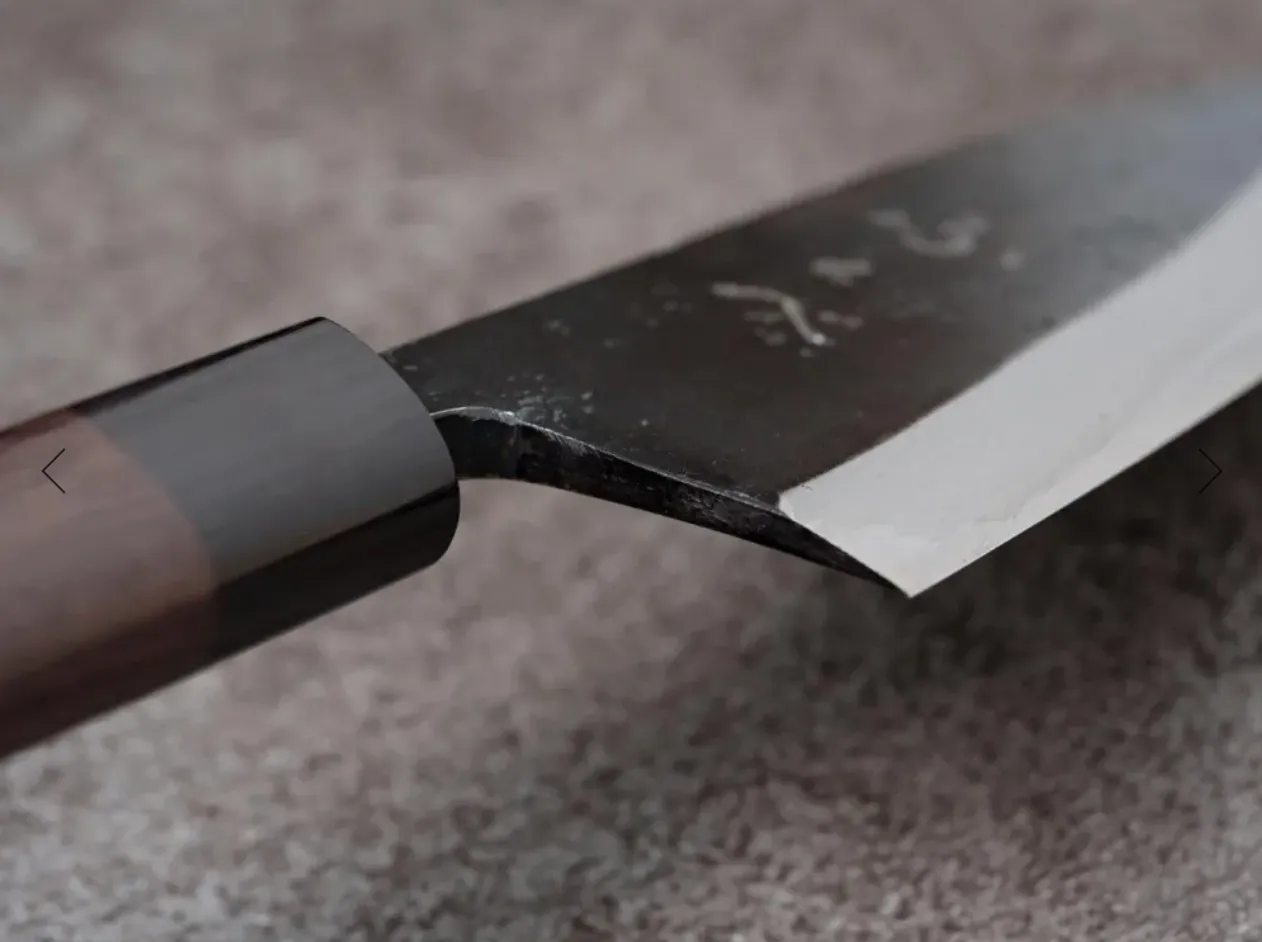
Here you’ll find premium versions of many workhorse blades, such as this Deba (above), in a high-grade iron and steel laminate version, with a rosewood handle, or the similarly-specced deluxe black oxide Yanagi seen below.
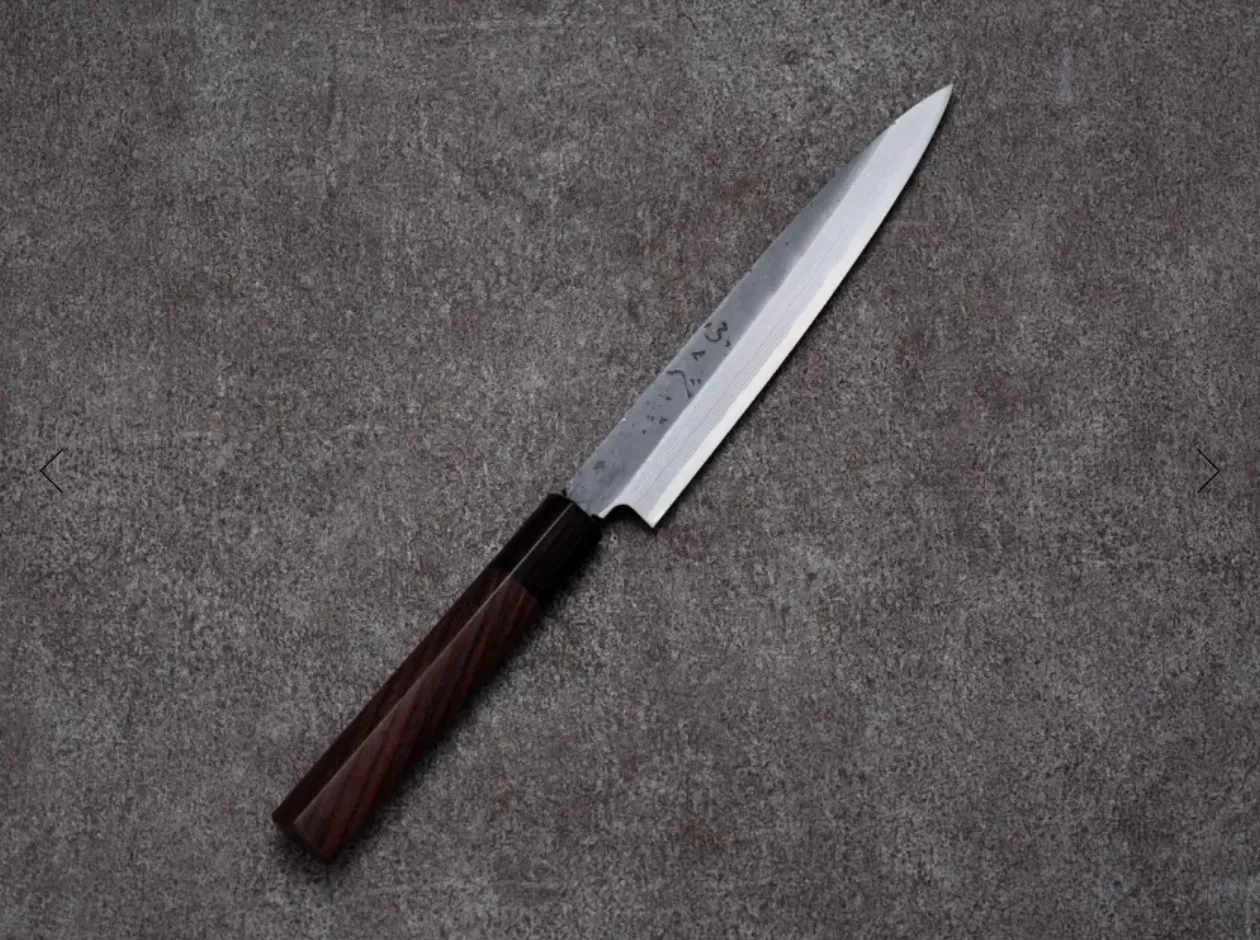
Find Your Professional Kitchen Knife
Camping, Hunting, and Bushcraft
For outdoors enthusiasts, the preparing and cooking of food is not a pursuit that’s restricted to the home kitchen. And when it comes skinning, slicing, and dicing on the go, Fukube Kaji also offers a variety of precision tools.
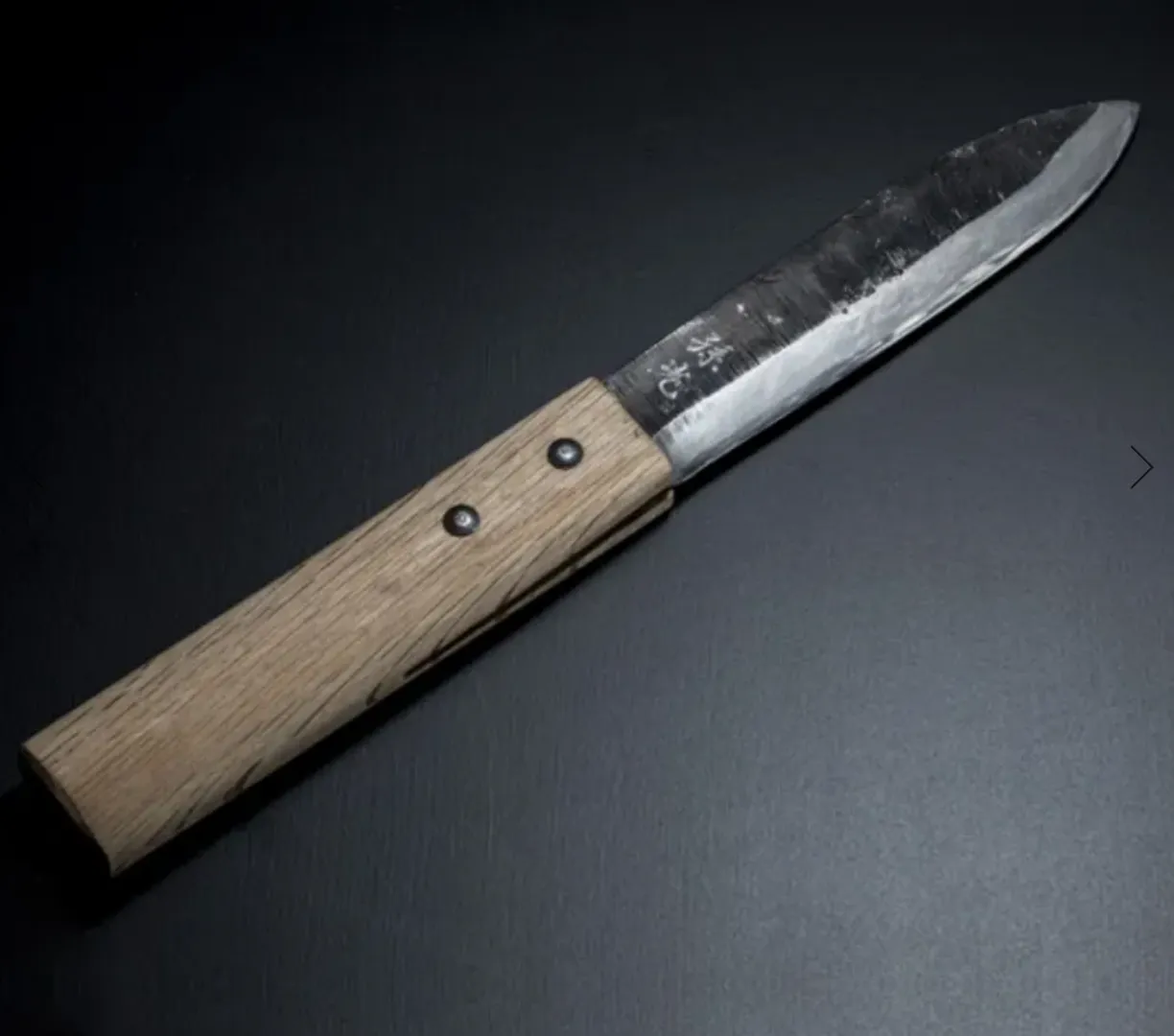
Take this dual-purpose Japanese fishing and hunting knife for instance; an essential bit of kit for any trip.
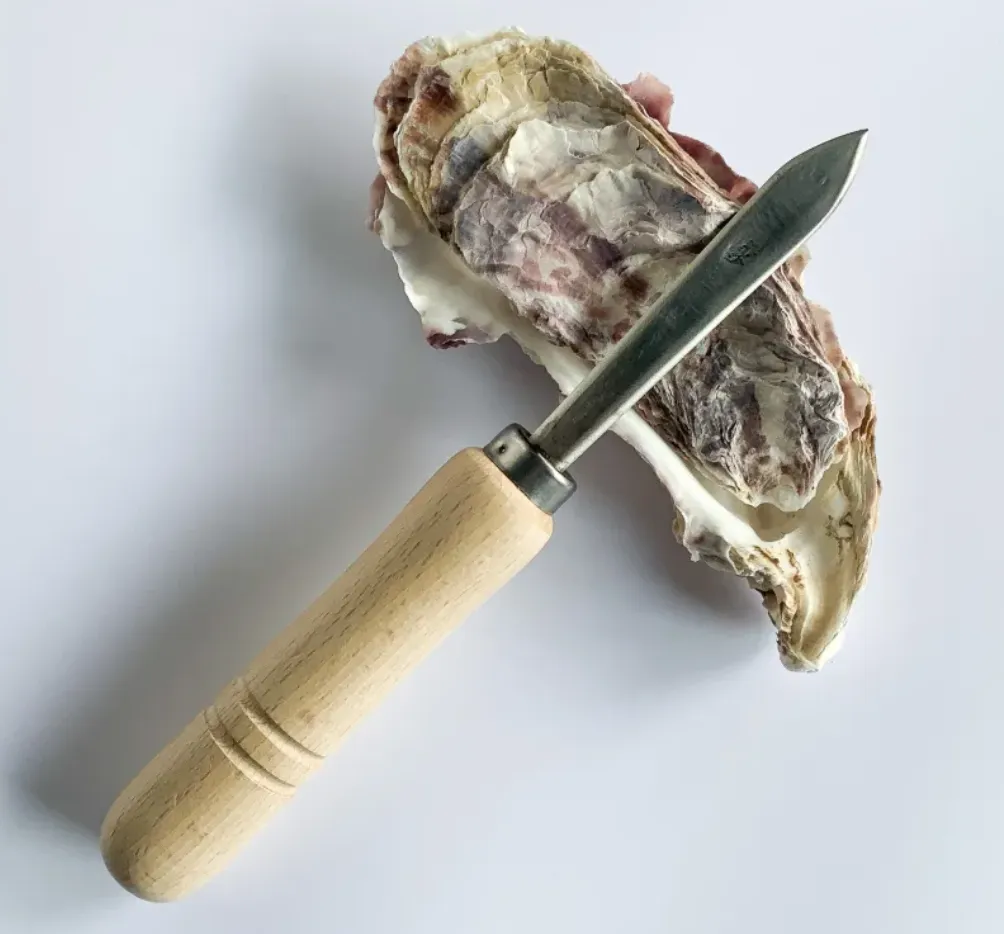
Meanwhile, for those who favor beach camping over a mountain escape, the hand-forged oyster knife in stainless steel may prove more useful.
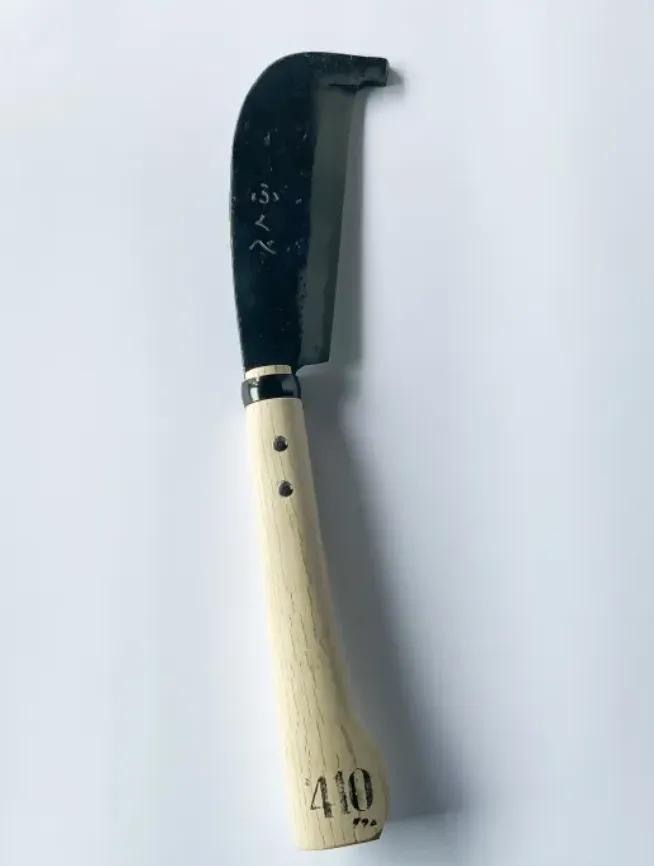
Finally, whether you prefer cooking with gas or on an open fire, soonner or later you’ll likely need to chop wood of some description – which is where this handy double-edged Noto hatchet comes in.
Find Your Outdoor Knife
💡 Also read: Different Types of Japanese Knives
Maintenance: How to Care for Your Japanese Knife
Japanese knives are typically made from much harder steel than other knives, and have thinner blades. While this makes them a joy to use, and has the added advantage that they need sharpening much less frequently, it also makes Japanese kitchen knives more fragile, so they need to be treated with care and respect both when in use and in storage.
Blunt Honesty: How to Correctly Use Japanese Knives
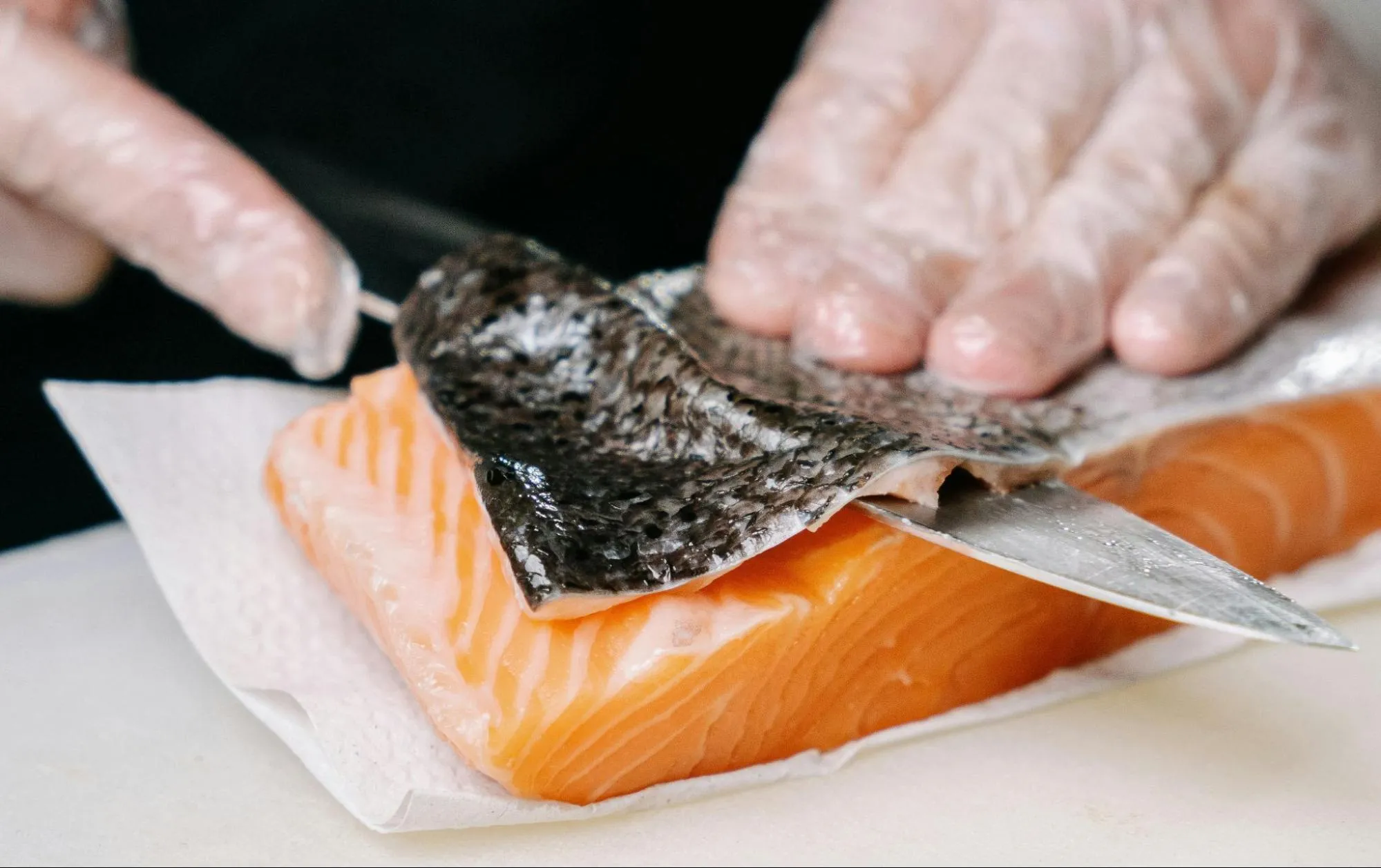 Image credit.
The refined performance of Japanese kitchen knives comes with a few trade-offs. Be particularly mindful of the materials you’re cutting, and be aware that the blades of Japanese knives typically require more care in order to maintain their cutting edges and prevent damage.
For a start, always cut on a wooden surface - or, if you really must, plastic - as these materials are softer and more forgiving than others. Conversely, avoid cutting on glass, steel, granite, or even bamboo or certain hardwoods - which can be surprisingly, well, hard.
Beyond this, simple universal knife-care common-sense – such as not scraping the cutting edge of a knife across a chopping board – applies here, too. Use your knife to cut in a smooth motion, applying even pressure, and without twisting, and it will maintain a sharp cutting edge for a long time to come.
Cut and Dried: How To Store Knives
It’s not only how you look after your knife when in use that matters, but also how it’s treated when resting. Here we offer some practical tips on how to store knives.
First of all we need to stress that dishwashers are not good for Japanese knives – or indeed any knives at all. The heat, moisture, and all that rattling around will blunt the fragile blades, rust a carbon-steel knife, and damage wooden handles.
However, leaving a knife dirty for a long period of time is not a great idea either; when you finally do get to cleaning the knife, it will take a lot more aggressive scrubbing to remove any stuck-on debris, which can also damage the blade.
Stainless steel knives require no special maintenance. But be aware that carbon-steel knives will rust if left damp for even a very short period of time. The extra work involved in owning a carbon-blade knife is truly minimal though: simply wipe the blade down with a dry cloth immediately after washing, and perhaps give it an occasional oiling to prevent oxidation. That’s it.
Carbon or stainless, don’t throw your knife in a drawer with other utensils once it’s dry, as this will likely blunt or even chip the blade. Either store the knife in a plastic blade-guard or keep it on a magnetic knife strip or in a knife-block.
And once your knife is in need of sharpening, a grindstone and oil set is undoubtedly the best method. Sharpening a knife this way often takes a little practice at first, though, so you may want to start out on a cheaper and less important knife before moving onto your precious Japanese model.
Where to Buy Authentic Japanese Knives Online?
If you’re visiting Japan, most medium-to-large towns will be home to at least one dedicated knife store. But if you are looking to purchase Japanese kitchen knives online, finding Japanese dealers that are willing to ship abroad can be a challenge. For this reason we highly recommend ordering from Fukube Kaji. Simply sign up for a free ZenMarket account, and you can start adding premium Japanese kitchen knives to your cart right away. Then once you’re ready to confirm your order, we’ll purchase the items for you and ship them to your door.
💡 Also read: How to Buy the Best Japanese Knives from Japan at Japan Knife
Conclusion
Japanese knives are known for their slim, hard blades; making for exceptionally sharp cutting edges that hold up well over time. Crafted from a variety of steel types, these knives excel in precision tasks – slicing through ingredients with minimal resistance, making cuts feel smooth and effortless. Choose the right Japanese kitchen knife, and cooking will be an absolute pleasure!
We hope you’ve found this guide to choosing a Japanese kitchen knife useful, and that the models we’ve reviewed have wet your appetite for more. To purchase premium Japanese kitchen knives from Fukube Kaji, head on over to ZenMarket and sign up for a free account now!
Have you signed up for ZenMarket yet?
ZenMarket is the place to get your hands on goods directly from Japan!
Sign up